Categories
Independent Work Present & Publish Findings

Celebrating Senior Theses: An Interview with Claire Ashmead ‘17

In our spring series, Senior Theses: A Celebration, we take a moment in the interlude between thesis deadlines and graduation to appreciate the diverse, personal, and impactful work of seniors’ capstone research projects.

~~~~~~

Claire Ashmead completed two theses this spring: for her History concentration, a comparative study of McCarthyism and the Chinese Cultural Revolution, and, for her Creative Writing certificate, a novella entitled The Camel-Hair Coat. Here she reflects on writing and revising, family and loss, and the completion of her first book.  
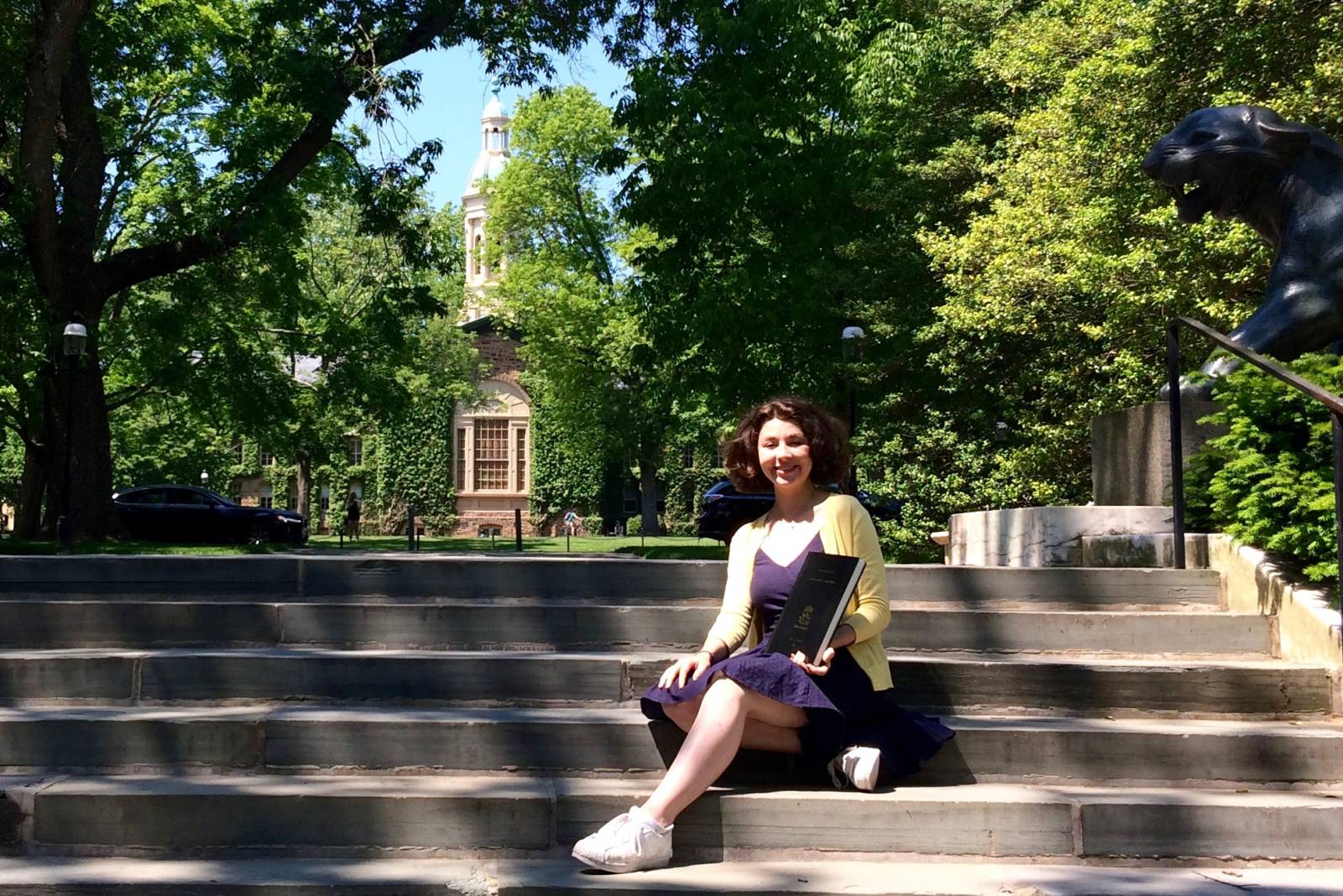
“Any creative product is more bound up with your soul than an academic product. My creative writing thesis is about my relationship with the women in my family, my relationship with space itself.”

What is your novella, The Camel-Hair Coat, about?
It follows a girl, Daphne, who, four years ago, under mysterious circumstances, lost her mother in a terrible accident. Her intense grief over her mother’s death and profound yearning to know why her mother was taken away from her summons the ghost of her mother back from the dead. Daphne is faced with this choice: she can bring her mother back to reality, which she has wanted more desperately than she’s ever wanted anything before, but with terrible consequences for the rest of her family – her sister and grandmother. The price of bringing somebody back might be the exchange of other people you love, and even yourself. But if you really miss somebody – what wouldn’t you do?

How would you distill the book’s themes into a few words?
Grief, wishes, and growing up.

What was the hardest part of writing the book?
How much I had to revise. The book underwent a dramatic transformation, in part because I had two advisers: Joyce Carol Oates in the fall and then Jeffrey Eugenides in the spring. They’re completely different writers, which for me I think ended up being great: Joyce Carol Oates really tries to pull your creativity out of you, and she encouraged me to envision an alternative reality that ended up being a little confusing. Jeffrey Eugenides, on the other hand, is a very linear storyteller. When I gave him my draft, he told me he didn’t really understand what was going on, and that I needed to rewrite.

It was February, and I was hearing from my adviser that the 140 pages I’d generated needed to go. But in another sense that actually felt great.

At first that was very scary. It was February, and I was hearing from my adviser that the 140 pages I’d generated needed to go. But in another sense that actually felt great. I’d had the sneaking suspicion that the story needed a major change, and I wasn’t sure in what way. So I decided to structure it like a four-act play, where each act takes place in one day of one season. Once I had that structure, it was like, bingo! I know how this is going to develop.

In the second writing, I only kept maybe 3% of the words I’d previously written. But because I’d already created the spaces and characters in my head, writing the story the second time around actually took almost no effort, and required much less editing.

How did you juggle writing two separate theses?
It was all about time management. I also really believe that just getting words on a page is so crucial. Often people feel like writing needs to be perfect when it comes out onto the page. My experience writing for Princeton Triangle Club has taught me that actually the hardest part is just starting, and as soon as you begin to write, your thoughts become clearer.

Also, the processes of the two theses were very different, which was helpful – if they were the same it probably would’ve been much more difficult for me to do the two. For my creative thesis, I wrote almost every day. With creative writing, I want to explore characters and change dialogue, so the earlier I get it out, the better. In history, it’s a very different beast: I like getting all of my secondary source reading and research done, getting it all into my head, and then putting it out onto the page. I would research for months and months, and then sit down and write a chapter in a day or two.

Describe your happy place as a writer.
I have a two-room single in Edwards, so I have a room with my bed, and then another with a desk, facing the window. I wake up early, at 6 or 7 a.m., and would either go for a run or just go get coffee at Rojo’s, and then come to my desk in my little monastic sanctuary and write.
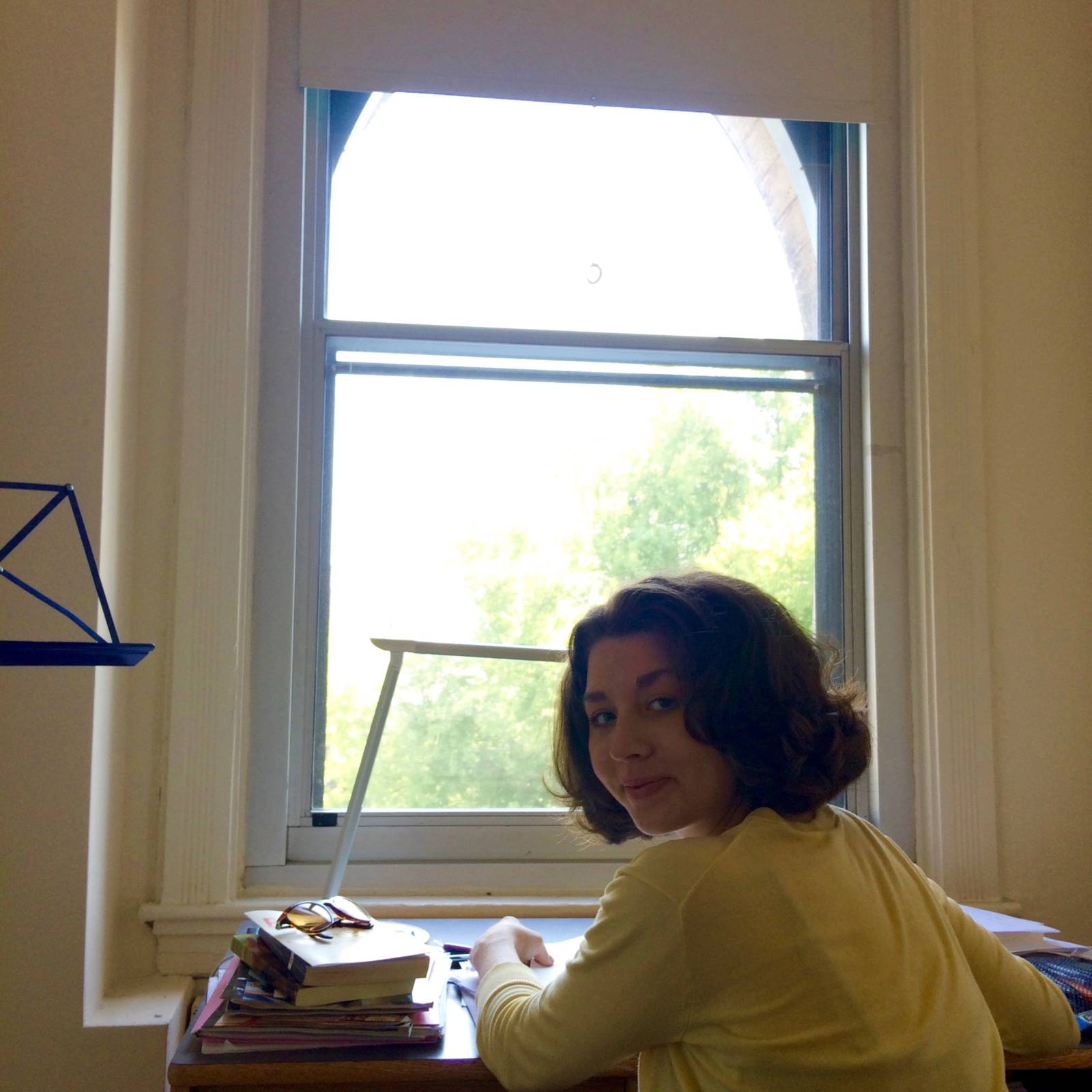
Claire in the “monastic sanctuary” where she drafted her thesis by hand. “I don’t like writing on lined paper,” she told me. “It’s art – I mean, you wouldn’t draw on lined paper, right? You might want to go off in any direction!”

The first time I write something, I write in pen, by hand, on blank sheets of unlined paper. The great thing about writing by hand is that it’s physically exhausting, so you only say what you need to say, and the words you pick are more exact and intentional.

I’d sit down and write for about an hour and a half every morning, which would be about five double-spaced typed pages, sometimes more. The first sentence can sometimes be difficult, but as you start writing, you reenter the world. It’s like learning to ride a bike: you remember it, and you just push forward on the momentum of describing the scene.

The first sentence can sometimes be difficult, but as you start writing, you reenter the world. It’s like learning to ride a bike: you remember it, and you just push forward on the momentum of describing the scene.

Do you have a favorite section of the book?
A lot of the book was plot that I just had to get through, and then there were a few scenes that made me feel that they were exactly why I wrote the book. Here are two paragraphs, after Daphne’s mother has come back and she is able to speak with her mother again.

Her mother took her hands. “At least you’ll have your father to walk you down the aisle. Mine was gone by the time I was your age. I missed him so much.”

“What’s it like?” Daphne asked. “Missing somebody?”

“You know, I’ve never thought about it.” Her mother frowned. “I’d say missing somebody is like remembering to pick up milk at the grocery store. Most of the time, you don’t think about it at all. And then all of a sudden the thought will just occur to you. I’ve got to pick up milk at the grocery store. And the thought will occur to you once a week, every month, every year, for forever. I’ve got to pick up milk at the grocery store. There, that’s it. I think about my father every day.”

If you’d like to read more of The Camel-Hair Coat, you can find it archived – with all senior theses – on the senior thesis digital archive, where it will be available starting after graduation on June 6th, 2017.

— Zoe Sims, Natural Sciences Correspondent

Categories
Present & Publish Findings

Behind the Scenes at Princeton Research Day: A Call for Student Judges

Last year, I was invited to be a judge for Princeton Research Day (PRD) as a veteran of the Mary W. George Freshman Research Conference.  If there was one thing I loved about this conference, it was hearing my peers’ interesting research conclusions. I was excited to see this happen on an even larger scale at PRD, but I was also nervous; I felt that I had little authority to judge the work of upperclassmen (and graduate students!) with only a semester’s worth of experience under my belt. However, the event organizers were incredibly encouraging in this respect, valuing our nonspecialist input.

One of several poster presentations taking place at Frist!

Before PRD, the judges held a brief meeting to go over logistics and judging criteria. I felt that, rather than encouraging harsh criticism, the criteria really emphasized the purpose of PRD as a celebration and opportunity to share the hard work done by Princeton researchers. Scores were mostly based on how well people could relay information, translate their complex findings (no chart goes unexplained!), and engage an audience that has no experience in their field. This criteria eased a lot of my apprehension: I might not be able to judge the correctness of a data set, or rebut conclusions about culture in Georgian England, but I can judge how well these were communicated to me.

Categories
Present & Publish Findings

In Between the Lines: A Guide to Reading Critically


A good example of how I mark up my readings as I go

I often find that Princeton professors assume that we all know how to “read critically.” It’s a phrase often included in essay prompts, and a skill necessary to academic writing. Maybe we’re familiar with its definition: close examination of a text’s logic, arguments, style, and other content in order to better understand the author’s intent. Reading non-critically would be identifying a metaphor in a passage, whereas the critical reader would question why the author used that specific metaphor in the first place. Now that the terminology is clarified, what does critical reading look like in practice? I’ve put together a short guide on how I approach my readings to help demystify the process.

  1. Put on your scholar hat. Critical reading starts before the first page. You should assume that the reading in front of you was the product of several choices made by the author, and that each of these choices is subject to analysis. This is a critical mindset, but importantly, not a negative one. Not taking a reading at face value doesn’t mean approaching the reading hoping to find everything that’s wrong, but rather what could be improved.
Categories
Independent Work Present & Publish Findings

Lessons from Princeton’s Day of Action

Over the past few months, students and academics across the Princeton campus community have been reckoning with the new reality of America under the Trump presidency. To encourage productive post-election dialogue, the Princeton Citizen Scientists sponsored a Day of Action last Monday, March 6th. The Day of Action brought together hundreds of students, faculty, and community members for dialogue with teach-ins on topics ranging from Intersectional Activism to Science in the Public Sphere. Local organizations like the Citizens Climate Lobby and the Coalition for Peace Action also tabled for the event.

My involvement with the Day of Action began early in the morning, as I was walking to class when I noticed a woman carrying a large basket of books and pamphlets near my room. We chatted on our way to Frist, where she was tabling with Showing Up for Racial Justice (SURJ), a national network that organizes white people to fight with multi-racial minorities for social change. After I showed her to the campus center, I cocooned myself in a library to prepare for my own teach-in at the Day of Action, “Making Political Disagreement Productive: Mitigating Confirmation Bias.”

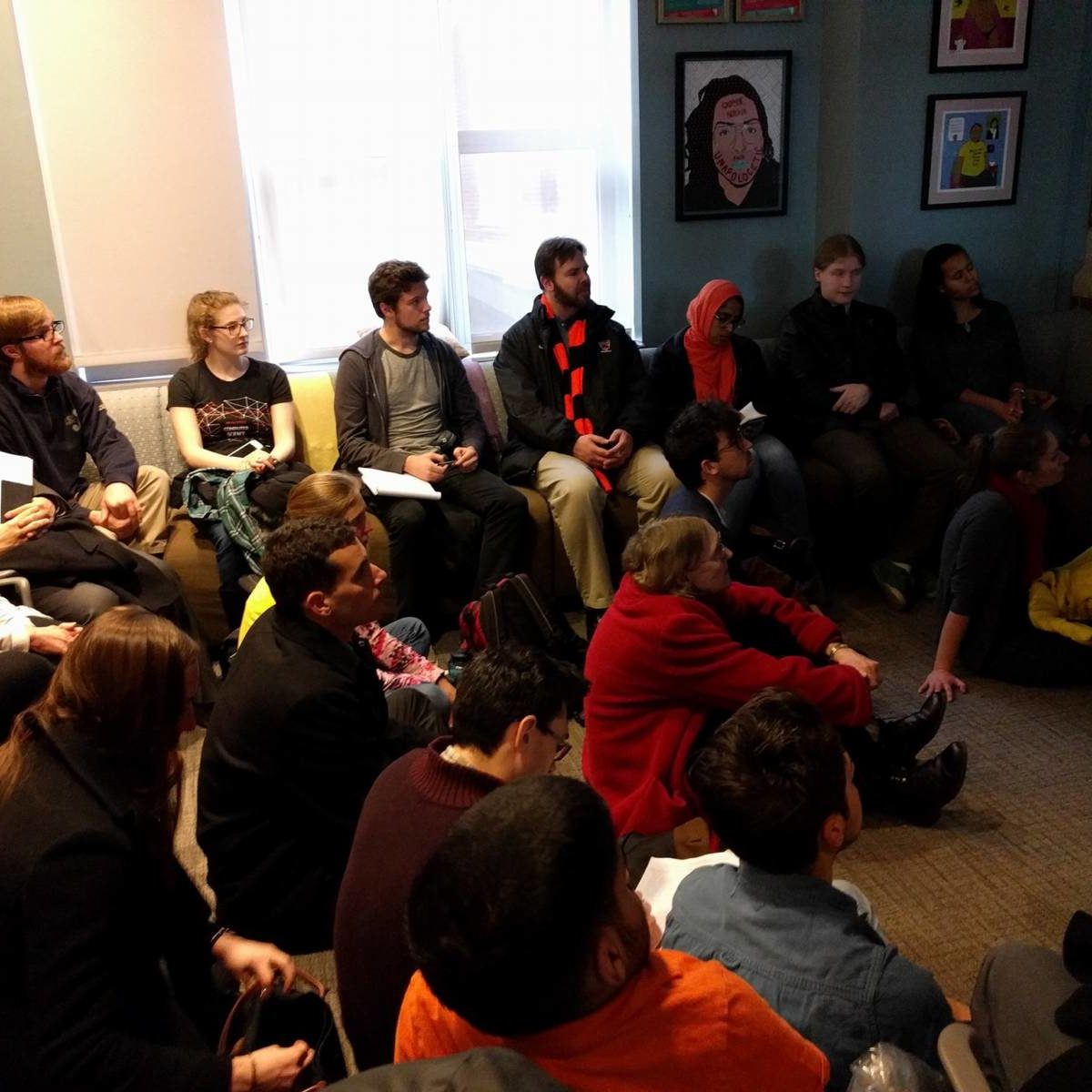
Participants at my teach-in during the Day of Action. Photo by Jonathan Balkind.

My teach-in was the first time I had presented my thesis to a public group. The motivation? Partisan antipathy and political polarization has doubled among both Democrats and Republicans, with about forty percent of members of each party reporting “very unfavorable” opinions of the other. Polarization exacerbates unproductive political disagreement, as partisans succumb to confirmation bias and immediately discount positions counter to their own. I presented lessons from psychology and philosophy to explore the causes of, and possible mitigants to self-serving political bias.

Sharing space on the Day of Action program with names like Cornel West and Max Weiss, I expected only a handful of people at most to attend my teach-in. I was stunned–and happy– when I entered the room to find a full audience of students, professors, and community members. During my ~20 minute presentation, I was interrupted often by questions. When I couldn’t come up with answers, I found new angles to examine my own work from.

The discussion flowed freely after my talk. People from Tennessee and Missouri shared personal stories and advice about engaging with their family members about politics. A conservative student and a liberal professor of Religion had a wonderful exchange about the need to reach across the aisle to those from the other side who are willing to listen. A Princeton resident alerted me about a political discussion project in the town library, and another student pointed me to a book that I’ve since found helpful in my work. My experience at the teach-in embodied the collective knowledge-sharing that the organizers of the Day of Action were aiming for.

I left the room buzzing with energy and thankful that I had decided, on a whim, to participate in the event.  I had spent so long discussing my thesis only with a few professors and friends that I had not realized how valuable publicly presenting it could be for my thought process and motivation. Seeing my academic research received with such enthusiasm in a collaborative environment reaffirmed my desire to continue pursuing the offshoots of my thesis work after graduation. Consider presenting or participating in a future Day of Action or finding other ways to showcase your academic work on campus too, like the annual Princeton Research Day each spring.
— Vidushi Sharma, Humanities Correspondent

Categories
Present & Publish Findings

Making Your Citations Cite Themselves: A Step-By-Step Guide to Automated Bibliographies

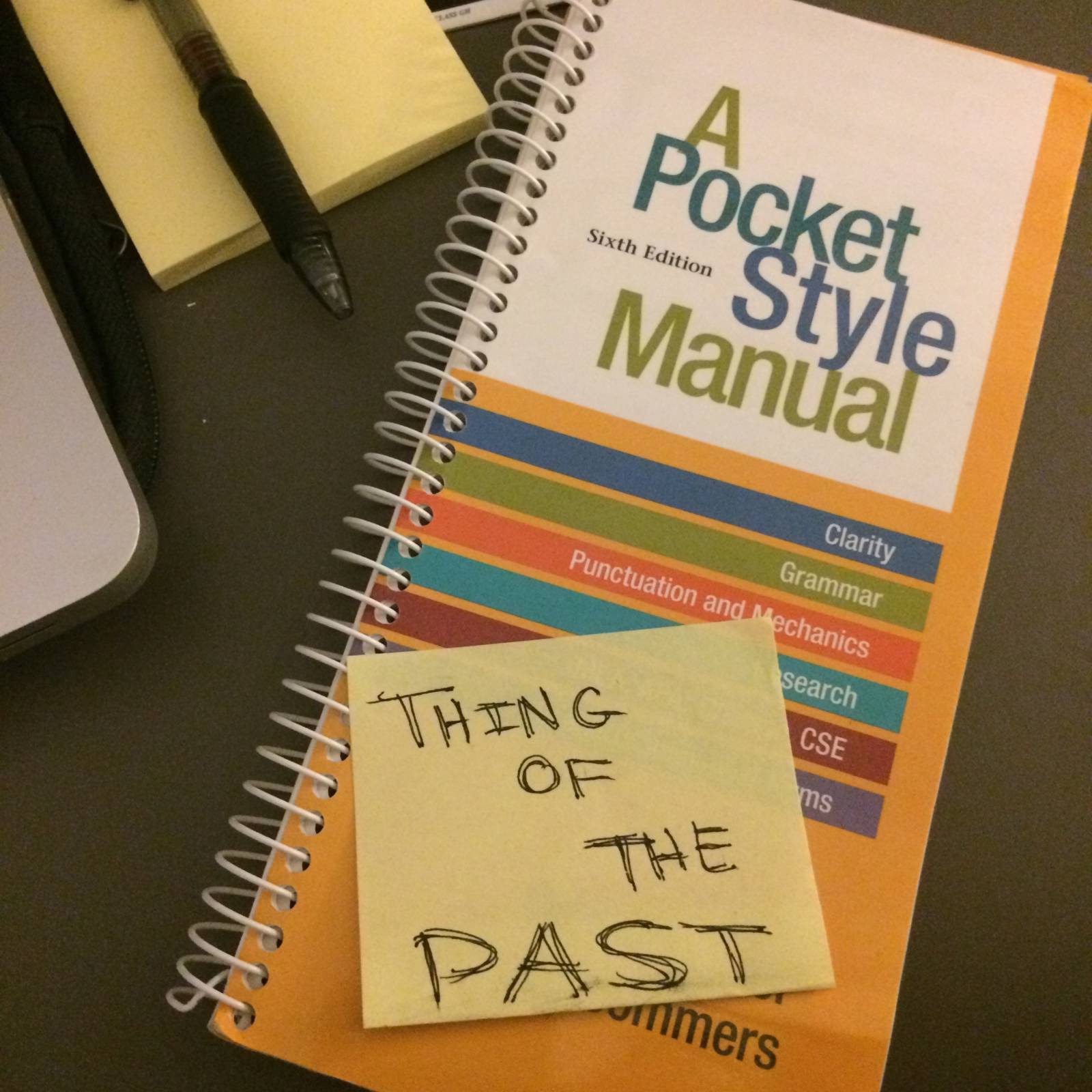
I’ve always struggled with citations: remembering where I should put commas, how to format journal names, how many authors I should list before writing et al (or was it et. al.?). Last year, my roommate caught me using my freshman year copy of A Pocket Style Manual as I complained my way through the tedious formatting of my junior paper citations.

Nothing personal on Hacker & Sommers (2012), but at some point efficiency has to beat out habit. And what kind of pocket does that book fit in, really?

“You don’t use Mendeley?” she asked me. “Oh, wow. Let me help you.”

After saving many tedious hours with the help of a citation manager, I’m passing my roommate’s wisdom on, by way of a 12-minute guide that can get you started using Mendeley. If your experience is anything like mine, you’ll never go back!

Mendeley and Zotero, the two most popular free citation management programs, store sources and create formatted in-text citations, footnotes, and bibliographies. I use Mendeley, which has the benefit of allowing you to highlight and annotate PDFs within its desktop app. But I also have friends who swear by Zotero, which is better with non-PDF sources. (If you’re torn, you can check out this helpful comparison.)

Both programs are extremely easy to use once you’ve started – it’s making the switch that takes some effort. But fear not! In (approximately) 12 minutes you can be on your way. (For Zotero instead, you can try the online guide here, or attend a free training session in Firestone.)

Categories
Independent Work Present & Publish Findings

Research Mythbusters: Do we work best under pressure?


“We can all remember a time we procrastinated and it really paid off. We hang onto that like gold.”

My ears perked up. I was driving home from the supermarket when Dr. Tim Pychyl, director of Carleton College’s Procrastination Research Group in Canada, appeared on NPR to discuss “Why We Procrastinate.” My thesis, never far from my thoughts, immediately came to mind. I listened closely as Pychyl explained procrastination: what it is, why we do it, and whether it gives us what we want.

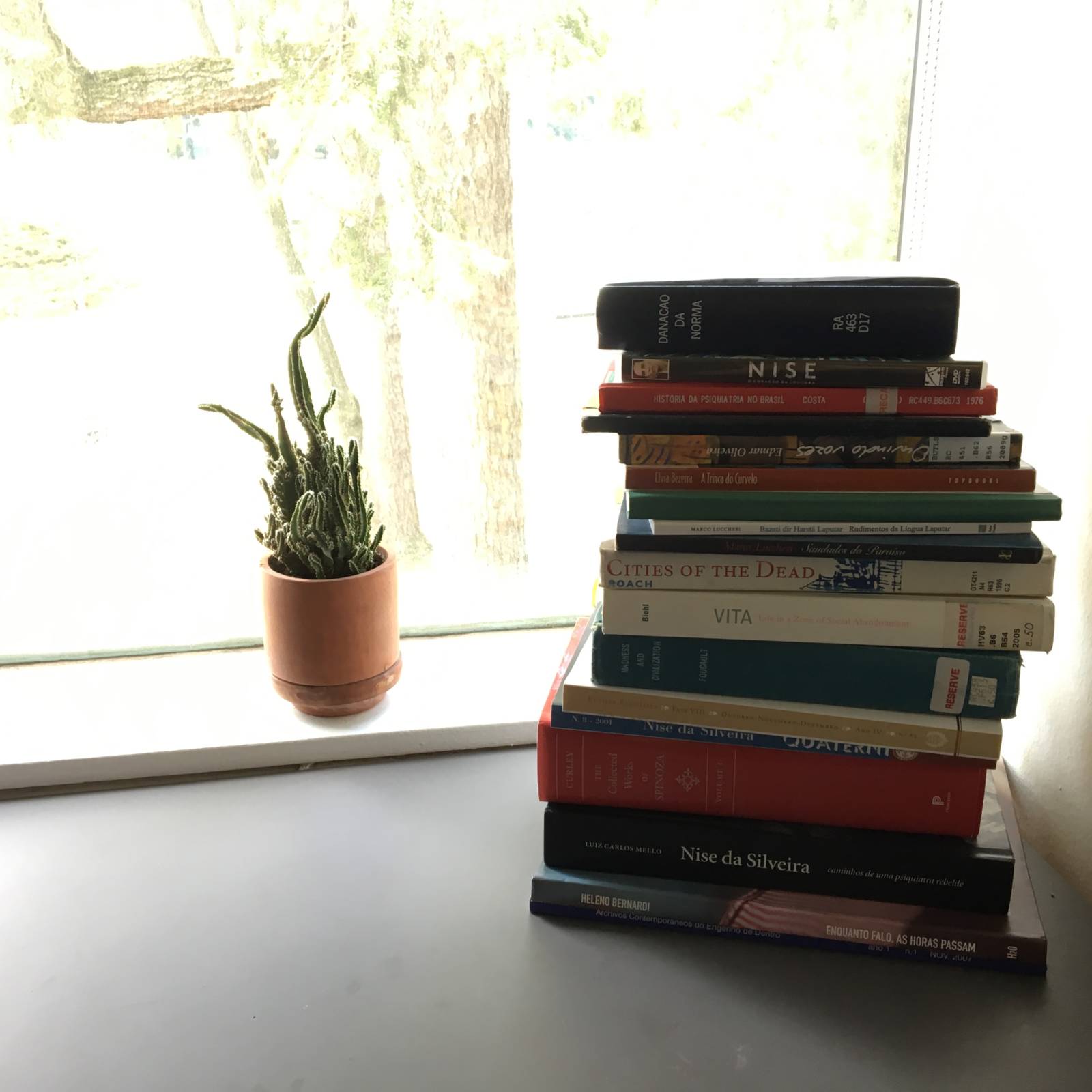
Update on my thesis stack: 18 books in my room (and another ten in my locker in Firestone)!

Pychyl highlights a common misconception: that we work best under pressure. I know graduates who wrote the bulk of their theses in the final two weeks, justified by the notion that productivity and creativity are most accessible when facing a tight time constraint. Stress, however, according to Pschyl, doesn’t produce the best work — it just forces us to complete tasks. He discusses an experiment where students were made to text in their feelings about work throughout the school week. Earlier on, students justified their procrastination with the common myth of last-minute creativity. However, as deadlines approached, nearly all wished they had started earlier.

So why is procrastination such a common practice? Pychyl says it has to do with rewards processing. If we do well on a task that we complete last minute, that behavior is reinforced. Success remains fresh in our mind, while stress fades in our memories. It masks the fact that we might have done even better — and slept a whole lot more — had we allowed ourselves more time.

Categories
Present & Publish Findings

Princeton Research Day: Spotlight on Costume Designer Julia Peiperl ’17

Princeton Research Day (PRD) is an annual celebration of the research and creative endeavors by Princeton undergraduates, graduate students and postdoctoral researchers. The campus-wide event serves as an opportunity for researchers to share their work with the community and includes research from the natural sciences, social sciences, engineering, the arts and humanities. In this post series, PCUR correspondents cover a range of topics relating to PRD and highlight the valuable lessons this event has to offer.

This year, PRD will be taking place on Thursday, May 11, 2017. You can learn more about participating in or attending Princeton Research Day by visiting the official PRD website here.

~~~~~~

The idea of research often conjures up images of scientists with microscopes and lab coats. But, for many researchers, the process looks very different. Take theater student Julia Peiperl ’17, for example. Rather than wearing the coat, she designs it.

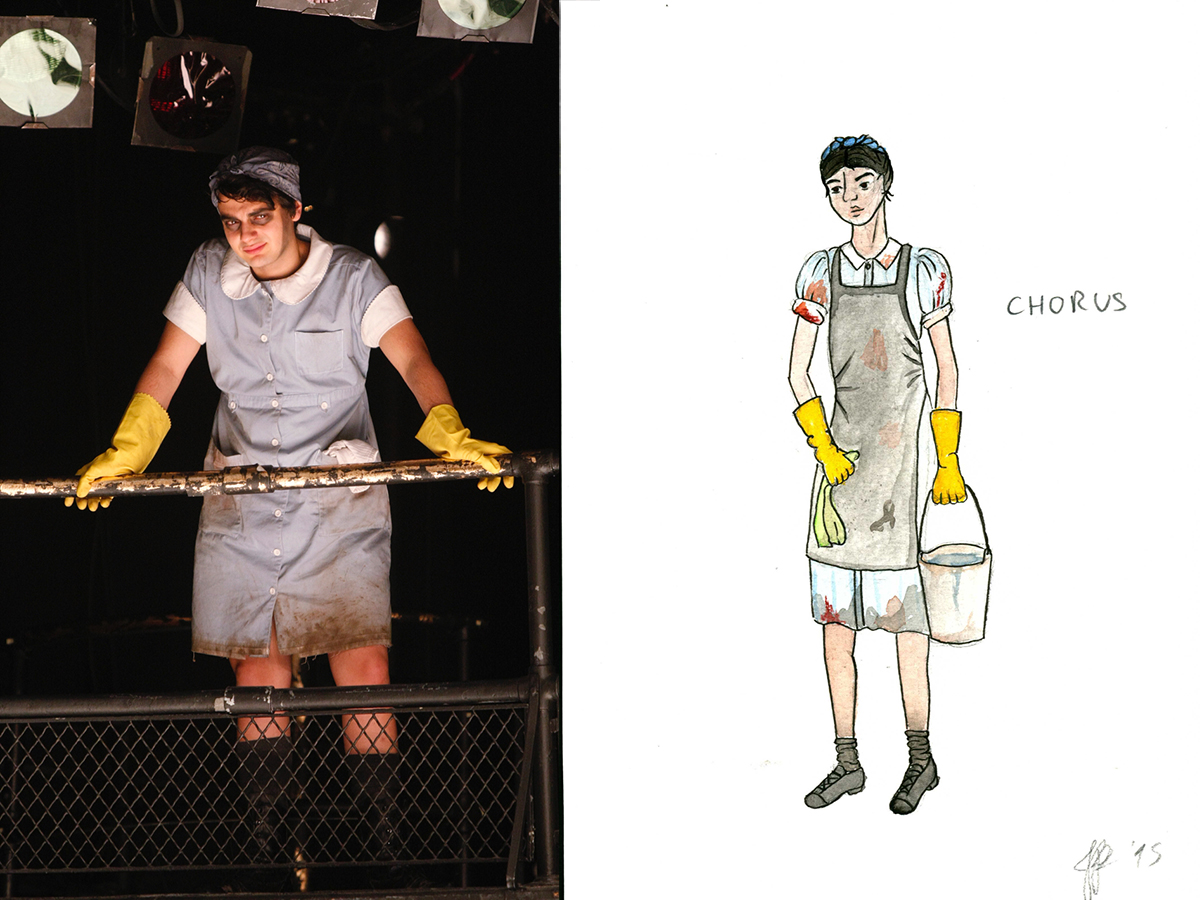
An example of the research that went into Julia’s designs for Elektra.

“Lots of people don’t realize how much research goes into theatrical design,” she told me as we sat down to chat about her experiences at Princeton Research Day last May. Presenting on her costume designs for the Lewis Center’s February 2016 production of Sophocles’ Elektra — which she had developed in a class on Advanced Theatrical Design — she hoped to showcase the detail and research that goes into such a creative endeavor. As an actor in the play, I was excited to learn more.

As a maid in the Greek Chorus, I was lucky enough to wear one of Julia’s costumes!


Clothing, after all, tells worlds about a person. A costume designer may spend weeks or months researching images that suggest a time period, an archetype, or even an emotion. For Elektra, a Greek tragedy, Julia found inspiration in the image of a 1950s “brush doll” provided to her by the lead actress: brush on the bottom, doll on the top. Much like a document might inspire a historian to turn to the archives, this image led Julia to do more pictorial research, eventually settling on a time period (the 1950s) and a color scheme (pastels). After designs were presented to the show’s director, they were given to the Lewis Center Costume Shop to make a reality. This was not the end. In the coming weeks, just as a researcher continues to make changes and discoveries throughout the writing process, Julia worked with each cast member to refine the pieces and make them comfortable to wear. For my character — a maid in the two-person Greek Chorus — the director wanted me to seem “otherworldly.” Hoping to convey this through aesthetics, Julia would bring in new costume and makeup ideas, even in the few days leading up to the show.

Categories
Independent Work Present & Publish Findings

It’s all about YOU(r thesis)

Your conscience usually tells you to put others’ preferences before your own. Consider your thesis an exception to the rule.

There are many circumstances in which you should put others’ preferences ahead of your own.

I’m going to go on record and say your senior thesis is not one of them.

As you know, your thesis is a major independent work project with your name on it. You pick the question and you conceptualize the answer. You are the star of the show. So, your thesis – or any research project with you at the helm – requires trust in your own intuition. The process is really all about you: what you know, who you know, and what you like.

Since understanding these aspects of yourself is important for your research (and your sanity), it’s worth thinking about each in detail:

Categories
Present & Publish Findings

Presenting at Princeton Research Day 2017!

Princeton Research Day (PRD) is an annual celebration of the research and creative endeavors by Princeton undergraduates, graduate students and postdoctoral researchers. The campus-wide event serves as an opportunity for researchers to share their work with the community and includes research from the natural sciences, social sciences, engineering, the arts and humanities. In this post series, PCUR correspondents cover a range of topics relating to PRD and highlight the valuable lessons this event has to offer.

This year, PRD will be taking place on Thursday, May 11, 2017. You can learn more about participating in or attending Princeton Research Day by visiting the official PRD website here.

~~~~~~

This May will mark the second Princeton Research Day (PRD), a campus-wide celebration of undergraduate, graduate, and postdoctoral research. PRD allows researchers and artists to hone their presentation skills and share their work with the campus community, with the chance of winning awards for excellent presentations.

In anticipation of this year’s application cycle, I asked three students who participated in the inaugural PRD last year about their experiences. I interviewed Allison Simi, a graduate student in CBE who won the Gold Research Talk Award last year, PCUR alumni Stacey Huang ’16 who presented an electrical engineering project, and Jared Lockwood ’19, the only freshman to present.

Kujegi Camara ’16 presents work at the first annual Princeton Research Day. 
Categories
Conduct Research Present & Publish Findings

Writing Out of Your Comfort Zone: How to Sound Like an Expert on an Unfamiliar Topic

How many times have you had to research a topic outside of your area of interest? Whether you are fulfilling a distribution requirement or testing out a new field, developing sound arguments in areas that are new to you can be intimidating. With that in mind, I’ve compiled some tips that always help me when my I’m especially unfamiliar with my research topic:

  1. Look for a rebuttal argument: Rebuttal articles usually clarify and outline the argument you’re researching in order to argue against it. This helps clarify some of your own ideas while also giving material to complicate your own arguments. I do this early in the research process, as it helps me solidify a direction with my paper when I have a lot of general ideas. I recently used this technique while writing a paper on Evangelical
    YouTube is good for more than procrastinating! Alternative sources like videos can explain complicated material.

    environmentalism. I struggled to develop an argument until I read a text explaining why this framework would not be economically feasible. I used this rebuttal in conjunction with articles on viable economic models of Evangelical environmentalism to help me jumpstart my argument. Without the rebuttal article, I would have had a less clear understanding of the topic and would have approached my paper with a more limited perspective.