You’ve finished a research project and now you’re on to the final step: presenting your work! It’s time to share the incredible work you’ve done with the general public, and one of the best ways to do so is to create a poster conveying the significance and conclusions of your research. This will be an essential skill during your time at Princeton whether for a course or as a part of your junior and senior independent work. If this is your first time creating a poster presentation, check this blog out!
Sara Akiba ‘26 with her poster presentation on “Foraminifera-bound δ13C as a Paleo CO2 Proxy: Methods Testing” for the Geosciences Junior Poster Presentations! If you want a poster as great as hers, continue reading below for some advice.
Research is always top of mind here. Princeton is a research university. Princeton faculty are engaged in research. Princeton students complete independent research to graduate. These are just some of the ways that we collectively understand what research is as Princeton. Yet, the images that can come to mind when thinking about “research” are quite limited. The idea of research conjures up images of bubbling chemicals and expensive technical equipment. That picture of grueling lab work is illustrative of some disciplines, but it’s largely immaterial to the work of many researchers. This can lead to a misunderstanding of what skills are necessary to succeed in research environments. Getting involved with research is daunting enough without confusion about the skill set required. This past summer, when I worked in public health research, I identified core skills that are critical, no matter what your research experience looks like.
Fireworks on the 4th of July, taken at the closest firework show to campus this past summer
As a Princeton student, the possibilities for summer are exciting but can also feel overwhelming. Between research opportunities, internships, volunteering, and even traveling, it’s easy to feel like everyone around you is planning something impressive. But the key to a fulfilling summer isn’t about packing in as much as possible—it’s about finding what fits your personal goals and needs, whether that’s academic growth or much-needed rest.
This could be you working passionately on your funding proposal using the tips in this guide! Photo credit: Glenn Carstens-Peters.
After having discovered a potential funding opportunity, you might be reading the requirements for the application and find that you need to write a “research proposal” as a part of the application. This might be your first time writing a funding proposal. Here are a few tips to assist you in writing your funding proposal!
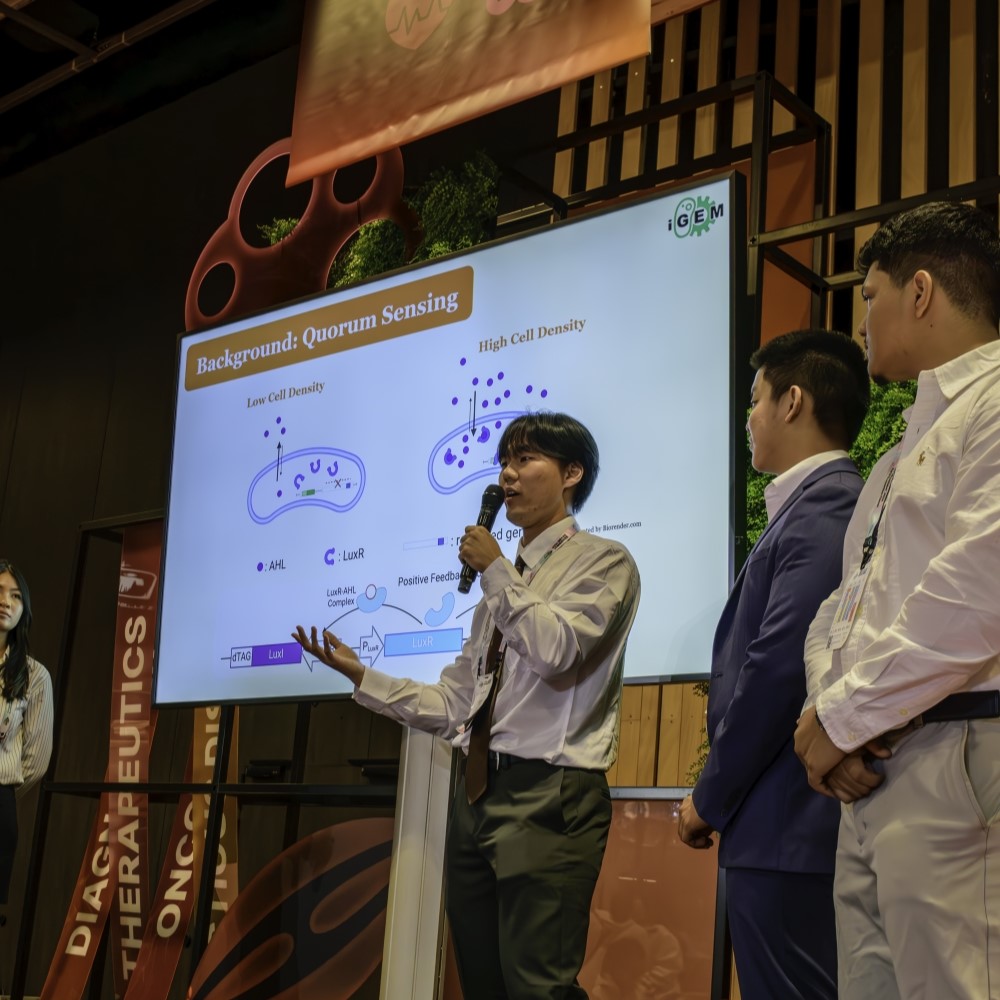
Dowon Seo ’27 presenting Research in Paris, France.Photo courtesy of Dowon Seo.
Princeton offers a wealth of opportunities to engage in undergraduate research. From smaller projects found in writing seminars to the ever-looming senior thesis, research is woven throughout our academic journeys. Still, outside of this mandatory exposure to research there are also unique opportunities to explore research as an undergraduate. One of the most interesting of these is the Princeton iGem team. I was able to sit down to speak with a member of this year’s team, Dowon Seo ‘27, after he returned from the annual iGem conference in Paris.
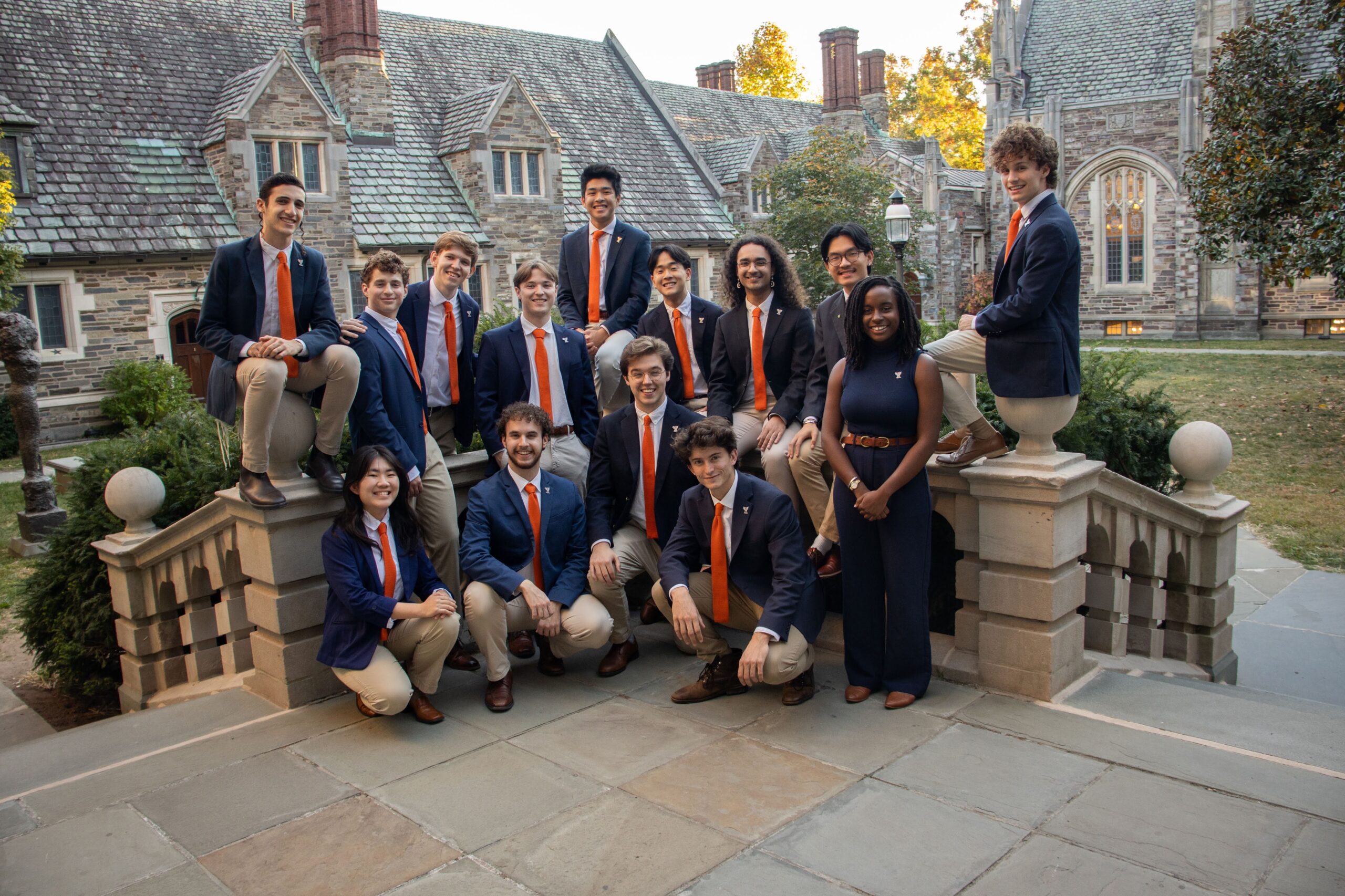
Photo of the Footnotes, Princeton’s fresh low-voice a cappella group founded in 1959
Imagine standing in front of a big audience, heart racing, ready to blend your voice with others and hit the notes of an intricate a cappella arrangement. Every beat, every breath, is crucial. Every time I stand on stage or under an arch with my a cappella group, the Princeton Footnotes, I think of how similar singing and music feels to what I do in the lab. You might be thinking that singing in an a cappella group and doing research are worlds apart. However, these two passions have formed a bond in ways that I never believed possible. In fact, the creativity, collaboration, and discipline I have channeled in being a part of the Footnotes have made me a better researcher—and vice versa.
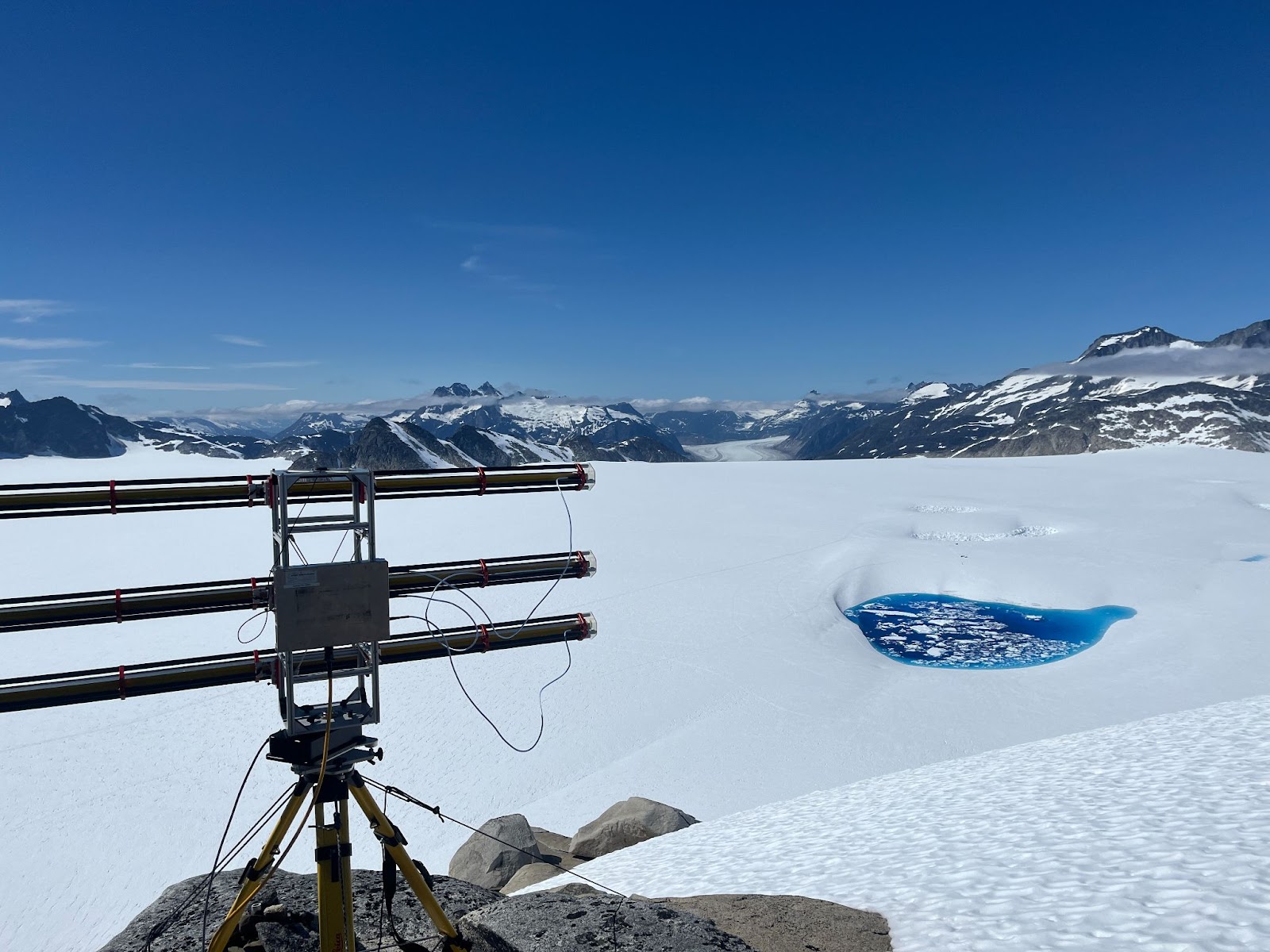
A Terrestrial Radar Interferometry (TRI) station overlooking Echo Glacier — a field site used by NASA as an analog environment to the moon Europa.Photo credit: Advik Eswaran.
Students across a variety of disciplines (or fields, if you will) have the opportunity to perform fieldwork at Princeton. In contrast to lab work—which involves performing experiments or analyses within a controlled on-campus environment—fieldwork takes place, well, in the field. Researchers venture out into the wide, wild world in pursuit of somehow collecting useful data from the vast webs of chaos that surround them. In my home department of the Geosciences, fieldwork is the norm: students go out to geological field camps or embark on oceanographic cruises to gather data about the raw Earth that surrounds us. However, fieldwork is truly possible in any discipline.
This past summer, I conducted my own fieldwork as part of the Juneau Icefield Research Program (JIRP). For two months, I lived and conducted glaciology research with about 40 other students, staff, and faculty on the glaciers of the Juneau Icefield—an interconnected system of over 140 glaciers spanning 1500 square miles across southern Alaska and northern Canada. It was one of the most incredible—and intellectually rewarding—experiences of my life. Here, I’ll share some stories from my time on the Icefield, contextualizing them within some broader lessons I learned about how field research operates.
A student working in a lab, potentially on a research project for their senior work that would greatly benefit from funding! Photo credit: Nick Donnoli.
You’ve brainstormed a great idea for your research project. You have the details of your topic all figured out, but you need some assistance with figuring out the logistics of the financial aspects that come with your great idea.
If that’s you, here’s a quick guide on one way of securing funding as a Princeton student!
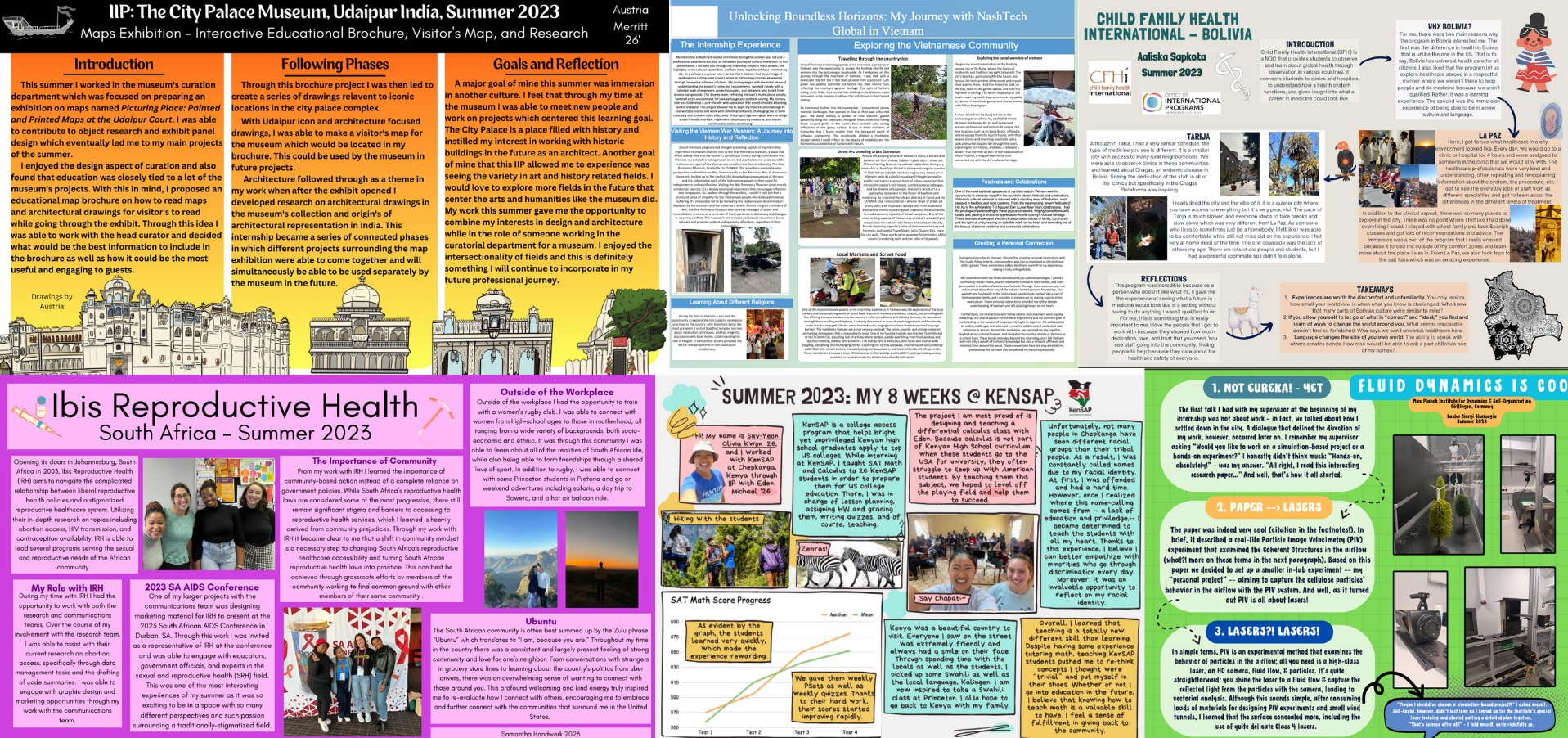
Spotlighting the experiences of the 2023 IIP Virtual Poster Winners
Several of the winning virtual posters from the 2023 IIP Program
Applications are currently open for the 2025 Summer International Internship Program (IIP)! This incredible program connects 1st, 2nd, and 3rd year students with an international institution for ~8 weeks to pursue a project that allows them to explore different careers, cultures, and workplace environments. Many of these projects empower students to take on various research endeavors, learn new research skills, and apply their research findings to make an impact on global communities. Here are several spotlights of Princeton students who shared their internship experiences and were winners of the 2023 IIP Virtual Posters. You can also view all of the poster reflections.
Reflection on my personal experience tackling a new research paradigm
Yubi Mamiya presenting her findings on “Clinical trial simulation of ensitrelvir for SARS-CoV-2” to the Fred Hutchinson Cancer Center Infectious Disease Sciences Department.
I’ve always believed in challenging myself to learn new methodologies and explore new fields in my research. Yet, there’s a fine balance between tackling a new challenge and feeling over your head. Reflecting on my past summer conducting a project in a completely new research paradigm, I wanted to take a moment to share my experience in the hopes of encouraging other students to be unafraid to undertake novel endeavors.
I had the life-changing opportunity to research the dose-response of the oral antiviral ensitrelvir for treating mild to moderate symptoms of SARS-CoV-2 with the Schiffer Lab starting this past June as an intern in the Fred Hutchinson Cancer Center Infectious Disease Sciences Internship Program. This project employed a very different application of my interests in healthcare and computer programming than I’d ever done before. Wide-eyed with amazement and curiosity, I delved into the fields of pharmacology, clinical trials, mathematical modeling, infectious diseases, and computational simulations. I remember learning about my project goals for the first time and thinking: “Wow, there are thousands of other students who would make a much better intern on this project”. This overwhelming imposter syndrome is something that I’ve often struggled with during my past research experiences when walking into new fields for the first time. But, thanks to the incredible mentorship of the Schiffer Lab and the tips that they shared with me, I overcame this fear and was able to grow into a more interdisciplinary and confident researcher this summer. I hope to pass on this same inspiration to other students here.