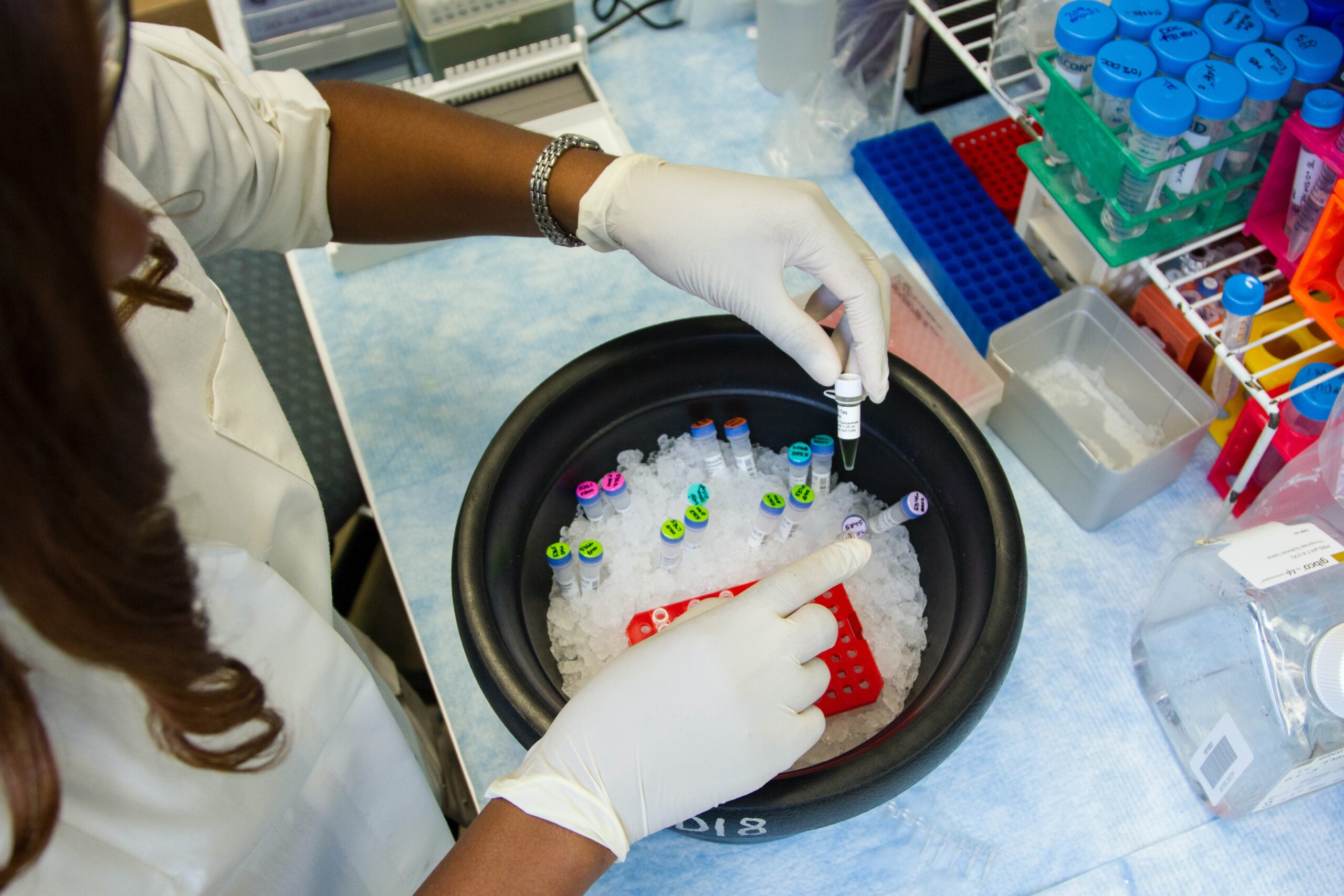
Having no knowledge about Neuroscience at the time, I did not expect my experience taking Advanced Placement Psychology to amount to more than an interesting elective. However, I discovered my passion for research through Dr. Volpicelli-Daley, who came to our class to give a presentation about her research on Parkinson’s Disease with mouse models. She invited us to apply for a position as a research assistant in her lab, and I ended up getting the job. I worked with the Volpicelli-Daley research team at the University of Alabama at Birmingham during the summer between my junior and senior years of high school and then again over my gap year before coming to Princeton.
Continue reading No Experience, No Problem! A Guide to Being the Newest in the LabSubmitted and Successful: 3 Final Steps Before Turning in Your First Paper

“Did I include a scholarly conversation? Where is the motive of my piece? Do I even have a thesis?!” The “Submit” button on Canvas can stir worrisome thoughts as it may seem permanent or stressful. The goal of this post is to walk you through a few final steps you can take to ensure that everything is in check and ready to go, so that you don’t feel like something is missing once turning in your assignment. These points are by no means the end all be all, but you may use them to help you feel more confident handing in your final product. Thus, without further ado, here are 3 final steps to follow before submitting your research paper.
Continue reading Submitted and Successful: 3 Final Steps Before Turning in Your First PaperI Survived getting rejected (and you can too)
When I finally got rejected from the international internship in Portugal I applied to, I was crushed. I had worked so hard on the application, done practice interviews, and had relevant work experience. I felt that surely I would at least get an interview, and probably be welcomed into the program with open arms. I had chatted with someone else who did the same program and loved it, and I imagined myself strolling the glorious halls of the cutting-edge research facility I would work in. But then the notification date came and passed. “Oh well,” I thought, “I applied to some High Meadows Environmental Institute (HMEI) internships in cool places, surely one of those would work out!” Nope. With the summer break growing ever nearer, it seemed I was officially out of luck. It felt like all of my friends had these grand plans in places around the globe I never even imagined traveling, but I was stuck.
Continue reading I Survived getting rejected (and you can too)From Law to Coding: Writing my SPIA Quantitative Junior Paper

There are many reasons why I chose to major in the Princeton School of Public and International Affairs (SPIA), ranging from the impact that we have through service and the focus on policy and law. One unique feature of SPIA is the ability for concentrators to take more qualitative courses such as SPI333: Law, Institutions, and Public Policy and quantitatively-based courses, such as POL346: Applied Quantitative Analysis. During the Fall of my junior year, I wrote a more qualitative junior paper on risk assessment tools in the pretrial adjudication system and analyzed whether or not they make more biased decisions than do humans (see here to read more about my experience). Headed into my junior spring, I was presented with the choice of writing another qualitative paper or joining a quantitative research lab. Thankfully, I felt confident in my coding abilities due to past courses I had taken which prepared me for this moment (see here to read about how I gained a quantitative background in R as a SPIA major). I chose the lab without hesitation and my spring semester independent research journey began.
Continue reading From Law to Coding: Writing my SPIA Quantitative Junior PaperFailure: Science’s Beauty and the Beast
In my junior year of high school, through my conversations with more and more teachers and scholars, I thought I had come to understand the importance of one inevitable piece of the scientific process (or really any academic discipline):
Failure.
Continue reading Failure: Science’s Beauty and the BeastExperiences in the ReMatch+ Program: An Interview with Kasey Shashaty ’23 – Part 1
Kasey Shashaty is a junior majoring in Electrical and Computer Engineering. She began working at the PULSe (Princeton University Laser Sensing) Lab in the summer of 2021 and has been working with them since. In this interview, Kasey and I discuss how she got involved in this lab through the ReMatch+ program, her experiences working in the lab both virtually and in-person, and where she is taking her experiences in the future.
Continue reading Experiences in the ReMatch+ Program: An Interview with Kasey Shashaty ’23 – Part 1A Week in My Life Doing Materials Science Research
This semester, I am doing junior independent work in the Arnold lab group at Princeton, which is based in the MAE department but also focuses on materials science, which is what I am interested in. My project investigates creating graphene aerogels from protein precursors, which basically means that I get to select different proteins of interest, freeze-dry them, pyrolyze them, and then see if they create graphene by examining them under a scanning electron microscope (SEM). These graphene aerogels are interesting materials because of their high porosity and conductivity, making them promising for applications to energy storage, which is why we are interested in researching them.
I thought it might be interesting to highlight a week in my life (well, actually two weeks) to give some insight on what lab-based independent work can look like during the school year. I want to note that this is only my experience as a CBE major, and independent work can look very different for other majors. If you’re an underclassman interested in doing junior independent work or just curious about what that could entail, I hope that this post can provide some insight.

Lessons from Junior Independent Work in MAE
In the fall of 2021, I worked in the Computational Turbulent Reacting Flow Laboratory under the guidance of Professor Michael Mueller. In the Mechanical and Aerospace Engineering (MAE) department, junior independent research is optional. I enrolled in MAE339: Junior Independent Work in the fall and am currently continuing my research this spring semester. Research was an integral part of my high school experience, and I was excited to start working on independent research in my junior year of college in a different setting. Now, I want to share a few of the lessons I learned from this past semester with you:
Get Your Independent Work Done Without Stress
As a B.S.E junior doing independent work for the first time, I am already anticipating the stressful cram at the end of the semester that comes with senior thesis and junior independent work deadlines. As busy Princeton students, we often don’t think that we have enough time in the week to work consistently on our independent work, and thus, a lot of it inevitably gets pushed off to the weeks (and days) before the deadline. But it doesn’t have to be this way. Putting together a comprehensive plan to organize and budget your time at the beginning of the semester can save so much hassle down the road. Therefore, I think it will be helpful to walk through how to create a plan for independent work over the course of the semester.

What are First-Years Researching? An Interview With My Legendary Zees
On campus, I am a Residential College Adviser in Whitman College. It is by far the most meaningful part of my Princeton experience and I am thankful every day to have such amazing advisees (zees). In the fall, I decided to interview some of my zees on the incredible research that they have done on campus and how they became involved in this research. My freshmen show that research does not always mean working in a lab or on a senior thesis like many often assume. There are so many different ways to become involved with research on campus, whether it’s through writing a paper or joining an academic club. My hope is that seeing the research that my zees did last semester will inspire you to do your own and also show you what research on campus can look like for first years. So, without further ado, here is the research conducted by the most legendary zees of all time:
Continue reading What are First-Years Researching? An Interview With My Legendary Zees