Categories
Conduct Research Independent Work Present & Publish Findings Resources

Securing Funding to Attend a Conference

In a recent post, I wrote about submitting an extended version of my R3 to the Gender, Work, and Organization Conference in the United Kingdom. Although I’m very excited to attend the conference, a new challenge has recently presented itself to me: securing funding.

In this post, I’ll detail some of my experiences finding funding for my conference. Considering that many of you have recently applied for Princeton Research Day and may be considering submitting your manuscripts for publication in a journal or for a conference, I hope this post is helpful!

Categories
Present & Publish Findings

5 Tips on Writing an English Paper

As a prospective English major, I’ve written a handful of English papers and have tried to learn what makes some stronger than the others. While the best way to write an English paper may differ based on whether you are writing about a poem, novel, play, or essay, and whether you plan to take a purely textual, historical, theoretical, or comparative approach, some fundamentals are applicable to many English assignments. Here are just some tips you can keep in mind while crafting your next paper: 

Categories
Independent Work Present & Publish Findings

A Few Tips for Successful Writing

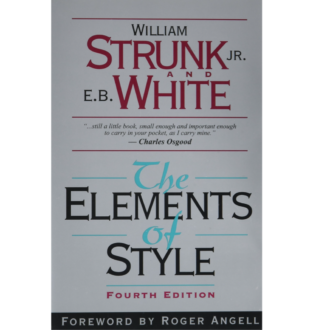
Image courtesy of Amazon.com
The cover of Strunk and White’s The Elements of Style. In this post, I suggest that consulting a style guide such as this can be a useful step toward improving your writing.

As regular readers of this blog will know, several other PCURs and I are in the throes of writing our theses. Personally, I’ve been thinking a lot about writing: what makes it effective, what strategies are successful, and what I can do to improve my own. I am by no means an expert writer, but in this post I will share a few tactics that have proven useful as I progress towards a submission-ready senior thesis. While this reflection stems from my own thesis experiences, I hope that writers of all class years and departments might find in it some principles of general applicability.

Categories
Present & Publish Findings

Tips on Submitting Your Research for Publication: Part I

So you’ve finally finished grinding out those long Dean’s Date papers (yay!). While you may not want to look at them ever again, it’s nice to make good use of these essays even after the semester is over, especially considering all the time and effort you probably put into researching, drafting, and revising them. 

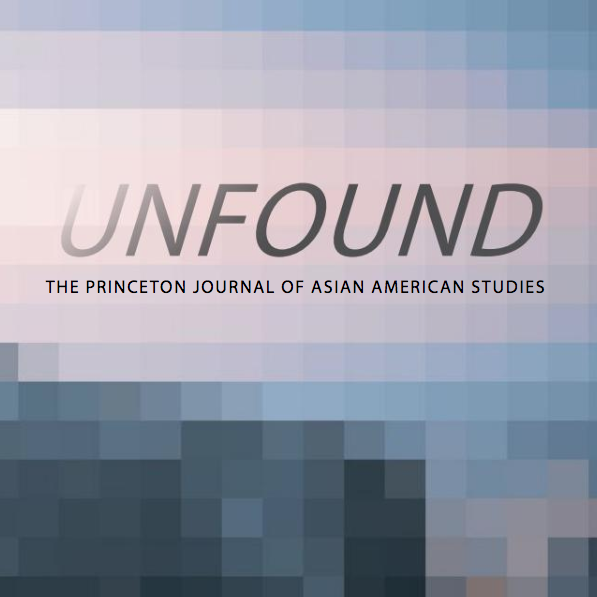
Last year’s cover for Unfound, Princeton’s Journal of Asian American Studies 

One way to do this is to try to get your papers published in an academic research journal, including those affiliated with Princeton or independent journals. As a Co-Editor-in-Chief for Unfound, Princeton’s Journal of Asian American Studies, I review and edit submissions for our yearly issues. Through this experience, I’ve learned a lot about the selection process in academic publications. While the process may differ according to each journal, there are some general rules of thumb that are important to keep in mind while preparing an academic paper for submission. 

Here are some things to consider when submitting your research for publication: 

Categories
Independent Work Present & Publish Findings

Research: Have Fun With It!

The second time I met with my independent Junior Paper adviser this semester, I was nervous. I had decided following our first meeting that I wanted this JP to be the continuation of research I had, at that point, started nearly two years before (that project on the 1848 revolutions that keeps popping up in my posts), and I was apprehensive to present ideas that I felt might be stale; at the time, I struggled to think of ways to expand the project to something more mature than what I had begun as a first year student. Plus, I was feeling reluctant to be finishing up a project I had been working on for most of my college career.

My adviser and I discussed some of these concerns of mine, and right before I left, he smiled and said, “Alec, have fun with it.” He repeated this phrase at many of our weekly meetings, especially if I came feeling overwhelmed by often self-imposed worries. It was usually paired with a reassuring statement: “You know more than you think you know.” I knew more than I think I knew, and I was going to have fun. 

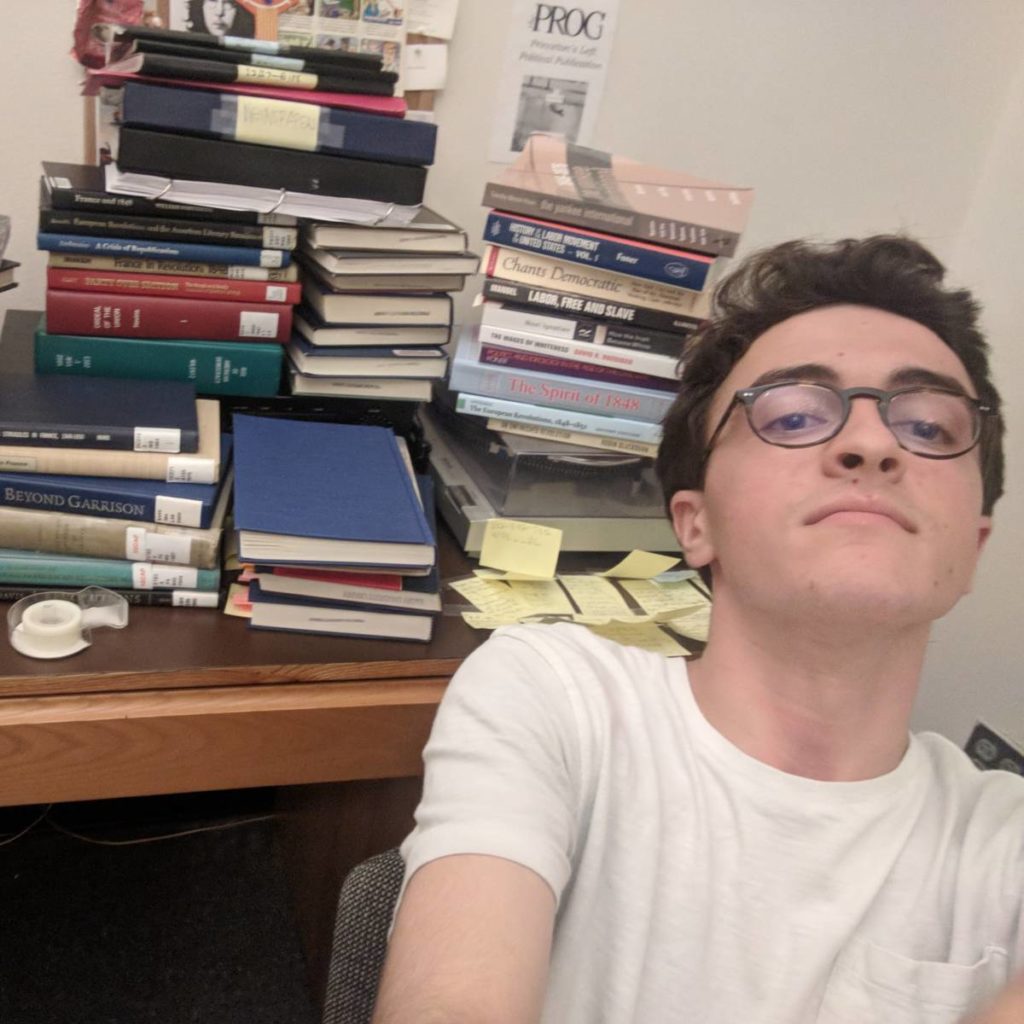
Me “having fun” with my research, back in the summer of 2018!
Categories
Conduct Research Present & Publish Findings

Tips on Submitting Your Research for Publication: Part II

So you’ve just finished your JP, a dean’s date assignment, or some other research project. Considering how fast things seem to move here, you might have already forgotten about it – that’s how I felt when I turned in my R3 my first year.

However, I ended up taking another look at my R3 to prepare my presentation last spring for the Mary W. George Research Conference – the biannual writing conference – (tips on doing that here). During that process, I recognized some significant changes and expansions I could make on my R3, but I didn’t think much of it at the time.

After presenting my R3, I was encouraged by my writing seminar professor and some of my peers to expand my work and submit the manuscript for a conference or for publication. After submitting to a conference and to multiple research journals, here are some of my takeaways from the publication process:

Presenting my R3 at the Mary W. George Research conference helped me polish my paper.
Categories
Present & Publish Findings

Research Resources: Unsung Heroes, An Interview with PCUR Chief Correspondent Ellie Breitfeld ’20

For this year’s Winter Seasonal Series, entitled Research Resources: Unsung Heroes, each correspondent has selected a faculty member, staff member, or peer working for a research resource on campus to interview. We hope that these interviews will provide insight into the variety of resources available on campus and supply the unique perspective of the people behind these resources. Here, Andrea shares her interview

~~~

Categories
Get Started with Research Present & Publish Findings

Writing Lessons from my Creative Writing Workshop

This semester, I took my first fiction workshop in Princeton’s Creative Writing Program. I had taken two poetry courses in previous semesters and wanted to try something new. (Pro-tip: if you haven’t yet taken a CWR course, definitely consider applying for one before graduating).

Creative writing is, in many ways, a break from academic writing. It does not center on data, analysis, or argumentation. Instead, workshops focus on developing compelling images, characters, stories. Creative writing also has access to a wider variety of forms than academic writing, which tends to adhere to a narrow set of relatively conservative styles.

My Creative Writing professor, Yiyun Li, leading a Fiction workshop.

However, some of my workshop instructor’s writing advice has translated well to my academic writing. After all, writing is writing, and many of the same challenges confront both creative and academic writers. Below I’ve collected five of her best pieces of writing advice:

Categories
Present & Publish Findings

Research Resources: Unsung Heroes, An Interview with Writing Center Fellow Johanne Kjaersgaard ‘22

For this year’s Winter Seasonal Series, entitled Research Resources: Unsung Heroes, each correspondent has selected a faculty member, staff member, or peer working for a research resource on campus to interview. We hope that these interviews will provide insight into the variety of resources available on campus and supply the unique perspective of the people behind these resources. Here, Soo shares her interview.

~~~

Johanne, a sophomore from Aarhus, Denmark 

As part of the Winter Seasonal Series, I interviewed Johanne Kjaersgaard ’22, an international student from Aarhus, Denmark. A prospective Politics major, she currently works as a Fellow at the Writing Center, one of the most widely-used academic support services on campus. Writing Center Fellows take on a variety of tasks, from guiding students in formulating and structuring papers to also offering advice to juniors and seniors in developing their senior theses and navigating their independent research projects. 

Categories
Independent Work Present & Publish Findings

The Search for the Perfect Writing Space

It can be difficult to find the perfect place to write. When I leave my afternoon classes, I often find myself standing on the sidewalk, unsure of where to go next. There are so many study spaces on this campus, but some days nothing feels right. (For some ideas, check out Nanako’s post about finding the perfect space for you)

The space where I work matters. And frustratingly, what I need in a study space is in constant flux, depending both on my mood and the type of work I need to get done: energetic spaces for sleepy mornings, quiet spaces for more focused work, and so on. Over my few years at Princeton, I’ve learned how different study spaces affect me: campus cafes are energizing, but distracting; Firestone carrels are productive, but isolating; and my dorm room puts me to sleep within fifteen minutes—no matter the time of day.

With larger projects like a thesis or final paper, though, it can be even harder to find the right space to write. In my experience, larger projects require more focus and endurance, making it hard to be productive in a loud, busy space. On the other hand, the prospect of extended hours in library isolation is almost always unappealing to me.