Categories
Present & Publish Findings

How to Prepare for an In-Class Zoom Presentation

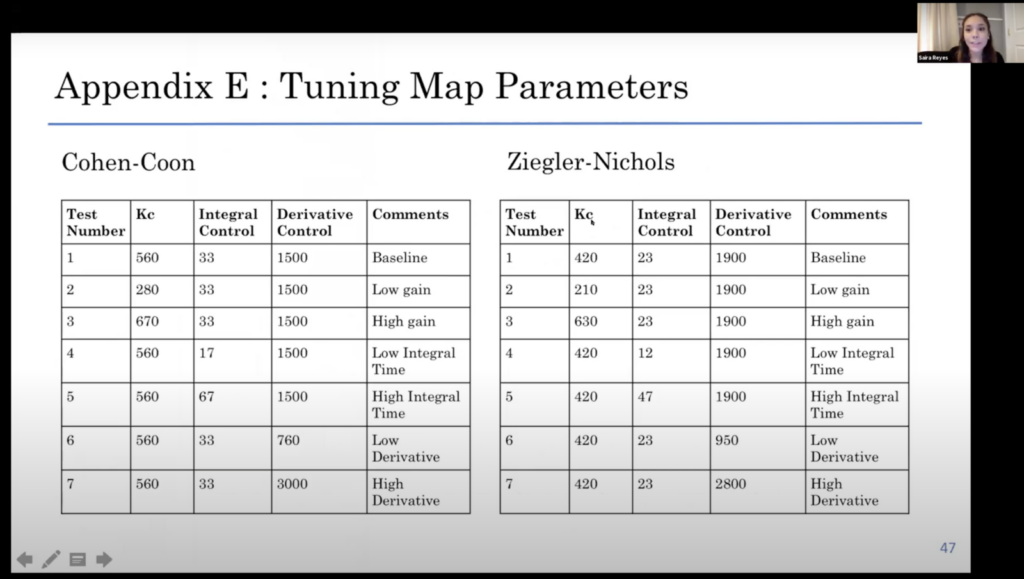
Presenting on Zoom can be difficult, as you must now learn how to keep a virtual audience engaged. Last spring semester, after returning home due to COVID-19, I had to quickly learn how to make this transition, as I was enrolled in CBE346: Chemical Engineering Laboratory (core lab). This course was laboratory based, and it consisted of 4 different lab rotations, after which all students had to complete a written report and a presentation. Due to the pandemic, 3 of those were completed over Zoom. 

In this post, I will give tips on how to prepare for a Zoom presentation, using the insights I gained from my core lab presentations.

Screenshot of the recorded video of my core lab presentation.
Categories
Conduct Research Get Started with Research Present & Publish Findings

A Freshman’s Guide to Writing a Research Policy Memo

The freshman seminars are one of the unique experiences at Princeton. While they may seem intimidating at first, they made me think of the process of research in my very first year in college. Not everyone might become a full-time researcher – I, for example, want to become a policy analyst – but many of our jobs will involve research, and the structure of the freshman seminar is very conducive to the research process. In the Economics of Immigration seminar that I took with Professor Leah Boustan during Fall 2019, we discussed aspects of the economic effects of immigration both on the receiving country and on the migrants themselves. Our final deliverable was a research policy memo – a document that describes a policy intervention by the government, by first arguing the need for it, then describing its advantages, and finally proposing a way by which it might be implemented. In order to write an effective memo, I had to research an issue that necessitated looking at it from diverse points of view. The process made me appreciate several principles of writing a policy memo.

Categories
Present & Publish Findings

4 Tips to Organize Your Lost Folders and Misplaced Files

While I was working to finalize my research this summer, I realized something: I couldn’t find one of my sources central to my argument. Pouring through my various folders on my computer, I could not find this source. Between Excel sheets with undescriptive names and misplaced images, it wasn’t just that my source was missing; I lacked an entirely well-formulated, well-maintained organizational structure to keep track of my work.

If anything, organization should be easier in the digital space. Besides bytes, we’re not necessarily concerned with finding the space to store our papers, books, and other materials; in fact, we can create folders upon folders, meticulously grouping related works together to keep track of them.

But this is the trap. While I’ll see the mess before me on my desk, I don’t necessarily see that all of my folders are disorganized until I need to find something. I don’t see that I stored images for my essay on my Google Drive rather than in that class’s folder. In my experience, computer storage may facilitate organization, but it also hides potential messes from you until you need to find that one file for your assignment or research. And even if you’re the type of person where all of your work is spilled out onto your home screen, sifting through the documents at times is surely a nightmare.

So, I wanted to outline some of the steps that I’ve taken this school year to make sure that everything remains organized in this weird digital setting:

Categories
Conduct Research Present & Publish Findings

Princeton Problem Sets at Home: A Guide to Success on PSETs

Although we can’t go to McGraw in-person this semester, we can still collaborate with our peers at McGraw online.

There comes a time for many Princeton students when they are assigned their first PSET, or problem set. “How will I learn all of this in a week? What are the teachers looking for in the answers? How will I collaborate with others when I’m not even on campus?” These are thoughts that many Princeton students have when any PSET is distributed, especially with the semester being online. Believe me, I have been there too, and I would love to share some PSET tips and tricks to help you do your best!

Categories
Conduct Research Independent Work Present & Publish Findings

Time Management Tips for Navigating Zoom University

Oh, it’s unfortunate that your classes are all online now… But all the extra free time must be nice, right?

Actually, no. Somehow, I have ended up in a place where I’m busier than I was back when school was offline. And that’s without Powerlifting Team practices, the thirty-minute dinners that consistently turned into three-hour-long social gatherings, and all of the hours I spent working on-campus jobs.

I’ve realized it has to do with my relationship with time. In the past, I didn’t need to be very intentional with my free time: it always just happened. Nowadays I think back fondly to my naïve visits to the Rocky Common Room for pre-bedtime cereal-breaks, only to end up practicing handstands on the rug by the piano with my friends until 2 am. 

Without spontaneous social interaction, I ended up filling up all of my time with work, clubs, projects, and research. Unfortunately for first-year students, these challenges are only compounded by the transition to college academics in general. Whether or not you feel like you’re busier this semester, I believe we can all benefit from evaluating how we make time for ourselves: below are five tips I’ve implemented to help facilitate a productive and sustainable semester this fall.

As an extension of last Spring, Princeton classes are once again remote for the Fall of 2020-2021.
Categories
Present & Publish Findings

How to Stay Productive at Home During Finals

While I’ve never taken online classes before at Princeton, this isn’t the first time where I’ve had to complete my semester at home. Last spring, I went home right after classes ended since all my final assignments were to be submitted online. Despite that working at home should have given me more time with fewer distractions, more often than not I found it incredibly difficult to focus on finishing the semester. With social-distance learning, I’ve been reflecting more on the problems I encountered last spring, and thought I’d share a few tips to help you stay focused during finals period, whether you’re working on those papers or studying for final exams!

Categories
Independent Work Present & Publish Findings

Write On, Write Well: Lessons From a Semester Abroad

This spring semester, I am enrolled as a visiting student at Hertford College, University of Oxford. While now I am back home on Long Island taking my Oxford courses online (just as Princeton students are Zooming into their own lectures and precepts in these strange times of COVID-19), I was able to spend about two months in Oxford. It was a truly wonderful experience; the city is beautiful, the people kind, and the academics engaging and rigorous.

The course of study at Oxford is quite different from that at Princeton. There, students do attend lectures, and sometimes seminars, but most of their academic work is conducted in preparation for tutorials. Tutorials meet most weeks each term, and consist of an hour-long meeting with a professor, either one-on-one or with one or two other students. For each tutorial, students must write an essay of around 2,000-2,500 words to discuss with their professors. Professors give the prompt in advance, and students are expected to craft a response based upon weekly reading lists. These lists are usually quite long, and students are by no means meant to read each item (this would be almost impossible; my reading lists for history courses usually had around ten prescribed primary sources, and thirty or so books and articles suggested for further reading). Rather, students must explore the different sources, be selective, and find works which are relevant to the argument they wish to make. Even though this curriculum differs notably from Princeton’s, it still taught me valuable lessons about my writing process that will help me at Princeton and beyond. Working on tutorial papers, in sum, has made me approach my writing with better time management, more confidence, and more appreciation for the craft of the essay.

Categories
Independent Work Present & Publish Findings

How to Pull Yourself Out of a Thesis-Writing Slump

We’ve all been there. We all know what it feels like to take a break⁠—whether it’s on purpose or by accident⁠—from a lengthy paper; it can be overwhelming when you realize that you messed up your writing process timeline. Personally, I recently took a looooong break (think: three weeks, give or take) from writing my thesis. Part of it was by accident; due to COVID-19, all Princeton students were told to move out and head back home for the remainder of the semester. The stress of packing, saying goodbye to my friends and the campus, and moving out caused my thesis to take a backseat in terms of priorities. Once I arrived home, I purposefully decided to extend my break from writing my thesis in order to unpack, get settled, and get used to online classes. One day lead to the next, and suddenly, I had spent three weeks away from my thesis.

It’s hard to hold yourself accountable about your thesis during breaks.
Categories
Conduct Research Independent Work Present & Publish Findings

Research Resources: Unsung Heroes, An Interview with Gender and Sexuality Studies Librarian Sara Howard

For this year’s Winter Seasonal Series, entitled Research Resources: Unsung Heroes, each correspondent has selected a faculty member, staff member, or peer working for a research resource on campus to interview. We hope that these interviews will provide insight into the variety of resources available on campus and supply the unique perspective of the people behind these resources. Here, Kamron shares his interview.

A few weeks ago, I interviewed Sara Howard, the Gender and Sexuality Studies and Student Engagement librarian. I’ve found that I often don’t use all the available research resources to my benefit. Given that we have all recently transitioned on an online learning community, consider meeting with your librarian over Zoom!

Sara Howard is a librarian for the Princeton Program in Gender and Sexuality Studies
Categories
Present & Publish Findings

Tips on Writing a Philosophy Paper for Non-Philosophy Majors

Writing a philosophy paper can be intimidating for non-philosophy majors.

Last spring, I took PHI 203: Introduction to Metaphysics and Epistemology. I had never taken a philosophy class before in my life, and in the beginning it was difficult to wrap my head around the theories brought up in the readings and precept, let alone execute a coherent argument in a paper. Throughout the course, I learned a lot not just about the theories and arguments in philosophy, but about the distinct style of philosophical writing itself. In drafting the papers, I realized just how different writing a philosophy paper is compared to writing papers in other humanities and social science disciplines. This post contains some tips on how to approach a philosophy paper for those unfamiliar with the field: