Categories
Conduct Research Independent Work Research Life

Paying it Forward: A Faculty Perspective on Mentorship in Research

Headshot of David Walker
David Walker is a Professor of Computer Science at Princeton University whose research focuses on programming languages, formal methods, and computer systems. Known for his commitment to advancing both theoretical and practical understanding in the field, Professor Walker also plays a central role in mentoring students.

As someone who completed my junior independent work under Professor Walker’s guidance last semester, I’ve had the chance to witness his thoughtful mentorship firsthand. In a research culture where both the technical challenge and emotional uncertainty can feel overwhelming, I’ve come to appreciate how crucial the human side of research is—how we learn from and grow with those who guide us. With that in mind, I sat down with Professor Walker to explore how he thinks about mentorship: what it looks like, why it matters, and how he helps students, like me, find their footing in the world of research.

Categories
Research Life

The Importance of Humanities and Social Science Classes: In which a STEM major reflects

A lot of my previous posts are mostly concentrated on research and science, and that’s because those are the things I love. However, taking a psychology class this semester that had a more social sciences approach made me think about my story in STEM. In particular, a part of the lecture that stuck with me was the “stereotype threat”. The stereotype threat is the fear of proving a stereotype right. I’m not good at math, and I’ve always thought that would just be the way life goes, but last year, I took MAT103, and I did quite well (it’s one of the easier math classes of course, but the bar is low for me). In fact, it was my easiest class. This really changed my perspective on my math skills. When I reflected on my experience with math, I realized that this mindset I have about it was cultivated by my gender.

Categories
Research Life

Office hours are weird. Here’s how to make the most of them.

Sign showing office hours
Office hours signage. Photo Credit: Weingarten Center, University of Pennsylvania

If you’re like me, you’ve been here. Standing awkwardly outside your professor’s door, notes in hand, heart racing slightly as you rehearse your question for the tenth time.  When I first got to Princeton, my professors felt larger than life – giants in their field, accomplished researchers and authors. As an undergraduate, I felt like an ant in comparison. I felt afraid to go to their office hours, because their time felt so much more valuable than mine.

Categories
Conduct Research Research Life

Research is Better with the Right Mentor—How I Found Mine

Glass brain plots
Glass brain plots from the data analysis of the project I’m working on with my mentor, who spends a couple hours every week going through the fundamentals of coding in neuroscience with me. When I started working with him, I didn’t even know I could make plots like these. Our weekly meetings paid off.

When I first came to Princeton, already interested in neuroscience research, I kept hearing about all the incredible opportunities available to undergraduates. Professors conducting groundbreaking neuroscience studies, cutting-edge labs filled with brilliant minds—it all sounded amazing. But as a first-year student, I had no idea how to actually get involved. Everyone seemed to know what they were doing, while I was stuck wondering: Where do I even start? Will a professor really take time to mentor someone like me? If I cold-email them, will they even read it?

Categories
Research Life

Staying Connected

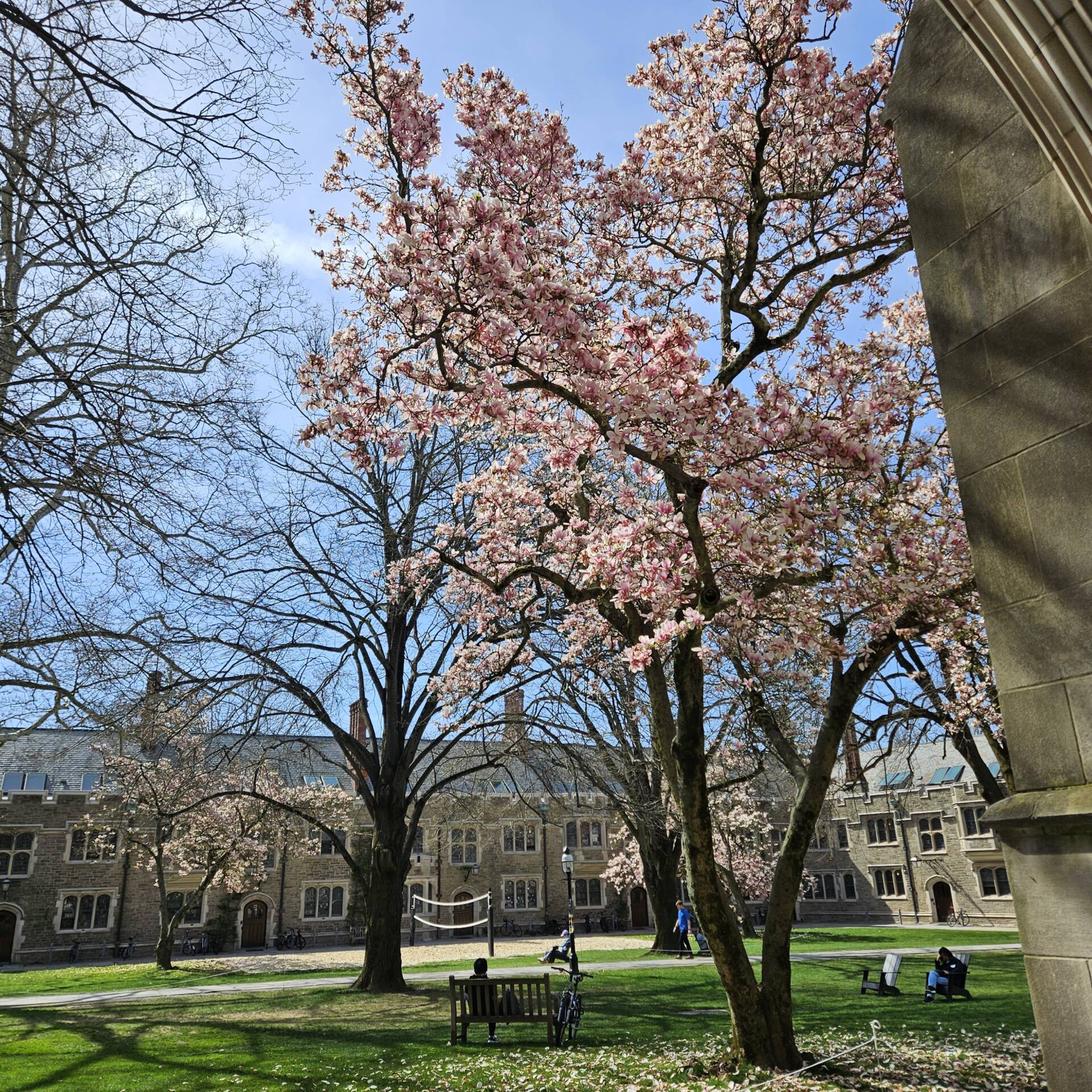
A blossoming cherry blossom tree towers over Joline courtyard in Spring as people work in the chairs below.
Joline Courtyard during Spring

Each spring semester, it feels like many of us find ourselves scrambling to find unique, competitive, and exciting research experiences. In these intense weeks full of interviews, rejections, and offers, it is also important to think ahead about what comes next. Although staying connected with your research team after a program or internship ends can present a unique set of challenges, it can just as easily open up a number of new opportunities. This was a dynamic I had to adjust to at the end of my research internship last summer. Through that personal experience, I have found that consistent and clear communication are key after any research experience.

Categories
Independent Work Research Life

Insights and Interests: An Interview with Cevina Hwang

Hailing from Saipan and South Korea, Cevina Hwang is a junior in the Ecology & Evolutionary Biology department. With a longstanding interest in the field of dentistry, she chose to expand upon this passion through her junior work, where she will be exploring the evolution of the human jaw and teeth.

Join me below to read about Cevina’s journey in the junior work process. 

Headshot of Cevina Hwang
Cevina Hwang, Princeton University ’26
Categories
Conduct Research Research Life

The Point of the Lab Component: It’s not Just Three Hours of Misery for the Sake of it 

The image depicts an image of one of the more intensive lab components: organic chemistry. It's a depiction of my own experiment halfway through the procedure.
Organic Chemistry Lab Procedure in Frick, taken by Haya Elamir

For STEM majors, lab components of classes can be cumbersome. They can add stress to the classroom experience–not to mention the long hours. Unlike research in a lab as part of a thesis or independent work, these labs may not allow for self-direction, and can feel very methodical. Sure, they apply what we are taught in class, but for me personally, the rates at which lab and lecture move can be quite different, and I do not fee the benefits of the lab experience until later on in the semester when it finally clicks for me.

What’s the point of lab work then?

Categories
Research Life

Navigating Uncertainty

Photo of Nassau Hall during a winter snowstorm
Nassau Hall in the midst of a snowstorm

The start of 2025 has been an interesting one to say the least when it comes to research. New breakthroughs in Artificial Intelligence models are rapidly advancing our understanding of everything from ancient texts to protein structures. At the same time, they have complicated the publishing process by introducing a flood of junk to scientific journals. Turning to the federal level, years of biomedical research has culminated in the FDA approval of a new non-opioid pain medication. Developments like this are happening while major national pillars of our research structure face confusing directives amidst a clear priority shift in budget allocation. The degree of uncertainty researchers at the undergraduate level face today can feel overwhelming, but uncertainty is intrinsic to research across all disciplines. Whether that uncertainty is caused by human participants or dated lab equipment, it’s an aspect of research across the board. The unique large-scale uncertainties confronting researchers today can be faced using the same ways uncertainty is addressed during the research process.

Categories
Conduct Research Research Life

Looking Ahead to Spring (And Summer)

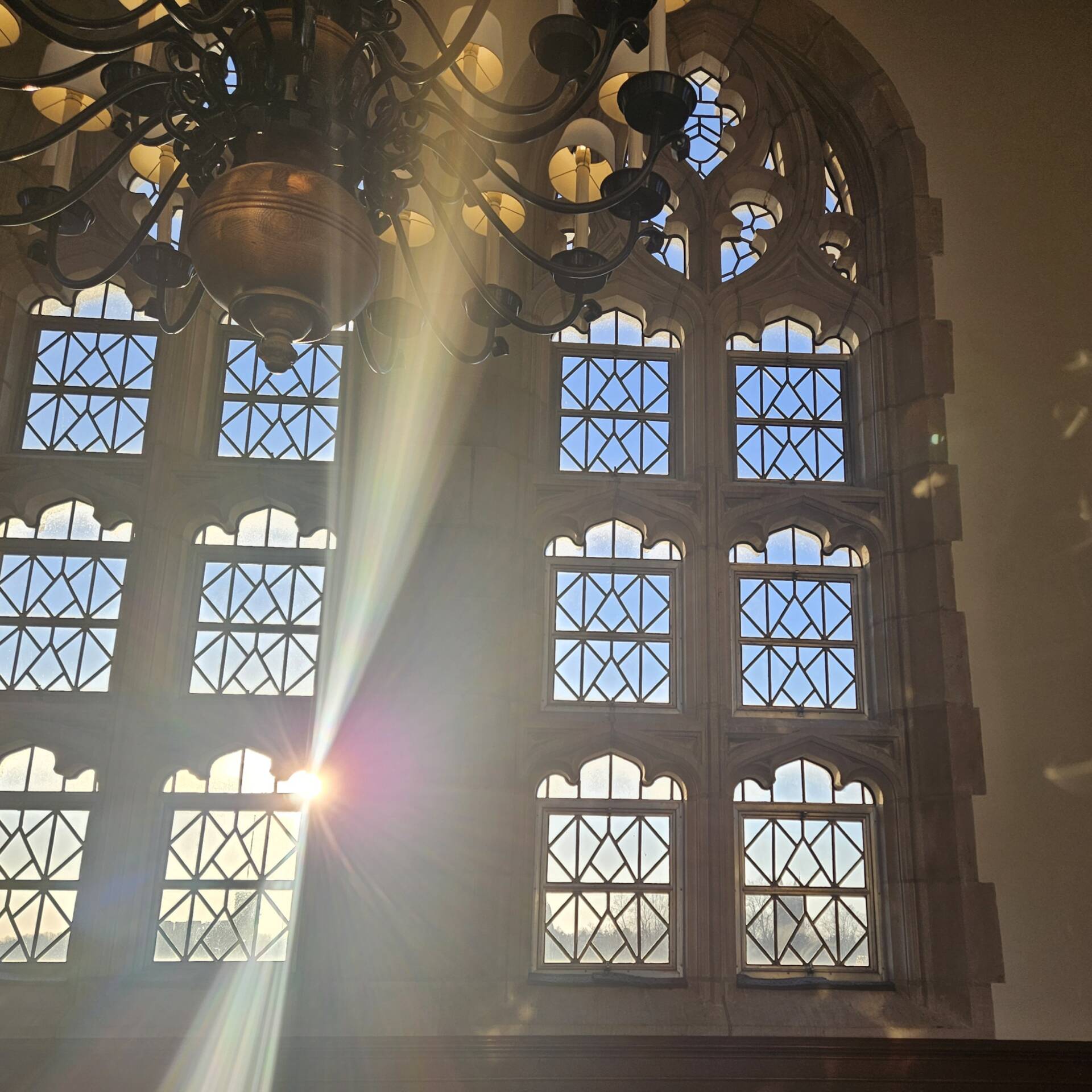
This image is a picture of a pretty set of windows during the warmer months to hint towards the warming weather and provide some optimism to the stress that applying to internships can cause.
Rocky Common Room Window, taken by Haya Elamir

For Princeton students, it’s not premature to start thinking about summer. If anything, this post may be a little behind for some of those proactive students. Rest assured though, you are not behind if you have not started the search for summer internships (even though many students will say they’ve already applied). Opportunities are aplenty, and no, you are not behind if you didn’t start applying for research internships back in the womb. 

Categories
Research Life

Latin Revival: Some Approaches and Language Learning Tools

Dei Sub Numine Viget
Detail from the façade of East Pyne, Princeton’s shield and motto. “Dei Sub Numine Viget” (Under God’s Power She Flourishes.) Photo Credit: John Jameson.

From philosophy, theology, history, and politics to taxonomy and medicine, Latin is doubtless one of the most important academic languages in history. Unfortunately, its status as a ‘dead language’ tends to repel many, and myths of its arcane and difficult nature often discourage learners. Another problem is that this mystique is perpetuated in many Latin language classrooms: the ‘dead language’ is truly treated as such, with little to no emphasis placed on speaking or pronunciation and all stress (in both senses of the word) lying on the rote memorization of grammar tables.

However, learning Latin need not be cumbersome, nor strike fear into our hearts. Rather, noli timere (be not afraid). The Classics Department offers excellent instruction and tutoring. Moreover, since course prerequisites can and often do interfere with language study during the semester, there are also great alternatives for self-study. Online and print resources abound for this timeless language and are tailored to a variety of learning styles.