Categories
Conduct Research Independent Work

So Many Sources: How to Manage the Seemingly Unmanageable

Last week, a librarian at the University of Cape Town emailed me some scanned items from their archives which I requested for my Junior Paper research. I’ve looked through them, and I can see that they will be quite useful for my work.

While I am glad that I have access to these sources now, they also add to a problem I had before I received them: in the research work I have been doing, I have what seems like too many materials to work with. During my time over spring break at the New York Public Library and Center for Jewish History, I amassed literally hundreds of newspaper and journal articles as primary sources.

At first, I was unsure of what to do with all of them. It simply seemed an overwhelming task to sift through them to figure out what was needed for my work (this is where having a clear yet flexible research question comes in handy; see my post here on that). A similar thing had happened to me this summer when I was working on a research project likewise involving hundreds of newspaper articles, and I do not think I dealt with it as well as I could have then. So, reflecting on these mistakes, I worked out some strategies to make things more manageable this time around. I hope these to be helpful for any student researcher who feels like they’re buried under a mound of potential sources:
Categories
Get Started with Research Independent Work Resources

First-Years and Sophomores: It’s Time to Start Thesis-ing!

Before senior year, the senior thesis can feel worlds away. For me, thinking about my senior thesis has always felt like imagining potential careers—impractical fantasies rather than realistic plans. Wouldn’t it be cool to…? What if I…?

But just a few weeks ago, I received an email from my department, reminding me that thesis funding application deadlines were approaching. If I wanted to receive summer funding for thesis research, I needed to have an adviser, a research question, and a summer research itinerary solidified by the end of spring break.

I felt somewhat blindsided by this deadline. I’m still a junior. I just started my second Junior Paper. I had given almost no thought to selecting my thesis adviser, let alone constructing a research plan for my still non-existent thesis project.

My thesis research proposal involves visiting an archive in Jerusalem. It’s never too early to start planning.

But for years, I’ve heard stories about the University’s generosity in supporting thesis projects. I wasn’t about to miss this opportunity.

Fortunately, I was able to select an adviser and write a project proposal before the funding deadline. Even so, I wished someone had warned me sooner about the timeline for thesis projects.

As I’ve learned, it is never too early to start thinking about thesis ideas.  Because thesis ideas can gestate for a long time, it can be helpful to maintain a few lists of ideas, models, and resources. You can add to them when you get inspired and consult them when the time finally comes to select a topic.

Categories
Independent Work Present & Publish Findings

The Junior Paper: A Halftime Report

1879 Hall, home to Princeton’s Department of Religion, where in a few weeks the author will submit the final draft of his JP.

My friends and fellow students, springtime has sprung forth from the recently-frozen New Jersey soil. Spring Break is in the rear-view mirror, and we march toward Dean’s Date, finals, and summer at a steady clip. But another set of deadlines draws even nearer, deadlines whose immediacy can be seen on the tired faces of many upper-class students. Yes, friends, I’m talking about independent work, JPs and theses, the academic tulips of the Princeton spring semester.

Categories
Conduct Research Independent Work

Stumped for Sources at Firestone? No Worries!

At Princeton, we are lucky to have access to an incredible collection of research resources. Between our libraries’ collections on campus, online databases, ReCap storage, and Borrow Direct, almost all your research needs are right at your fingertips. And, for most of the papers you will write while here, this is probably the case. But, especially with independent work, you may need sources so niche or rare that Princeton just can’t provide them. I have found myself in this situation this semester, as I write my junior paper for my HIS 400 seminar. Here, I’ll share my experience navigating the search for niche sources, with tips for getting creative when searching for material at Firestone and beyond.

My paper focuses on the political thought of Henry Katzew (a Jewish South African journalist and writer), situating it in relation to other Jewish South African responses to apartheid, Zionism, and a diplomatic crisis which occurred between the Israeli and South African governments in 1961. Given how specific my topic has become, it was difficult finding sources, especially primary sources, at Princeton right off the bat. Still, with some time to think and the help of quite a few librarians (more on that below— they are truly research superheroes), I have managed to find the sources I need to complete the work.

Categories
Independent Work Present & Publish Findings

Preparing for your Senior Thesis Before your Senior Year: Tips on Finding a Thesis Adviser


Students in the Woodrow Wilson School—and other majors!—start preparing for their theses in their junior year.

If you’re caught up on some of my earlier posts, you’ll remember that I’ve been working on my Junior Papers all year, ultimately gearing up towards the independent work that my senior thesis will require. However, as an underclass student, I was definitely unclear about what the senior thesis process would entail. I thought it was something I wouldn’t have to worry about until my last year at Princeton when, in reality, it starts much earlier than that (scary!!).


Categories
Conduct Research Independent Work Plan Beyond Graduation Present & Publish Findings

Professorship and Mentorship: A Conversation with the Woodrow Wilson School’s Professor Udi Ofer

This winter, for our seasonal series entitled “Professorship and Mentorship,” PCURs interview a professor from their home department. In these interviews, professors shed light on the role that mentorship has played in their academic trajectory, including their previous experiences as undergraduate and graduate students as well as their current involvement with mentorship as independent work advisers for current Princeton undergraduates. Here, Andrea shares her interview.

~~~~~

Udi Ofer is a Visiting Lecturer in Public Affairs in the Woodrow Wilson School.

Udi Ofer is a professor in the Woodrow Wilson School.

Outside of class, he is the Deputy National Political Director of the American Civil Liberties Union (ACLU) and Director of the ACLU’s Campaign for Smart Justice, which is dedicated to ending mass incarceration in the United States. His background as a civil rights lawyer brings a valuable perspective to the task force seminar “Rethinking Criminal Justice: Policy Responses to Mass Incarceration,” which he leads in the Woodrow Wilson School. I’m taking his seminar this semester, and because of my interest in his research (see posts here and here about my JP last semester, which was also about incarceration), I decided to interview him as part of PCUR’s winter seasonal series.


Categories
Conduct Research Independent Work

Macs, Tablets, Photoshop and More: Exploring the Digital Learning Lab

Have you ever wanted to learn Photoshop or make a 3D model? Maybe you’re trying to edit a video or record a podcast?

This year, I have become a frequent visitor to the Digital Learning Lab (DLL), an interdisciplinary, digital creative space located in Lewis Library. I first visited the DLL in the fall in order to borrow a drawing tablet to make a digital illustration for an issue of Nassau Weekly. Since my first introduction to the DLL, I have continued to learn more about all that is offered there, and I had to share!

Categories
Independent Work

De-Mystifying the Black Box Part 2: Research Abroad and Narrowing Everything Down

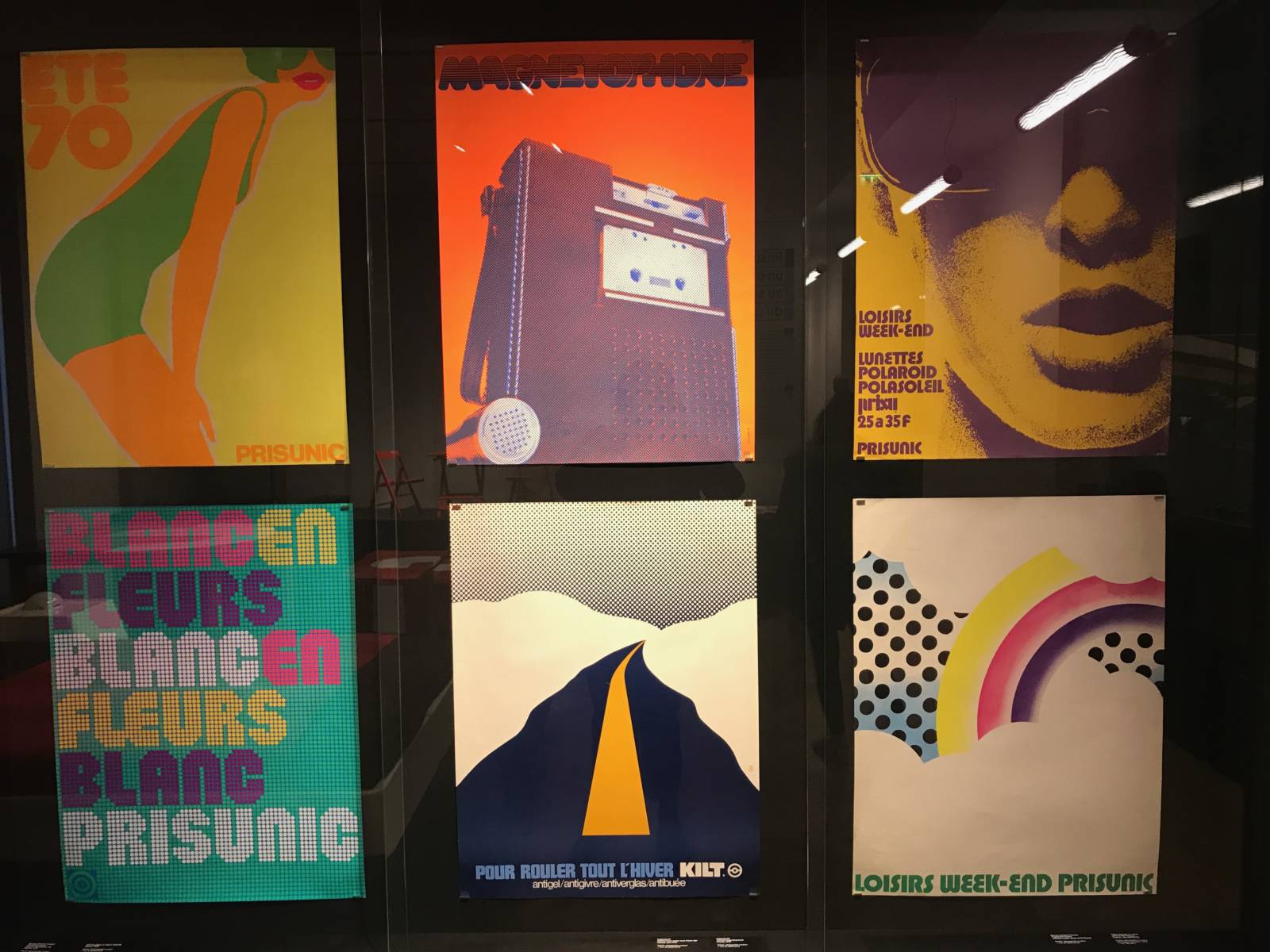
I went to Paris! Not just for fun—although it’s a dope city—but to get some thesis research done to narrow down a topic. In the first part of this series, I mentioned how I submitted an application for funding to research advertisements in museum archives and libraries in Paris. My goal was to narrow down the initial research question I had at the very beginning of my research process: how Public Service Announcements (PSAs) subvert the capitalist practices within traditional commercial advertising. My goal was to see the advertisements that inspired the French theorists I’ll be drawing from in my thesis. But, alas, there was one problem—when faced with an entire archive of advertisements, where do I even begin??

Some pretty iconic French ads I was inspired by at the Museum of Decorative Arts

I spent most of my time at the Bibliothèque Forney, a library specializing in design and the decorative arts. I emailed ahead of time to speak with one of the librarians, who wanted to get a sense of my argument and which advertisements he could direct me into researching according to my response. After explaining my general thesis topic and the research I had done in my previous two JPs (pro-tip: explaining a thesis topic in a foreign language is a good marker for how well you understand it—or rather how much you don’t), he responded bluntly: “You really need to narrow this down.” My face fell. That’s exactly what I was trying to do, the very reason I was in that library. I didn’t have a corpus of ads, which is what I was in search for in Paris. I had kind of hoped to look at a vast layout of ads and just be naturally drawn to an era, a medium, a theme, or product, but I quickly realized it was far too unrealistic to be able to survey three hundred years of French advertisements and just hope that a few of them would speak to me so I could write eighty pages about them. The librarian asked me how much time I had to write my thesis, suggesting one to two years, and I chuckled, slightly panicked, and said “six months.”

Categories
Conduct Research Independent Work

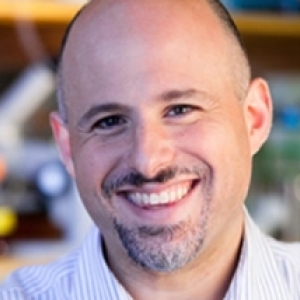
Professorship and Mentorship: An Interview with Molecular Biology Professor Zemer Gitai

This winter, for our seasonal series entitled “Professorship and Mentorship,” PCURs interview a professor from their home department. In these interviews, professors shed light on the role that mentorship has played in their academic trajectory, including their previous experiences as undergraduate and graduate students as well as their current involvement with mentorship as independent work advisers for current Princeton undergraduates. Here, Nanako shares her interview.

~~~~~

As one can see from the many PCUR posts on Junior Papers

Professor Gitai wants students to be open minded about doing independent work. 

and Senior Theses, independent work is a huge part of the junior and senior experience here at Princeton. However, everyone has different views on why this process is important, and different departments have different requirements. For this Winter Seasonal Series, I decided to interview Professor Gitai, who I met when I took MOL214: Introduction to Molecular and Cellular Biology in the fall of my first year at Princeton. Read on to learn more about the thesis writing process for concentrators in molecular biology, and how to make sure you get the most out of this process!


Categories
Conduct Research Independent Work

Get to Know your Department Before Concentration Declaration

The spring semester is in full swing, and, for sophomores, concentration declaration is quickly approaching. Obviously, choosing a major is a big decision which will dictate what discipline you study in most of your courses and possibly direct your professional career. However, your department will also define your academic experience as an upperclass student in other ways; each department has different requirements for independent work, different research opportunities for undergraduates, and a different type of community. I found that considering all of these variables helped me to choose my major, but doing so may necessitate a bit of investigating.

So if you are a sophomore about to choose your concentration, what can you do over the next couple months to get to know the department(s) you are interested in?

Here are some tips to get you started, with examples from my beloved home Department of Geosciences:

Members of the geosciences department on a field trip to Iceland in 2016. Undergraduates planned and led this trip which brought together graduate students, post-docs, professors, and administrators. The close-knit community and emphasis on undergraduates are two of the main reasons I declared GEO. Before you declare your major, I encourage you to do some research into the departments you are interested in and find out more about their communities and what kind of opportunities are open to undergraduates.