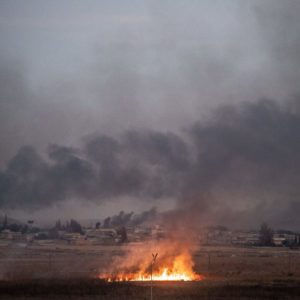
The Syrian town of Tal Abyad, which has recently been conquered by Turkey. Below, I consider the role of “imagined” or Andersonian nationalism in this move, and how the study of religion can shed additional light on certain drivers of conflict.
I’m often asked why I study religion. To those asking, my decision usually registers as vaguely interesting, if a bit niche, but certainly not as very “practical.” Often such conversations prompt inquiry into my own religious life—as if one could only study religion out of personal piety or an ascetic willingness to forego the earning potential of an economics or computer science degree. Temperamentally inclined to charitable conversation as I am, I try not to take misunderstandings or dismissals of what I do too seriously. As other humanities students likely know, being on the receiving end of such attitudes come with the disciplinary territory.
A long-term project like a thesis is a marathon, not a sprint. This has been a difficult adjustment for me. In almost every other research project I’ve done at Princeton, I’ve chosen the last-minute sprint model, rather than a more organized long-term approach. Sprinting hasn’t worked well in the past, but it won’t work at all for a thesis. There’s simply too much involved in a thesis to cram it into the few weeks before the deadline.
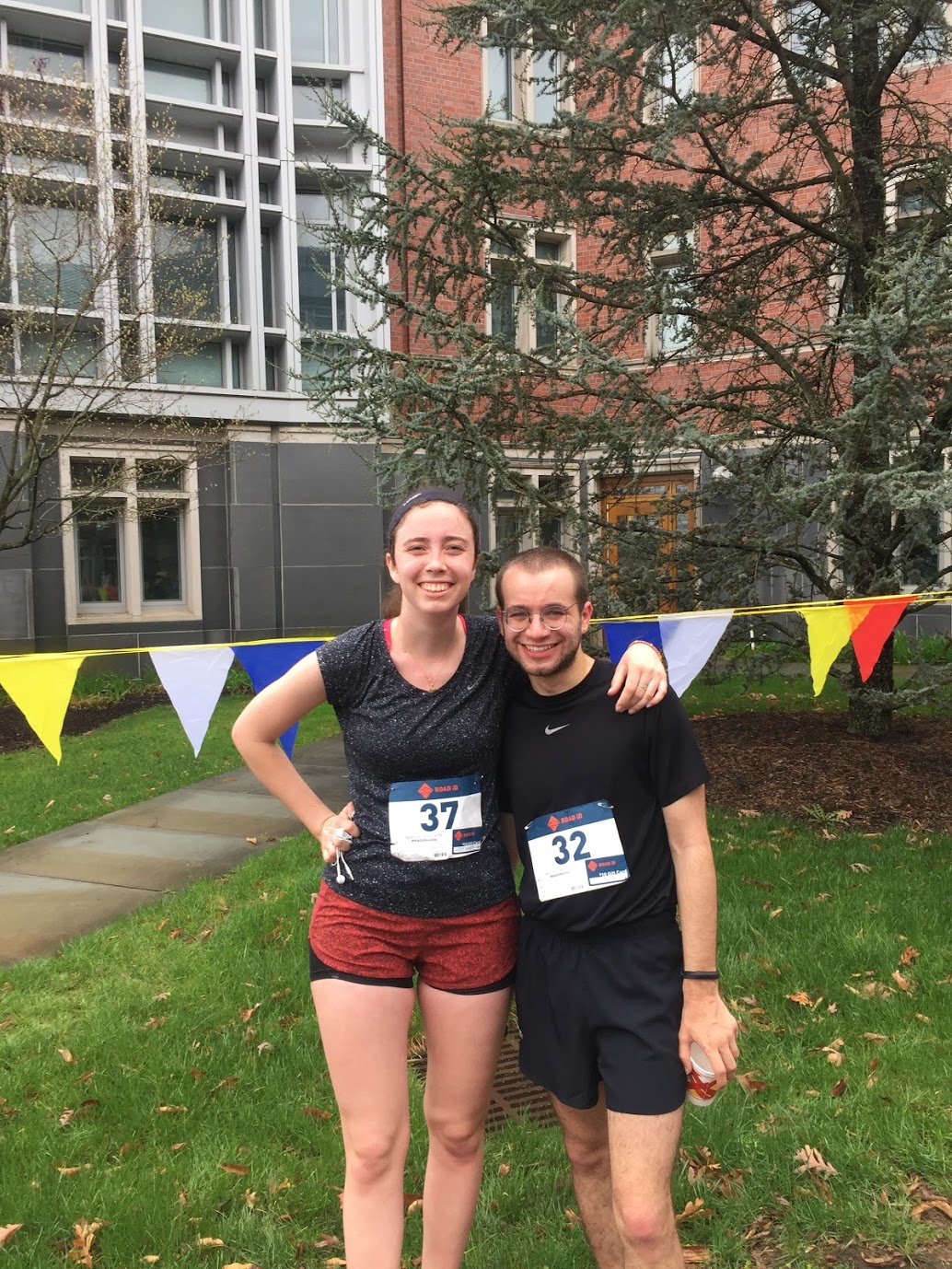
My thesis buddy and me cheesing at the finish line of a 5K last spring. It’s never too early to start training for the thesis marathon!
The marathon approach is new to me, so I looked up some tips for how to train for an actual marathon. I was surprised how many were relevant for a long-term project like a thesis or a final paper. I’ve collected my ten favorites here:
For quite a few months now, I have been sharing my experience on PCUR about a project I began last summer on New York City press reporting on a June 1848 workers’ rebellion in Paris, which I am now turning into my second Junior Paper (see my posts here, here, and here). Typing that descriptive phrase of my research indeed feels all too familiar. It seems, however, that this post may be the last time that I repeat it. As of last week, I am changing the focus of my JP: I am now moving on from New York newspapers, and instead examining the broader national antislavery movement’s response to the very same rebellion. Though this seemingly small change is pretty specific to both my discipline and my project, research in any field can benefit from critical examination and reframing.
As I have written for the PCUR blog before, choosing a topic for an open-ended research project can be challenging. Even once you have narrowed your search and settled on an idea you would like to pursue, you may find that other scholars have already written about it. There is indeed a finite number of possible research subjects (even if it seems, as I suggested in my earlier post, that there is infinite possibility), and as undergraduates many of us have yet to find our research niche. This by no means should discourage you! Just because there is existing literature does not disqualify you from making your own contribution. Of course, we are told this in our first-year writing seminars, where we discuss the different “scholarly moves” one can make (“piggybacking” on another scholar’s work, “picking a fight” with a scholar, and many others, as helpfully delineated in this paper).
In this post, however, I do not merely want to rehash what these “moves” are, but rather suggest how one goes about making any intervention, especially in determining what kind of intervention one wants to make. The following are some methods I have found useful in my research:
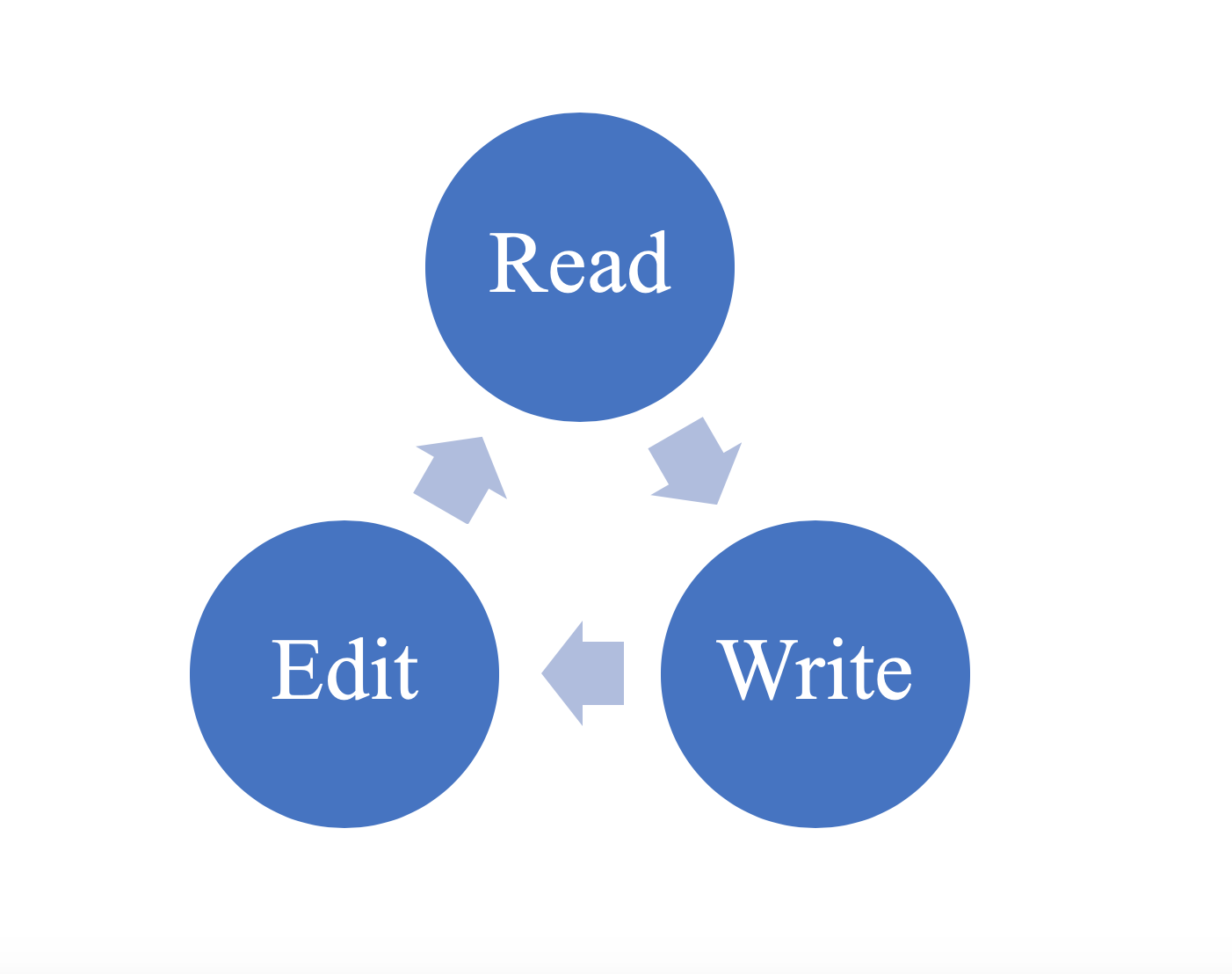
Last spring, my JP adviser passed on a piece of wisdom from his graduate adviser: for a research project, you should spend one third of your time reading, one third of your time writing, and one third of your time editing.
This was new to me. Historically, I’d spent 80% of my time reading, 19% of my time writing, and 1% (at best) of my time editing. I had always told myself that it didn’t make sense to start writing until I’d read everything and figured out what I wanted to say. Also, reading almost always felt easier and safer than writing. Instead of constructing my own ideas, I could sit back and receive other people’s finished products.
The research cycle: read, write, edit.
The problem was: I never ran out of things to read. Most of the time, I would only start writing once the deadline was in sight and I had no more time to waste. Rarely would I have enough time to edit my work.
For my thesis, though, I’m trying to follow my JP adviser’s system, spending equal amounts of time reading, writing, and editing. It took me until this week to realize that I need to treat these three elements as parts of a cycle, rather than macro chronological steps. In other words, I realized that I shouldn’t spend the first half of my fall semester just reading, the next few months writing, and the next few months editing. I need to be doing all three simultaneously. My reading, writing, and editing should be working in tandem with each other.
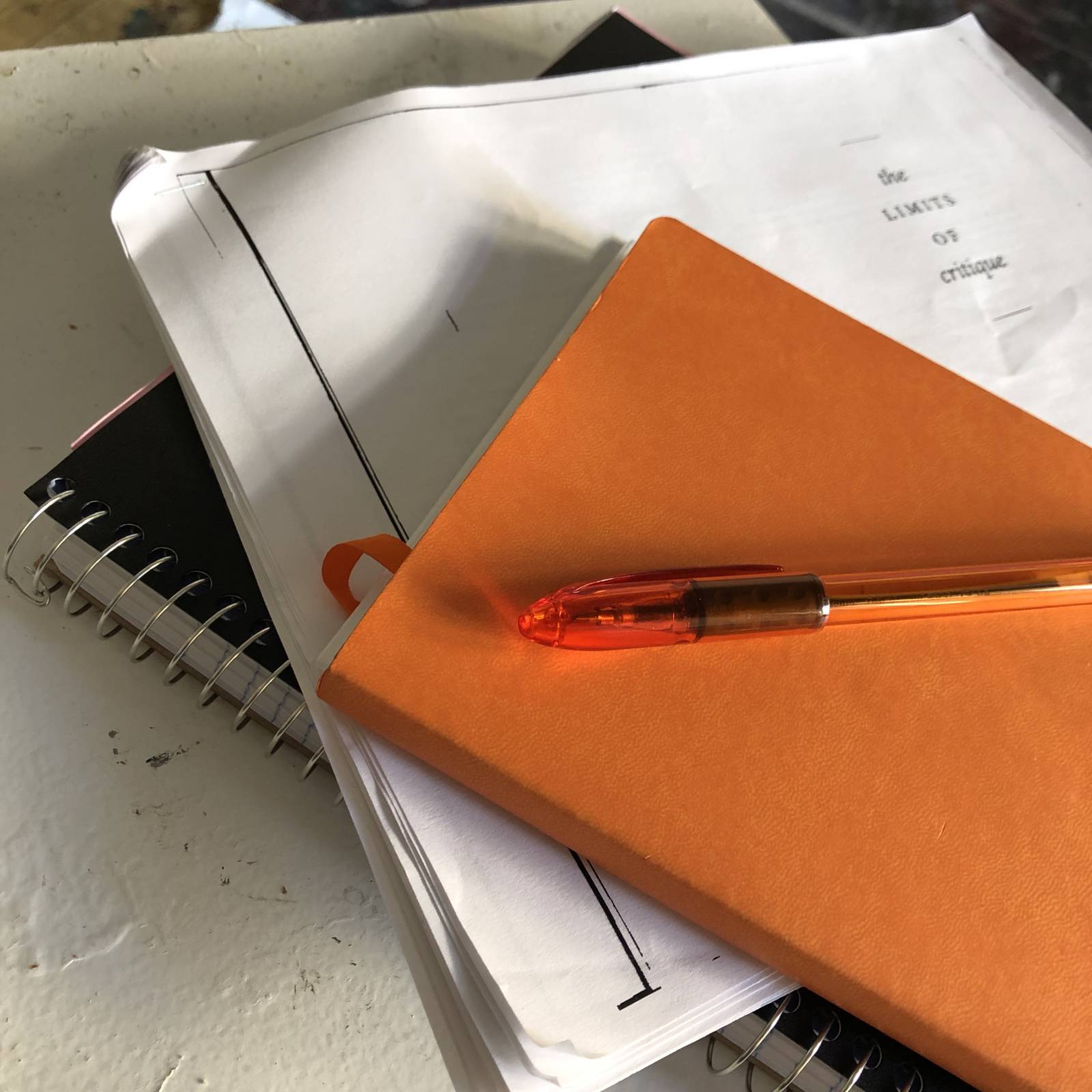
The author’s research notebooks alongside excerpts from Rita Felski’s The Limits of Critique, which partly inspired this post.
As we work our way into the fall semester, my fellow seniors might find some truth in the well-worn Dickens adage, “It [is] the best of times, it [is] the worst of times.” While this sentiment assumes a different shape and quality for each of us, it does seem generally fair to say that our final fall of college brings with it many joys—such as the enjoyment of established friendships, institutional and departmental familiarity, and an overall excitement about the many possibilities ahead—as well as certain unique stressors, such as discerning what in the great wide world to do after graduation and, of course, writing that Senior Thesis. While no one blog post can assuage all of our collective life-directional angst, that needn’t stop us from thinking about how to make our present situation a little brighter. One key way in which I suggest we can do this is by reframing how we view our theses. Which is to say, if your thesis currently makes you feel stressed, bored, uneasy, or generally bad, I hope you will read on.
The infamous Senior Thesis is a source of stress and anxiety for many students. Although there are information sessions galore for juniors, I didn’t feel like I actually understood the process until I started it. This summer, I began my thesis research process by traveling to Norway to collect observational data on the country’s prison system.
Last fall, in a cubicle on the B-floor of Firestone, you might have seen me scrolling through my unfinished JP. It would have looked unremarkable. I had been working on my JP in the same cubicle for weeks. Except this time, my JP was due to my department in two hours and I was realizing I had about 25 pages of footnotes to complete. I was panicking: crying and shaking while typing faster than I’ve ever typed before.
Luckily, I was able to complete the citations and submit my JP with three minutes to spare! But it took me the rest of the night to recover from the experience (and, to be honest, I still get a rush of anxiety every time I think about it). I promised myself I would never allow myself to end up in the same situation again.
A selfie I took just minutes after submitting my first JP last fall…
Whether it’s a final paper, a JP, or a thesis, here are some tools I’ve been using to help me beat the panic of independent work:
For this year’s Spring Seasonal Series, entitled Post-Princeton Life: The Experiences of PCUR Alumni, each correspondent has selected a PCUR alum to interview about what they have been up to. We hope that these interviews will provide helpful insight into the many different paths Princeton students take after graduation. Here, Nanako shares her interview.
~~~~~
In my last post, I wrote about how to get the most out of your short-term research internship. In this post, I provide some more insight I got about how to get the most out of my summer internship— this time from a more credible source: a Princeton alumnus. I interviewed Bennett McIntosh ’16, who used to write for PCUR, about his Princeton research experience.
Here’s a bit about Bennett:
Bennett McIntosh ’16 studied chemistry at Princeton and is currently a freelance science writer.
Bennett McIntosh is a freelance science writer and reporter living in Boston, covering the intersections of scientific research, technological change, and social welfare. He is currently helping to relaunch Science for the People, a magazine of science and politics whose first iteration grew out of the 1960s anti-war movement. While studying chemistry at Princeton, he wrote opinion columns forthe Daily Princetonian, science stories for Innovation, and lousy jokes for the Princeton University Band.
I meet with my JP adviser every other Monday morning. No matter how hard I try to beat procrastination, the weekend before each meeting is always an anxious scramble to complete a draft. On Sunday night, I worry that I’m unforgivably behind schedule, that my topic was a bad choice, that my writing is incoherent.
From conversations with my friends, I’ve realized that wanting to avoid our advisers is totally normal. It can be scary to share our work—especially when it’s unfinished, and especially when the reader will eventually be grading it. But as I’ve learned over the past semester, though it can be terrifying, meeting with my adviser has only helped and reassured me in the research and writing process.
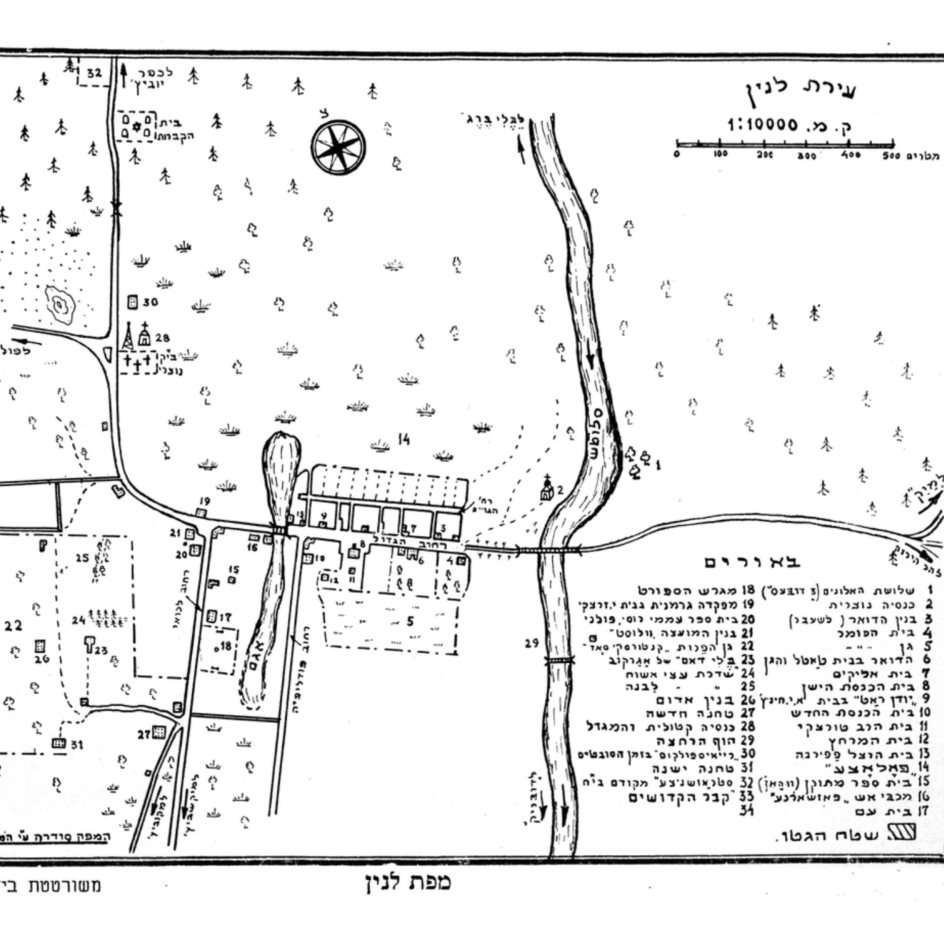
My JP focuses on the hand-drawn maps produced in Holocaust survivors’ memory books. This is an example from the town of Lenin.
When I feel anxious the Sunday before an adviser meeting, I’m not actually worried about what my adviser will think. I’m worried about having to confront my own work. If I send only a two-page draft, I have to admit to myself that I’m behind schedule. If my argument isn’t fully baked, I have to admit that I haven’t yet figured out how to approach my topic. If my writing is confusing, I have to admit that it needs a lot more editing.
Admitting mistakes or weaknesses is always hard. It feels so much easier to pretend they don’t exist—to convince yourself that you’ll be on schedule soon, that there are no holes in your argument, that your writing needs no editing. However, as difficult as it may be, confronting these questions regularly not only improves your work, but prevents a flood of buried anxiety at the end of the project.