Categories
Independent Work

Census Records, Wills, and Obituaries: Exploring the Ancestry Library


Have you ever wondered about your family history?

Besides the DNA kits offered by Ancestry and 23andMe, there are more concrete ways of piecing together the different tales that aunts and uncles spin at family reunions. Thankfully, as Princeton students, we are given access to a powerful database to locate, explore, and utilize different genealogical records to the benefit of both our personal and academic research: the Ancestry library. I had earlier discovered this resource through the class HIS 388: Unrest and Renewal in Urban America, whose instructor is Alison Isenberg, who was just featured in PCUR!

You might be asking: What kind of records does Ancestry keep? The records are multitudinous. From census records to wills to obituaries to yearbook photos, Ancestry keeps records from many different places, different times, and different people. The bulk of these records are government documents, often created, collected, and stored by bureaucrats for the purpose of institutional record-keeping and tracking individuals. According to Ancestry, these records are collected from different archives of information across the world, where they are then digitized, made machine-readable, and uploaded to their public database.

So, what does this all mean? What can we do with these documents? Let me show you.

Categories
Independent Work

An Interview with Bhadrajee Hewage ’20, South Asian Studies Graduate Student and Researcher

Bhadrajee Hewage is an accomplished researcher in the humanities – he has conducted research in 5 continents, can speak 12 languages, and has published articles in several magazines and journals as well as his own book on Ceylonese Buddhist revivalism (with a second book on the way)! Bhadrajee graduated Phi Beta Kappa from Princeton in 2020 having majored in History and obtained certificates in South Asian Studies, African Studies, and Latin American Studies. I met Bhadrajee through the Davis International Center where he served as Leader Coordinator. From our first few conversations, I was immediately awestruck with the breadth of research he’s done, and this is why I chose to interview him. His published works range from the early history of Rome and Tanzanian political history to the U.S. Civil War.

Bhadrajee Hewage ’20

He is currently a DPhil Clarendon Scholar at the University of Oxford and recently obtained his degree as the Prize Research MPhil Student at the Joint Centre for History and Economics at the University of Cambridge. Broadly, his research interests lie at the intersection of colonial, religious, and intellectual history.

Categories
Conduct Research Independent Work Present & Publish Findings Research Life

Back to the Classroom: How to Readjust to In-Person Exams

With midterms being in full swing this week, you’ve most likely started reviewing concepts and studying for these exams. However, another crucial part of the preparation process is to readjust to the in-person exam experience. After a year and a half of taking exams virtually, it is important to recognize that exams in the classroom will look and feel very different, so don’t let that take you by surprise. Whether you are studying for midterms or want to start thinking about final exams, here are a few key tips when it comes to taking exams at Princeton in person:

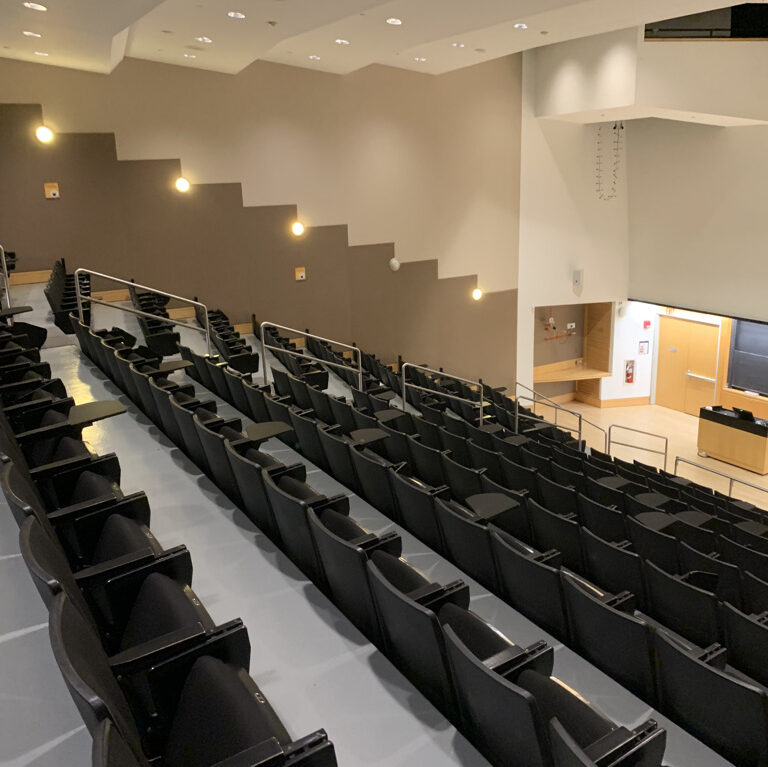
McDonnell A01, a large lecture hall where one of my midterms is taking place this semester
Categories
Conduct Research Independent Work Present & Publish Findings

Writing a Literature Review? Some Tips Before You Start

Writing the literature review section for a scientific research article can be a daunting task. This blog post is a summary of what I have personally found to best help when writing about scientific research. I hope some of these tips can help make the process an easier and more fulfilling experience!

Categories
Conduct Research Independent Work

How to Get Involved with Lab-Based Research at Princeton

As a first-year B.S.E student with little to no previous research experience, the idea of writing an eighty-page senior thesis based on my own lab-based research seemed like an extremely daunting task. Now, into the first semester of my junior year, the thought of having to write a thesis next year still seems like a challenge, although a lot less intimidating than two years ago. The main reason for this is because I have participated in multiple research-based summer internships through Princeton, which have helped me feel better prepared to do lab-based junior independent work and a senior thesis in the coming semesters.

You may also be wondering how early you can get involved with lab-based research at Princeton. Although there is certainly no pressure to do research as a first-year or sophomore if you do not want to, Princeton does make sure that opportunities are available for those who do want to be involved early. Here’s a timeline of some of the different lab-based opportunities available, and when you can start getting involved.

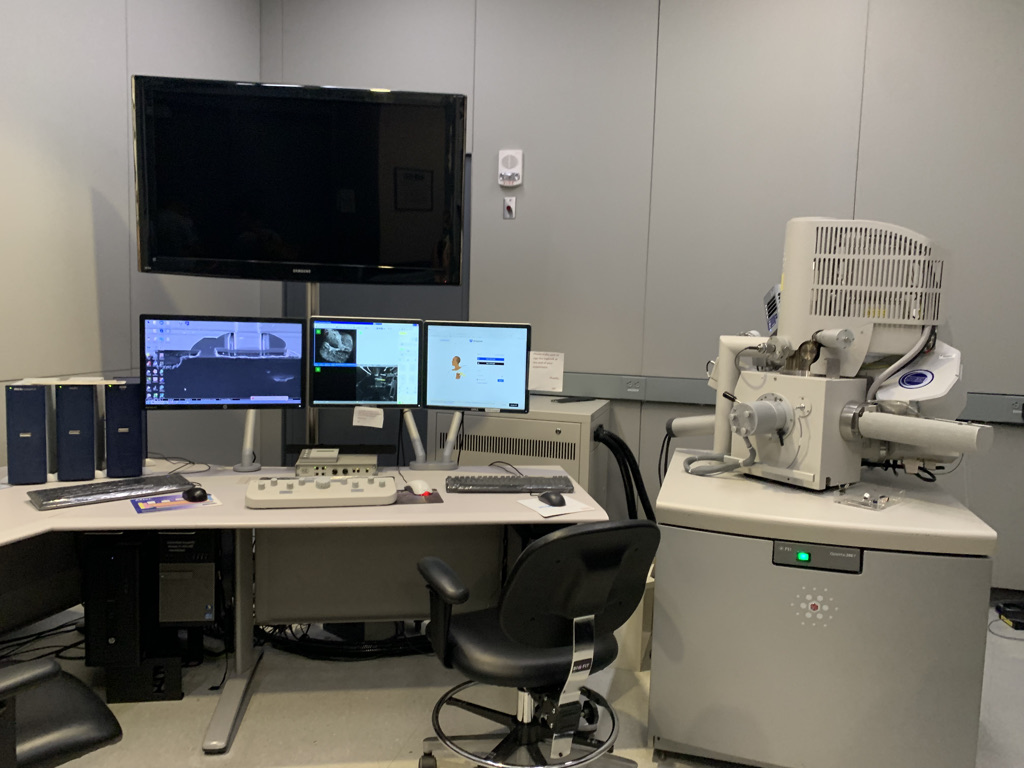
The scanning electron microscope in Princeton’s Imaging and Analysis Center, where I am doing research with a material science lab on campus.
Categories
Get Started with Research Independent Work Present & Publish Findings

Lost in the Library? Turn to a Librarian!

The Trustee Reading Room in Firestone Library, the hub of the entire Princeton University Library system and one of the largest libraries in the world.

Beginning a research project is often a daunting task. Often, when I begin a project, I have the vaguest idea of what to research. Sometimes, I don’t know where to begin looking. Given that Firestone is one of the largest open stack libraries in existence, there are literally millions of books, journals, anthologies, and other pieces of literature to sift through. The process of identifying the literature that will propel a research topic is thus often the most tiring part, but thankfully, there is a solution: the wonderful Princeton librarians!

So, who are these librarians? 

In fact, each undergraduate student at Princeton is assigned their own personal librarian. This librarian is supposed to act as your direct liaison between the library system and yourself. You can go to them to receive guidance on how to navigate the stacks, learn how to take advantage of different workshops and programs, or even just have a chat. My personal librarian, Ellen Ambrosone, almost always sends me an email every semester to remind me of her services. Often, she also includes a picture of her dog! Regardless, these librarians are meant to be friendly faces in a huge space, so do reach out to them with any inquiries about your research or the library system writ large!

The Princeton University Library system also hosts a large array of different subject librarians, each specializing in their own discipline. For example, Steven Knowlton is one of the subject librarians for both History and African American Studies. Thus, a student interested in a topic pertaining to History and/or African American Studies might want to reach out to him in order to identify literature that may be pertinent to your research topic. 

Categories
Conduct Research Independent Work

Worried About a Lack of In-Person Research Experience? Don’t Be. Here’s Why.

Due to the Covid-19 pandemic, a lot of in-person internships and research positions for students have been transitioned to remote opportunities. Last summer after my first year of college, I opted to take online classes over the summer because in-person opportunities were not a possibility. For this upcoming summer, I was hoping to gain laboratory experience in person, but my internship was also transitioned online. With only one summer left before I apply to graduate school, this left me with a looming question: will I have enough in-person research experience before I apply to graduate school?

Although this question bothered me for a while, I realized that I was approaching this issue from the wrong perspective. I feel as though many students are probably dealing with similar issues now that many summer opportunities have been canceled or moved online due to the pandemic. In this article, I am going to walk through the reasoning behind why you should not worry too much about lacking in-person research experience and also include some additional opportunities you should be on the lookout for. 

In-person research positions may not be available right now, but you can still take advantage of your remote research experiences.
Categories
Conduct Research Independent Work

How to Write a Research Proposal as an Undergrad

As I just passed the deadline for my junior independent work (JIW), I wanted to explore strategies that could be helpful in composing a research proposal. In the chemistry department, JIW usually involves lab work and collecting raw data. However, this year, because of the pandemic, there is limited benchwork involved and most of the emphasis has shifted to designing a research proposal that would segue into one’s senior thesis. So far, I have only had one prior experience composing a research proposal, and it was from a virtual summer research program in my department. For this program, I was able to write a proposal on modifying a certain chemical inhibitor that could be used in reducing cancer cell proliferation. Using that experience as a guide, I will outline the steps I followed when I wrote my proposal. (Most of these steps are oriented towards research in the natural sciences, but there are many aspects common to research in other fields).

Categories
Conduct Research Independent Work

On “Choosing Sides” in an Academic Debate: The More Precise, the Better

An amusing remark on academics, itself attributed to several different academics, goes something like this: In academia, disputes take on such huge proportions precisely because the stakes of them are so small. Whether this observation is or is not true, I have found that its general sentiment is passed down to undergraduates, if inadvertently so. Of course, there are pedagogical reasons for instilling this impression; when we are learning about debates on a given subject within a discipline, it can help to read the most absolute positions on either side, if only to distill the terms of argument.

But the impression that such debate must necessarily be black and white, and must be of great intensity, can be daunting to accept as an undergraduate writer. Who am I, I wonder to myself, to so totally challenge the work of an established academic researcher? Even if I might disagree with their broader argument, have they not done far more research than I have? Relatedly, what if their research offers some quite usable background information– am I not just a little hypocritical to use it while arguing against the position it was intended to support? Or, what if I agree with smaller asides or observations by the researcher, but not the thrust of their whole argument? In a word, need the division be so absolute within the scholarly conversation? 

Categories
Independent Work Present & Publish Findings

A Guide to Princeton Libraries during a Pandemic

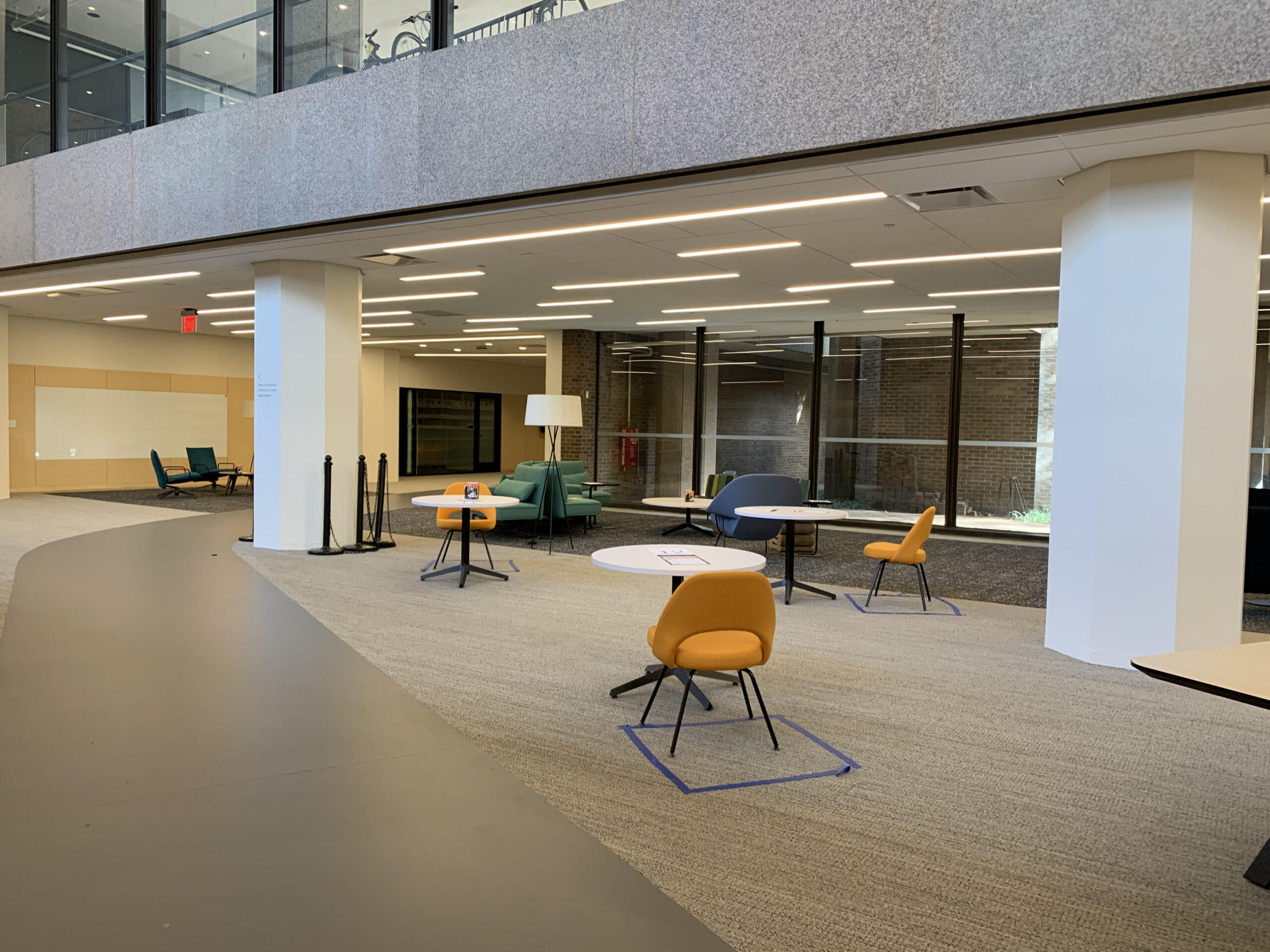
A view of the North Study section of the new Engineering Library underneath Fine Hall.

Last school year, during my first year at Princeton, I rarely ventured out to study in the libraries, instead preferring to stay in the comfort of my dorm room. However, after spending the fall semester at home, I realized just how much I missed the Princeton libraries, and I regretted not taking advantage of this amazing resource more often while on campus.

Going into spring semester, I challenged myself to explore the many incredible study spaces on campus that I had never been to. I was partly inspired by this post on the best study spaces on campus, and I wanted to provide an update on how studying on campus during a pandemic is like. A lot of the logistics around studying in the libraries have changed due to new Covid-19 regulations. So, in this article, I am going to lay out the changes to the Princeton library system and provide an update on some of the best new study spaces on campus.