
The freshman seminars are one of the unique experiences at Princeton. While they may seem intimidating at first, they made me think of the process of research in my very first year in college. Not everyone might become a full-time researcher – I, for example, want to become a policy analyst – but many of our jobs will involve research, and the structure of the freshman seminar is very conducive to the research process. In the Economics of Immigration seminar that I took with Professor Leah Boustan during Fall 2019, we discussed aspects of the economic effects of immigration both on the receiving country and on the migrants themselves. Our final deliverable was a research policy memo – a document that describes a policy intervention by the government, by first arguing the need for it, then describing its advantages, and finally proposing a way by which it might be implemented. In order to write an effective memo, I had to research an issue that necessitated looking at it from diverse points of view. The process made me appreciate several principles of writing a policy memo.
Category: Conduct Research
lab experiences, humanities research, fieldwork, archives, methods, problem solving, research based courses
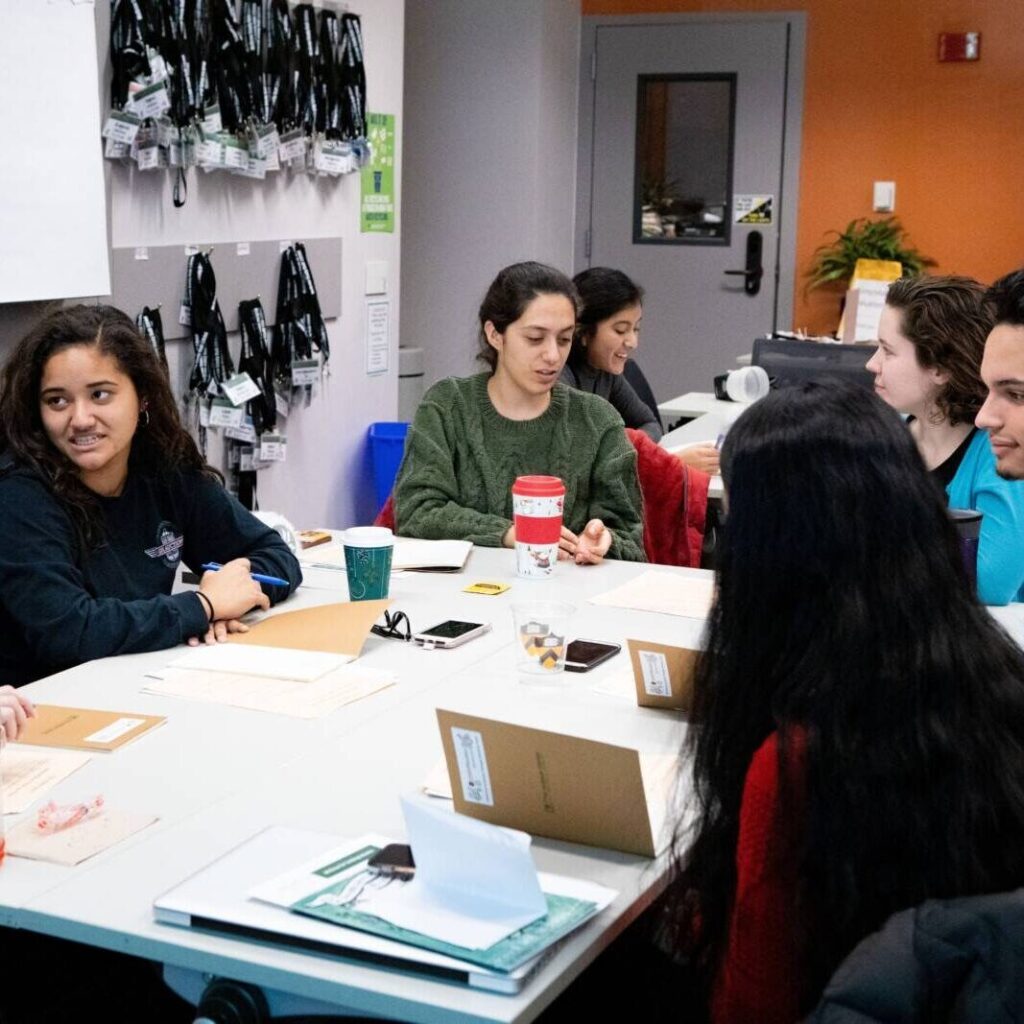
There comes a time for many Princeton students when they are assigned their first PSET, or problem set. “How will I learn all of this in a week? What are the teachers looking for in the answers? How will I collaborate with others when I’m not even on campus?” These are thoughts that many Princeton students have when any PSET is distributed, especially with the semester being online. Believe me, I have been there too, and I would love to share some PSET tips and tricks to help you do your best!
Oh, it’s unfortunate that your classes are all online now… But all the extra free time must be nice, right?
Actually, no. Somehow, I have ended up in a place where I’m busier than I was back when school was offline. And that’s without Powerlifting Team practices, the thirty-minute dinners that consistently turned into three-hour-long social gatherings, and all of the hours I spent working on-campus jobs.
I’ve realized it has to do with my relationship with time. In the past, I didn’t need to be very intentional with my free time: it always just happened. Nowadays I think back fondly to my naïve visits to the Rocky Common Room for pre-bedtime cereal-breaks, only to end up practicing handstands on the rug by the piano with my friends until 2 am.
Without spontaneous social interaction, I ended up filling up all of my time with work, clubs, projects, and research. Unfortunately for first-year students, these challenges are only compounded by the transition to college academics in general. Whether or not you feel like you’re busier this semester, I believe we can all benefit from evaluating how we make time for ourselves: below are five tips I’ve implemented to help facilitate a productive and sustainable semester this fall.

When I first applied for departmental senior thesis funding early this spring, everyone was still uncertain about how long the effects of the COVID-19 pandemic would last. It seemed departmental administrators were optimistic: funding requests could still be made for summer travel. In my application, I detailed my intent to travel to university and state archives throughout the U.S. south for a thesis examining how antebellum Mississippi Valley planters conceptualized the idea of labor. But before I even heard back about whether I was to receive support, the department updated its funding parameters to prohibit summer travel and I had to redo my application in turn. My summer plans, of course, were not the first academic casualty of the strange 2020 world; nor would they be the last. Fortunately, though, there were ways to work around my newfound limitations: all of the archives that I wanted to visit offered services for resident librarians to scan and send materials from their collection, so I updated my application to ask for funds to pay for associated fees. Here, I’ll be sharing some tips for requesting archival materials to be scanned, which I hope will be helpful to any researcher unable to travel (pandemic or not).
This year, as we prepare to write our final papers in quarantine, it will be extra tough to locate the sources we need for our research. Without in-person access to campus libraries, this Dean’s Date will require some new strategies for accessing research materials. To help with this process, I’ve collected a few virtual research resources from my weeks of quarantine thesis work, as well as the beginnings of my Dean’s Date research (also check out Alec’s recent post for more tips):
Do not underestimate the library catalog. A lot of sources are available online, especially with the University’s new partnership with the HathiTrust Digital Library. Through this partnership, millions of scanned books have been made temporarily available to students—in addition to Princeton’s many existing online holdings. To see if a book is available online, just search for it in the Princeton library catalog. If you don’t see a digital edition listed, try clicking on a print edition and seeing if a scanned version is available through HathiTrust (if it is, there will be a link just below the book’s title and general information). You can also click the “Request” button under “Copies in the Library,” then “Help Me Get It” and a librarian will do their best to send you a digital copy—if it’s available—within a few days.

Recently, we’ve all had to do our best to adapt our coursework, extracurriculars, and past times to a remote format. Some activities – like hands-on research in a lab – may be difficult, or even impossible, to do over Zoom. For those of you looking to fill the gap, hackathons may be the solution. Hackathons are short programming events designed for students to learn new skills, meet new people, develop solutions to everyday problems, and win prizes. And because of the COVID-19 situation, many hackathons are turning virtual.
To hear a little more about what exactly hackathons are and who they might be a good fit for, I interviewed Princeton sophomore and Director of the TechTogether New York hackathon, Soumya Gottipati. For those of you who have recently hard your internships canceled, Soumya also let me know about internship opportunities you might be interested in!

For this year’s Winter Seasonal Series, entitled Research Resources: Unsung Heroes, each correspondent has selected a faculty member, staff member, or peer working for a research resource on campus to interview. We hope that these interviews will provide insight into the variety of resources available on campus and supply the unique perspective of the people behind these resources. Here, Kamron shares his interview.
A few weeks ago, I interviewed Sara Howard, the Gender and Sexuality Studies and Student Engagement librarian. I’ve found that I often don’t use all the available research resources to my benefit. Given that we have all recently transitioned on an online learning community, consider meeting with your librarian over Zoom!

This semester, as I return to writing for PCUR, I will be publishing a series of posts describing my experience with the graduate school application process, applying to a variety of developmental psychology PhD programs. Throughout the process, I was fortunate enough to have guidance from my independent work adviser and other senior members of my research lab on campus. However, even with this support, I often found that the process was incredibly opaque. I spent hours searching for answers to seemingly simple questions, often never coming to a definitive conclusion. I hope to use this series of posts to shed some light on the many facets of the process. Although I can only speak to my personal experience, I hope to provide valuable information that can be helpful to students from a variety of disciplines.

Before getting into the nitty gritty of the application process itself, the first step is deciding whether or not you want to go to graduate school in the first place. Graduate school, especially PhD programs, are long, so before you commit to spending up to 6 years in a program, it is important to make sure grad school is the right path for you.
[Note: This post was written before COVID-19 reconfigured our library access. Interlibrary Loan is no longer accessible for students, but its sister program, Article Express, is still running at full speed!]
Every so often, when reading sources for my thesis, I come across a citation for a book or article I can’t find in the Princeton library catalog. Of course, given the size of Princeton’s holdings, these moments are rare—though somewhat more frequent as I’ve entered the fine-grain stages of my research project. In the past, a dead end in the library catalog was enough to convince me to give up on a source. However, the exigencies of my last month of thesis writing have pushed me to use what might just be the most magical tool in the Princeton library toolbox: Interlibrary Loan (ILL).

Whereas Borrow Direct and Recap only provide access to books listed in the Princeton library catalog, Interlibrary Loan can provide access to… pretty much any source you could possibly need. ILL has two main request options: Article Express (for scans of specific articles and book chapters) and Interlibrary Loan (for larger sources, like books, audio/visual materials, and microreels).
In a recent post, I wrote about submitting an extended version of my R3 to the Gender, Work, and Organization Conference in the United Kingdom. Although I’m very excited to attend the conference, a new challenge has recently presented itself to me: securing funding.
In this post, I’ll detail some of my experiences finding funding for my conference. Considering that many of you have recently applied for Princeton Research Day and may be considering submitting your manuscripts for publication in a journal or for a conference, I hope this post is helpful!