Categories
Conduct Research Present & Publish Findings

How to Write An Effective Lab Report


Researchers communicate their findings and advances in the field through lab papers, thus they are an essential component of experiments.

Whether you are in lab for general chemistry, independent work, or senior thesis, almost all lab experiments will be followed up with a lab report or paper. Although it should be relatively easy to write about an experiment you completed, this is often the most difficult part of lab work, especially when the results are unexpected. In this post, I will outline the components of a lab report while offering tips on how to write one.

Categories
Conduct Research Independent Work

Stumped for Sources at Firestone? No Worries!

At Princeton, we are lucky to have access to an incredible collection of research resources. Between our libraries’ collections on campus, online databases, ReCap storage, and Borrow Direct, almost all your research needs are right at your fingertips. And, for most of the papers you will write while here, this is probably the case. But, especially with independent work, you may need sources so niche or rare that Princeton just can’t provide them. I have found myself in this situation this semester, as I write my junior paper for my HIS 400 seminar. Here, I’ll share my experience navigating the search for niche sources, with tips for getting creative when searching for material at Firestone and beyond.

My paper focuses on the political thought of Henry Katzew (a Jewish South African journalist and writer), situating it in relation to other Jewish South African responses to apartheid, Zionism, and a diplomatic crisis which occurred between the Israeli and South African governments in 1961. Given how specific my topic has become, it was difficult finding sources, especially primary sources, at Princeton right off the bat. Still, with some time to think and the help of quite a few librarians (more on that below— they are truly research superheroes), I have managed to find the sources I need to complete the work.

Categories
Conduct Research Get Started with Research Research Life

Class Trip to Japan: Immersive Experiences, Changing Topics, and the Importance of Reflection

This year, I spent my spring break traveling around Japan with my art history seminar course, ART 429 Visual Japan: Past and Present. It was an absolutely transformative experience, both academically and personally. I’m here to share a little bit about how I learned to use experiences to inspire research and find answers through reflection.

Categories
Conduct Research

Open-Ended Assignments: Tips Towards Narrowing Your Research

When a professor assigns a research paper with no specific prompt, it sometimes can be hard to know exactly what kind of work is expected. Assignments like these may provide a suggested page count and an injunction to stay within the bounds of the course theme, but little else. In this case, the possibilities for paper topics seem infinite. Once you get past this hurdle and settle on a general idea you would like to explore, you still may feel compelled to answer some big questions; questions that might cover a long time frame, seek to identify general trends with a large sample size, or tackle broad theoretical questions. So much of the academic material we are exposed to seems to deal with these “big questions”: survey lectures, assigned readings with titles of sweeping breadth, and the prospect of the senior thesis.

The impulse you may have to ask big questions is natural, then— and it’s a good impulse, too! It is a great way to jumpstart your research, beginning the process of narrowing down by going from infinite potential topics to many potential topics. But, with a looming due date (unfortunately) limiting your research time, keeping your question broad can become overwhelming, and hinder your ability to meaningfully answer it.

During my experience this summer working on an independent research project as an intern with the Office of Undergraduate Research’s ReMatch+ program, I came to learn the importance of narrowing your question early in the research process. Though through the wonderful advice of my ReMatch+ graduate student mentor, my research was pretty specific by midsummer (focusing on the language of “othering” in New York City press reports of a June 1848 Paris workers’ rebellion), it took me several weeks to get to there— necessary time in retrospect, but time I would have rather been developing my topic rather than figuring out what it was. I definitely could have benefited from some guidance at the beginning of my work. So, with that in mind, I hope the tips below will help you narrow your research questions early on, so you don’t have to learn the hard way like I did.

Categories
Conduct Research Present & Publish Findings

Professorship and Mentorship: An Interview With Professor of Religion Anne Marie Luijendijk

This winter, for our seasonal series entitled “Professorship and Mentorship,” PCURs interview a professor from their home department. In these interviews, professors shed light on the role that mentorship has played in their academic trajectory, including their previous experiences as undergraduate and graduate students as well as their current involvement with mentorship as independent work advisers for current Princeton undergraduates. Here, Shanon shares his interview.

~~~~~

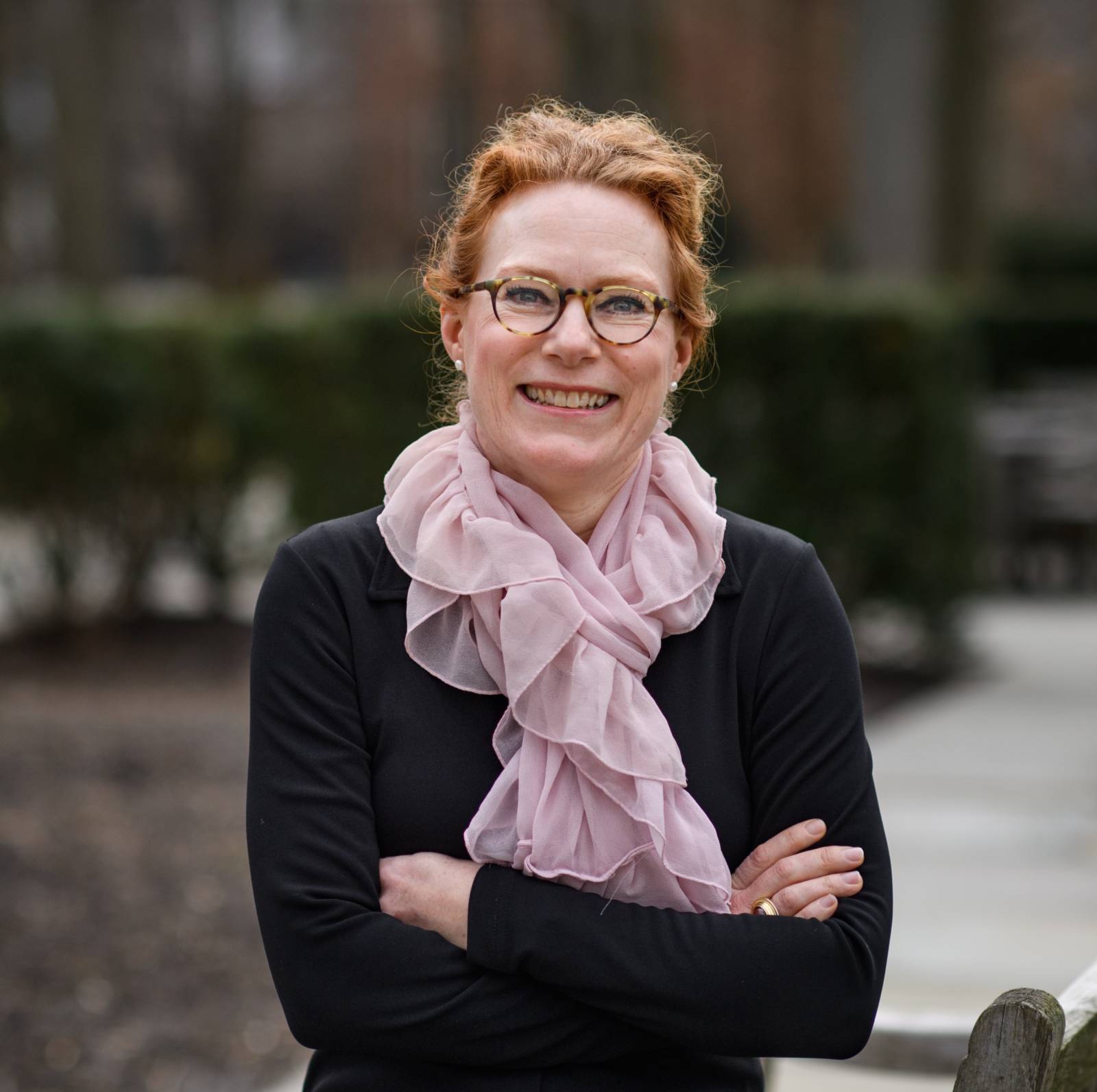
Professor Luijendijk holds several appointments at Princeton, including Professor of Religion, Chair of the Committee on the Study of Late Antiquity, and Head of Wilson College.

As part of our seasonal series on faculty research, I sat down with Professor of Religion Anne Marie Luijendijk to discuss her work in Early Christian History through the study of papyrus manuscripts. Having taken a course with Professor Luijendijk before, I must say that she is one of the most enthusiastic educators I’ve ever met. As such, it was definitely a privilege to speak with her about her own research. You can read our conversation below. If you’re interested in advice for working with a faculty adviser, the importance of taking walks, or the historical study of ancient religious manuscripts, then read on!

Categories
Conduct Research

How to Give an A+ Presentation in Seminar

In almost every seminar I’ve taken at Princeton, one of the main assignments has been a weekly student presentation. The professor typically passes a syllabus around the room and asks each student to choose a week or two to present. The structure of these presentations will vary, but I’ve collected some tips for how to prepare an A+ class presentation:

Make sure you understand your professor’s expectations. How long is the presentation supposed to be? Are you expected to lead the whole class discussion or just introduce the readings? What types of information do they want you to provide: Background for the readings? Summary of the arguments? Your own analysis? It can help to schedule a meeting with your professor the week before you present to review these expectations and receive some personalized guidance. If you’re brave enough, consider asking these questions in class on the first day so your classmates can also benefit!

Last week, I gave a presentation on the nineteenth-century warrior Black Hawk for my Native American History class. Meeting with my professor a few days before made the whole process so much easier.
Categories
Conduct Research Independent Work Plan Beyond Graduation Present & Publish Findings

Professorship and Mentorship: A Conversation with the Woodrow Wilson School’s Professor Udi Ofer

This winter, for our seasonal series entitled “Professorship and Mentorship,” PCURs interview a professor from their home department. In these interviews, professors shed light on the role that mentorship has played in their academic trajectory, including their previous experiences as undergraduate and graduate students as well as their current involvement with mentorship as independent work advisers for current Princeton undergraduates. Here, Andrea shares her interview.

~~~~~

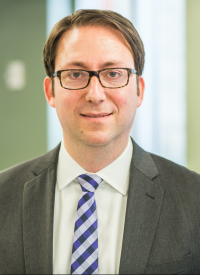
Udi Ofer is a Visiting Lecturer in Public Affairs in the Woodrow Wilson School.

Udi Ofer is a professor in the Woodrow Wilson School.

Outside of class, he is the Deputy National Political Director of the American Civil Liberties Union (ACLU) and Director of the ACLU’s Campaign for Smart Justice, which is dedicated to ending mass incarceration in the United States. His background as a civil rights lawyer brings a valuable perspective to the task force seminar “Rethinking Criminal Justice: Policy Responses to Mass Incarceration,” which he leads in the Woodrow Wilson School. I’m taking his seminar this semester, and because of my interest in his research (see posts here and here about my JP last semester, which was also about incarceration), I decided to interview him as part of PCUR’s winter seasonal series.


Categories
Conduct Research Independent Work

Macs, Tablets, Photoshop and More: Exploring the Digital Learning Lab

Have you ever wanted to learn Photoshop or make a 3D model? Maybe you’re trying to edit a video or record a podcast?

This year, I have become a frequent visitor to the Digital Learning Lab (DLL), an interdisciplinary, digital creative space located in Lewis Library. I first visited the DLL in the fall in order to borrow a drawing tablet to make a digital illustration for an issue of Nassau Weekly. Since my first introduction to the DLL, I have continued to learn more about all that is offered there, and I had to share!

Categories
Conduct Research Independent Work

Professorship and Mentorship: An Interview with Molecular Biology Professor Zemer Gitai

This winter, for our seasonal series entitled “Professorship and Mentorship,” PCURs interview a professor from their home department. In these interviews, professors shed light on the role that mentorship has played in their academic trajectory, including their previous experiences as undergraduate and graduate students as well as their current involvement with mentorship as independent work advisers for current Princeton undergraduates. Here, Nanako shares her interview.

~~~~~

As one can see from the many PCUR posts on Junior Papers

Professor Gitai wants students to be open minded about doing independent work. 

and Senior Theses, independent work is a huge part of the junior and senior experience here at Princeton. However, everyone has different views on why this process is important, and different departments have different requirements. For this Winter Seasonal Series, I decided to interview Professor Gitai, who I met when I took MOL214: Introduction to Molecular and Cellular Biology in the fall of my first year at Princeton. Read on to learn more about the thesis writing process for concentrators in molecular biology, and how to make sure you get the most out of this process!


Categories
Conduct Research Independent Work

Get to Know your Department Before Concentration Declaration

The spring semester is in full swing, and, for sophomores, concentration declaration is quickly approaching. Obviously, choosing a major is a big decision which will dictate what discipline you study in most of your courses and possibly direct your professional career. However, your department will also define your academic experience as an upperclass student in other ways; each department has different requirements for independent work, different research opportunities for undergraduates, and a different type of community. I found that considering all of these variables helped me to choose my major, but doing so may necessitate a bit of investigating.

So if you are a sophomore about to choose your concentration, what can you do over the next couple months to get to know the department(s) you are interested in?

Here are some tips to get you started, with examples from my beloved home Department of Geosciences:

Members of the geosciences department on a field trip to Iceland in 2016. Undergraduates planned and led this trip which brought together graduate students, post-docs, professors, and administrators. The close-knit community and emphasis on undergraduates are two of the main reasons I declared GEO. Before you declare your major, I encourage you to do some research into the departments you are interested in and find out more about their communities and what kind of opportunities are open to undergraduates.