Tips on Submitting Your Research for Publication: Part II

So you’ve just finished your JP, a dean’s date assignment, or some other research project. Considering how fast things seem to move here, you might have already forgotten about it – that’s how I felt when I turned in my R3 my first year.

However, I ended up taking another look at my R3 to prepare my presentation last spring for the Mary W. George Research Conference – the biannual writing conference – (tips on doing that here). During that process, I recognized some significant changes and expansions I could make on my R3, but I didn’t think much of it at the time.

After presenting my R3, I was encouraged by my writing seminar professor and some of my peers to expand my work and submit the manuscript for a conference or for publication. After submitting to a conference and to multiple research journals, here are some of my takeaways from the publication process:

Presenting my R3 at the Mary W. George Research conference helped me polish my paper.
Continue reading Tips on Submitting Your Research for Publication: Part II

Research Resources: Unsung Heroes, An Interview with PCUR Chief Correspondent Ellie Breitfeld ’20

For this year’s Winter Seasonal Series, entitled Research Resources: Unsung Heroes, each correspondent has selected a faculty member, staff member, or peer working for a research resource on campus to interview. We hope that these interviews will provide insight into the variety of resources available on campus and supply the unique perspective of the people behind these resources. Here, Andrea shares her interview

~~~

Continue reading Research Resources: Unsung Heroes, An Interview with PCUR Chief Correspondent Ellie Breitfeld ’20

Writing Lessons from my Creative Writing Workshop

This semester, I took my first fiction workshop in Princeton’s Creative Writing Program. I had taken two poetry courses in previous semesters and wanted to try something new. (Pro-tip: if you haven’t yet taken a CWR course, definitely consider applying for one before graduating).

Creative writing is, in many ways, a break from academic writing. It does not center on data, analysis, or argumentation. Instead, workshops focus on developing compelling images, characters, stories. Creative writing also has access to a wider variety of forms than academic writing, which tends to adhere to a narrow set of relatively conservative styles.

My Creative Writing professor, Yiyun Li, leading a Fiction workshop.

However, some of my workshop instructor’s writing advice has translated well to my academic writing. After all, writing is writing, and many of the same challenges confront both creative and academic writers. Below I’ve collected five of her best pieces of writing advice:

Continue reading Writing Lessons from my Creative Writing Workshop

Research Resources: Unsung Heroes, An Interview with Writing Center Fellow Johanne Kjaersgaard ‘22

For this year’s Winter Seasonal Series, entitled Research Resources: Unsung Heroes, each correspondent has selected a faculty member, staff member, or peer working for a research resource on campus to interview. We hope that these interviews will provide insight into the variety of resources available on campus and supply the unique perspective of the people behind these resources. Here, Soo shares her interview.

~~~

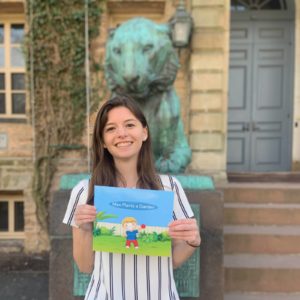
Johanne, a sophomore from Aarhus, Denmark 

As part of the Winter Seasonal Series, I interviewed Johanne Kjaersgaard ’22, an international student from Aarhus, Denmark. A prospective Politics major, she currently works as a Fellow at the Writing Center, one of the most widely-used academic support services on campus. Writing Center Fellows take on a variety of tasks, from guiding students in formulating and structuring papers to also offering advice to juniors and seniors in developing their senior theses and navigating their independent research projects. 

Continue reading Research Resources: Unsung Heroes, An Interview with Writing Center Fellow Johanne Kjaersgaard ‘22

Finding Funding for Unpaid Internships

We spend a lot of time finding and deciding what internships and jobs to pursue over the summer. There are quite a few posts on this blog alone that help with that process, including this one. After exploring my options, I think I know what I’ll be doing this summer: staying on campus to do research in a neuroscience lab (an experience I’ll talk more about in a future post).

However, knowing what I’ll be doing this summer isn’t all there is to finalizing my summer plans. For one, I don’t know how my experience will actually be funded. Second, I’m unsure where I’ll be staying for the duration of my research.

To better finalize my plans, I turned to SAFE, the Student Activities Funding Engine. SAFE is a website where students can apply for funding for internships and other activities. In addition to finding a relevant funding source for my summer plans, I came across many other interesting funding opportunities for students who have secured unpaid internships over the summer. I’ve gone ahead and summarized a few of them below.

The Student Activities Funding Engine Website (SAFE)
Continue reading Finding Funding for Unpaid Internships

The Search for the Perfect Writing Space

It can be difficult to find the perfect place to write. When I leave my afternoon classes, I often find myself standing on the sidewalk, unsure of where to go next. There are so many study spaces on this campus, but some days nothing feels right. (For some ideas, check out Nanako’s post about finding the perfect space for you)

The space where I work matters. And frustratingly, what I need in a study space is in constant flux, depending both on my mood and the type of work I need to get done: energetic spaces for sleepy mornings, quiet spaces for more focused work, and so on. Over my few years at Princeton, I’ve learned how different study spaces affect me: campus cafes are energizing, but distracting; Firestone carrels are productive, but isolating; and my dorm room puts me to sleep within fifteen minutes—no matter the time of day.

With larger projects like a thesis or final paper, though, it can be even harder to find the right space to write. In my experience, larger projects require more focus and endurance, making it hard to be productive in a loud, busy space. On the other hand, the prospect of extended hours in library isolation is almost always unappealing to me.

Continue reading The Search for the Perfect Writing Space

Tips for Planning a Research Trip

As I have written on this blog before, you unfortunately may not find all the material you need for a research project in Princeton’s own library system. Borrow Direct and Interlibrary Loan may  help bring items from elsewhere to Princeton, but often with primary historical sources, you may find that you need to travel to an archive to view them. This is especially the case if the source you need is only available in its original form (and thus may be difficult for a peer institution to duplicate or send directly to Princeton), or if you are unsure of precisely what sources are available, and need to browse a collection in full.

I found myself in this position just a few weeks before fall break. As I explained here, I had just expanded my JP topic to consider a broad range of American antislavery responses to the Paris June Days rebellion of 1848. My adviser suggested I look through the manuscript collections of a number of prominent activists of the time. Many of them— such as Wendell Phillips, William Lloyd Garrison, and Theodore Parker— worked out of Boston, and, as I discovered, a number of institutions there now hold their papers. I soon realized I would have to make a trip over fall break if I wanted to view all of these collections.

Continue reading Tips for Planning a Research Trip

Crash Course: Letters of Recommendation

No matter what kind of application process you’re working through, you’ll likely need some letters of recommendation. There are a lot of common misconceptions about how to go about securing these letters that I will explain here; I hope this post will help clear some of them up!

Continue reading Crash Course: Letters of Recommendation

Preparing for Academic Work in Foreign Languages

Last summer, I visited my native country, Honduras, for the first time in 10 years. Because I did not get to experience a lot of the culture while I was living there during my childhood, my family and I planned a trip across some of the most historically rich landmarks in the country, including the Mayan ruins. 

To learn the most during the trip, I knew I would have to complete some preliminary research on my own to acquaint myself with the history and culture in general, which of course meant reading research papers and articles in Spanish. I knew this task would be difficult, because despite the fact that I lived in Honduras for 10 years and had been speaking Spanish at home my entire life, I had never read or written academic work in Spanish. 

Whether you are reading sources in other languages, preparing to go abroad for research, or writing for a class or independent work in a foreign language, completing this task will be different than completing an assignment in English. In this post, I will highlight my two biggest take-aways on how to prepare to engage with scholarly work in another language. 

Continue reading Preparing for Academic Work in Foreign Languages

Tips for Synthesizing Information

Taking notes with an eye toward synthesis (that is, making connections to previous material, readings, lectures, and so forth) can give you a head start on the writing process.

One of the challenges of college is assimilating large amounts of information from a variety of sources: lectures, course readings, independent work research, precept discussions, extracurricular programming—the list goes on and on. Compounding the challenge is the fact that what’s ultimately demanded of students is not mere recall, which can be accomplished through memorization. Rather, we’re charged with synthesizing disparate materials, pulling things together, making connections across genres of information. In this post, I reflect on some of the ways I try to do this. Continue reading Tips for Synthesizing Information