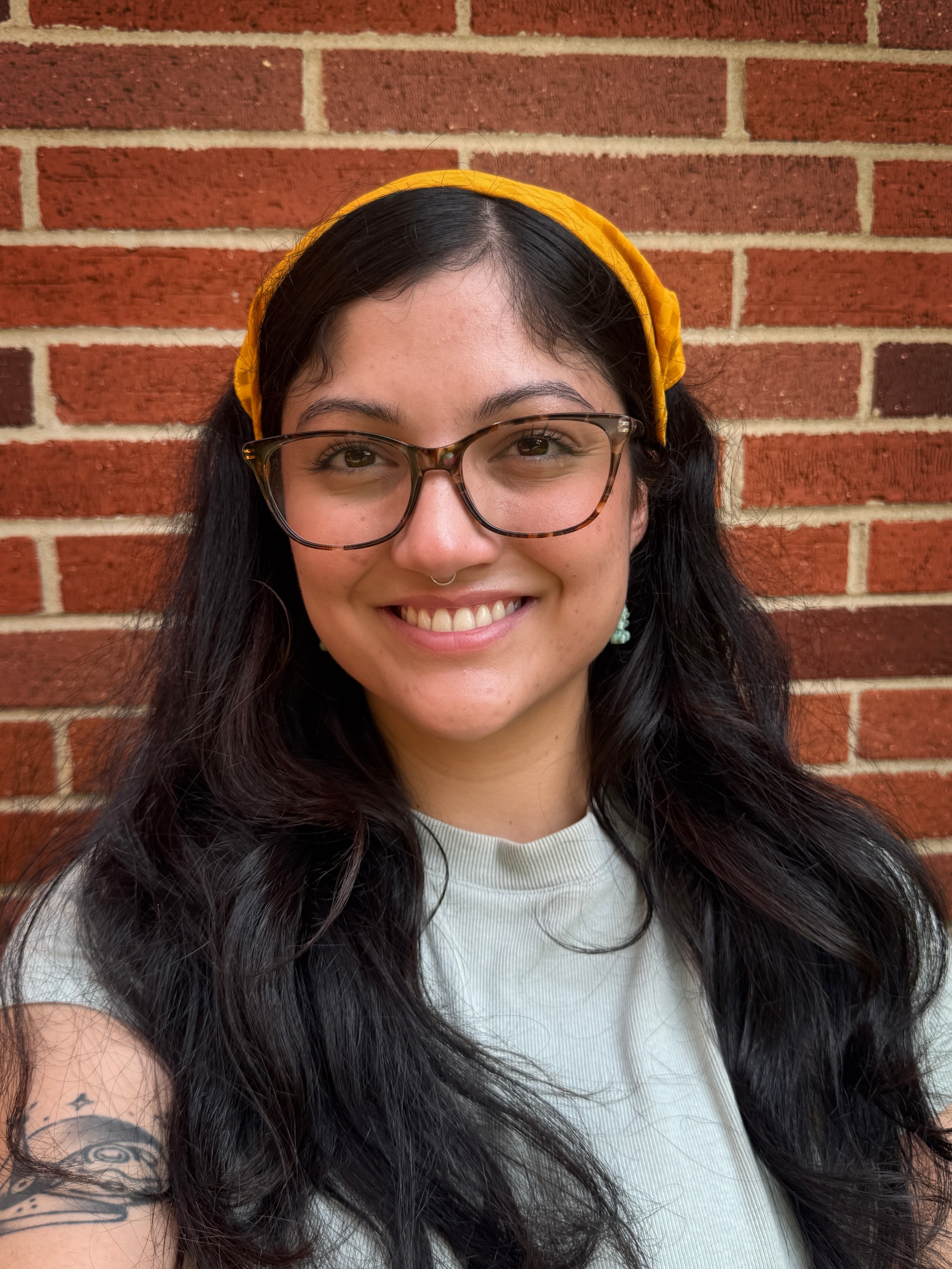
Headshot of Ciara Sanders, Ph.D. student. Photo credit: Ciara Sanders.
For this post, I decided to ask third-year Ph.D. student Ciara Sanders in Dr. Brooks Lab here at Princeton about her experience in molecular biology graduate school. She hails from California and is currently carrying out microbiology research for her Ph.D. For students considering molecular biology research/Ph.D. as a career, these questions may help answer any concerns you have, especially since medical school seems to be the popular option for molecular biology majors.
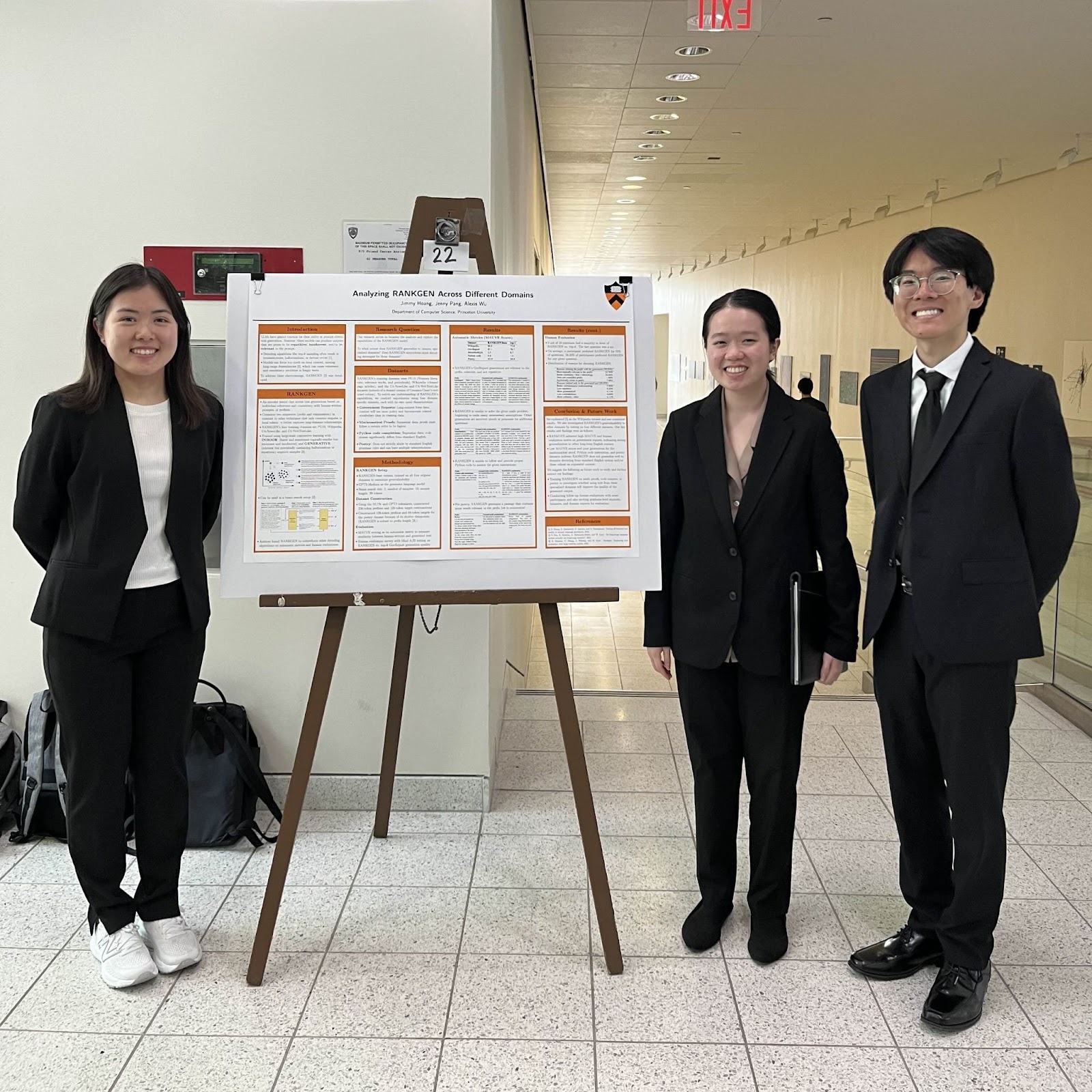
Alexis Wu (author), Jenny Pang ‘24, and Jimmy Hoang ‘24 at the COS 484: Natural Language Processing Spring 2024 poster session.
The end of the semester is often accompanied by deadlines for semester-long projects and final papers (including the infamous Dean’s Date deadline, which past correspondent Ryan Champeau has amazing advice on!). For some classes, students may be asked to create an academic or research poster and present their work to their peers in a poster session. A couple of courses I have taken where I produced a final research paper were COS 484: Natural Language Processing and ASA 238: Asian-American Psyches.
In ASA 238, the department provided funding so that all students in the class could have their poster printed through Princeton Print & Mail Services. However, this option typically is not free-of-charge to students. Moreover, since this process typically takes 4-5 business days after the proof is approved to be printed, course instructors may set conservatively early deadlines so that all students’ posters may be printed on time. With more deadlines in other classes, this can create additional stress.
The great news is, this stress can be avoided with a free, straightforward alternative: utilizing the Makerspace’s Large Format Printer. The Princeton University Library (PUL) Makerspace is a creative space on the A-level of the Lewis Science Library open to current students, faculty, and staff. If you’ve never used the space before, it might be daunting, but I hope this article will clarify the process and assuage any fears you may have!
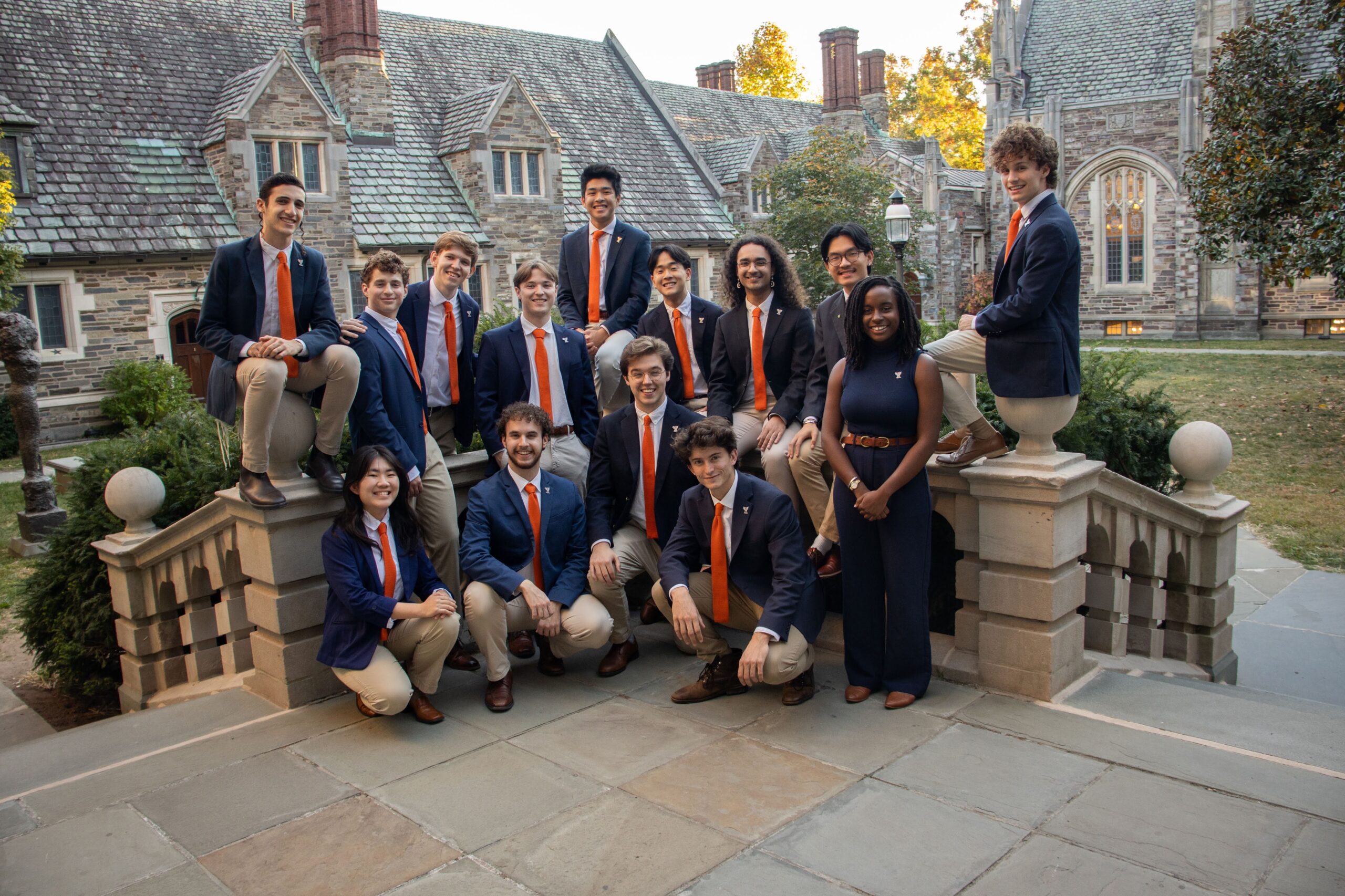
Photo of the Footnotes, Princeton’s fresh low-voice a cappella group founded in 1959
Imagine standing in front of a big audience, heart racing, ready to blend your voice with others and hit the notes of an intricate a cappella arrangement. Every beat, every breath, is crucial. Every time I stand on stage or under an arch with my a cappella group, the Princeton Footnotes, I think of how similar singing and music feels to what I do in the lab. You might be thinking that singing in an a cappella group and doing research are worlds apart. However, these two passions have formed a bond in ways that I never believed possible. In fact, the creativity, collaboration, and discipline I have channeled in being a part of the Footnotes have made me a better researcher—and vice versa.
A student working in a lab, potentially on a research project for their senior work that would greatly benefit from funding! Photo credit: Nick Donnoli.
You’ve brainstormed a great idea for your research project. You have the details of your topic all figured out, but you need some assistance with figuring out the logistics of the financial aspects that come with your great idea.
If that’s you, here’s a quick guide on one way of securing funding as a Princeton student!
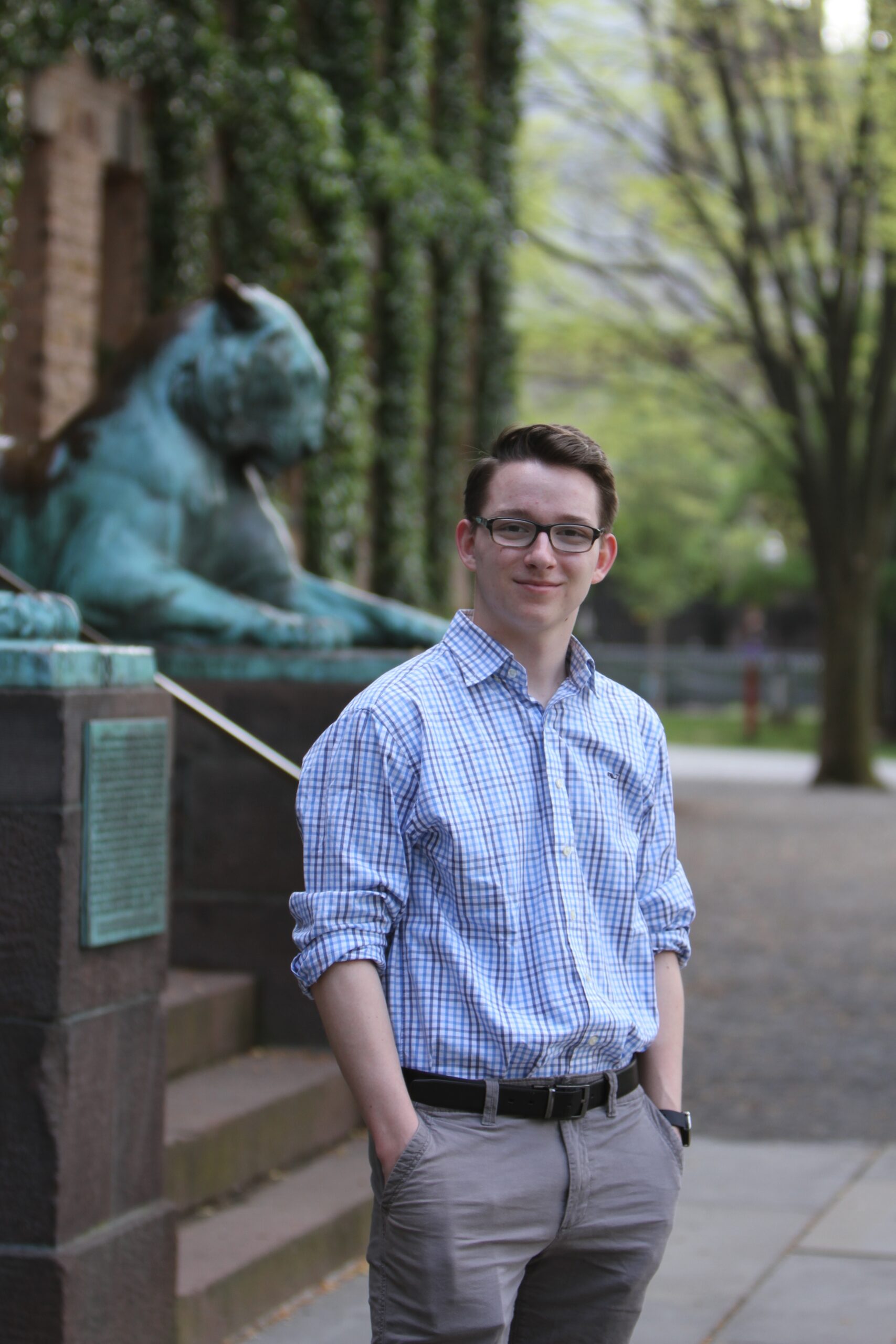
Jeremy Kiil is an alum from the Class of 2024 who majored in Electrical and Computer Engineering. He now works as a power engineer at Qualcomm in Raleigh, NC. While at Princeton, he was a member of Princeton Racing Electric, a worship leader in Princeton Christian Fellowship, and Vice President of Colonial Club.
At Princeton, I’ve formed close friendships with students across all years and departments, witnessing their challenges, hard work, and achievements, from difficult courses to their independent work and senior theses. When my friends often name-drop courses from their departments and share exciting insights from their day, I realize I haven’t taken many of those classes myself. This realization sparked a desire to generate deeper conversations about their academic interests, even if I don’t fully grasp all the technical details and concepts of their field.
One of these conversations was with Jeremy Kiil ‘24 about his experience in ‘Car Lab’ (formally, ECE 302: Robotics and Autonomous Systems Lab), a required course for all ECE juniors. To my surprise, our conversation wasn’t focused on the nitty-gritty details about hardware components. Instead, Jeremy shared insights applicable to all students. I found his advice on making consistent progress, staying resilient, and taking care of oneself as wonderful reminders for everyone. Inspired by our conversation, I wanted to document and share it with a broader audience.
The Princeton Index of Medieval Art used to be a physical register, much like this one.
Many academic disciplines engage with visual art, whether from the standpoint of art history, material culture, or even paleography. The Princeton Index of Medieval Art is a unique database well-suited to the needs of researchers across various fields. Whether history, comparative literature, art, or classics, the index gathers a vast amount of information on Late Antique and Medieval Artworks, neatly sorted in an accessible way.
Students collaborating in a molecular biology laboratory. Photo credit: Matt Raspanti.
Many students at Princeton spend their summers exploring a research project or a lab internship in their field of interest. But what’s next? Maybe you really enjoyed your experience and wanted to continue. Then, you come across the question: should I stay in the same lab or join a different lab?
This was the question I pondered when entering my sophomore year. I had an incredible summer experience as an High Meadows Environmental Institute intern in the Sigman Research Laboratory in the summer of 2023. I worked on a project that enabled my exploration of biogeochemical reconstruction via an investigation of the marine environment during a historical mass extinction through the use of a biological proxy known as foraminifera. But, where did I want to go from there? If you’re in a similar position, here are some things to keep in mind!
Trustee Reading Room, Firestone Library. Photo credit: Matt Raspanti.
“So what does this data mean?” My professor asked, looking at me expectantly. What does the data mean? “What does this data tell you about the cancer cells?” If he thought rephrasing it made it any better, it didn’t. I am not quite sure what I said to save face (and frankly, I really do not want to remember), but I must have said something because my professor just nodded. “When you look at your data, I want you to create a story. It may be a mystery, but then you’d be providing a certain set of clues.”
It is very easy to get caught up in generating data, especially if the data is particularly tricky and you’re concerned about making sure it looks right, generating the right graphs, having the right axes, numbers and titles. It can be a headache. By the time the graphs are done, I would rather not look at it anymore or think too hard about the numbers. However, as lab reports and analysis questions stack up for our classes, it becomes prudent to know how to analyze these graphs. While I am not a seasoned veteran, I have a few tips that helped me approach these types of situations.
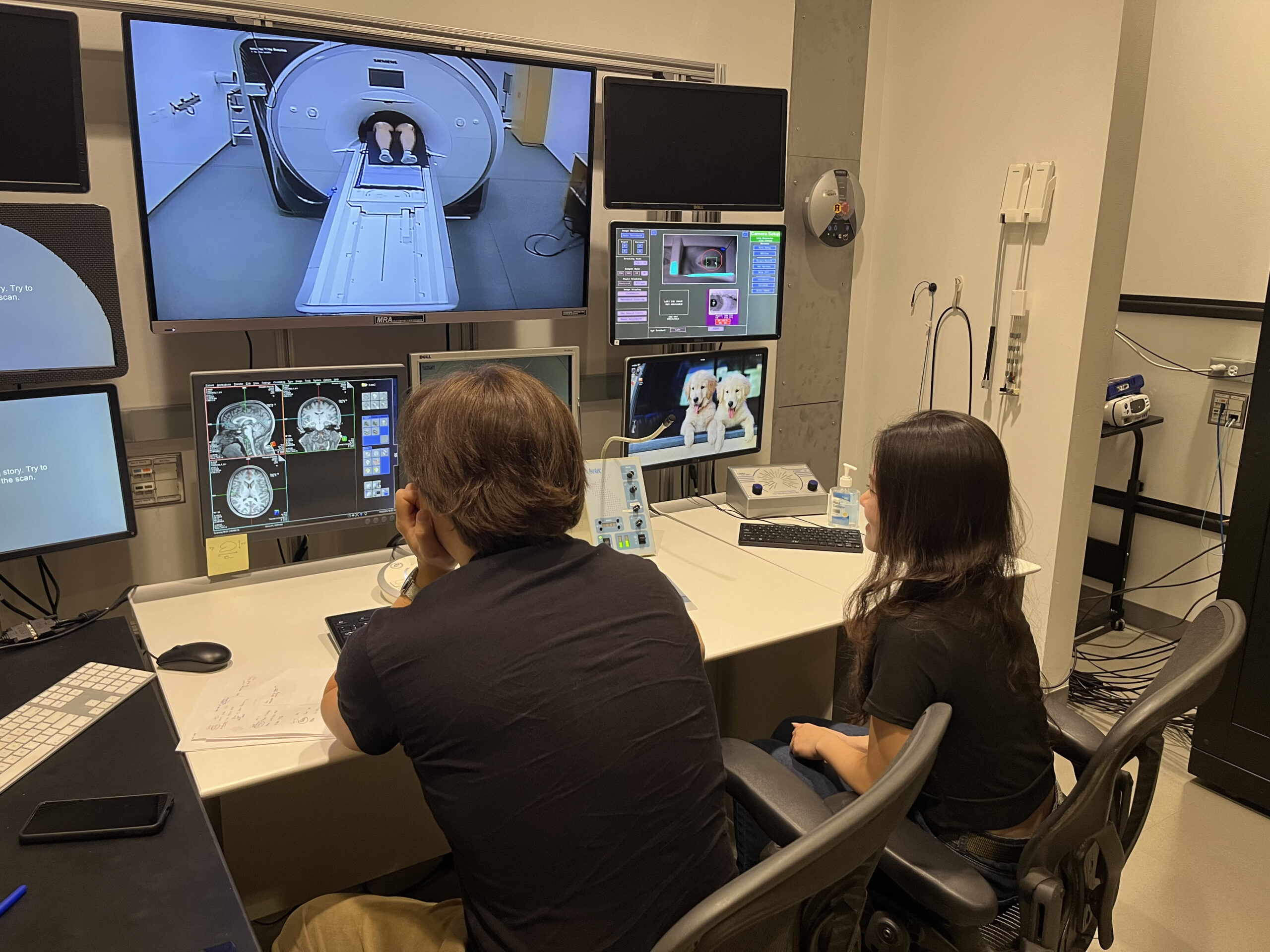
Dr. Augustin Hennings and I in the MRI control room, C Level, PNI
It felt a little odd to begin an email with, “I wrote about your lab in my application to Princeton!” but it was the truth. Since high school, I had been fascinated by memory and its profound effects on shaping our lives, which motivated me to pursue a degree in neuroscience. Professor Kenneth Norman’s work in the Princeton Computational Memory Lab captured my attention while I was exploring Princeton’s resources for my application essays. I wrote about how I wanted to be a part of the lab and study human memory, specifically focusing on how the brain and mind can overcome the emotional consequences of trauma-based memories. After arriving at Princeton, I had been eagerly awaiting the right time to reach out to Professor Norman about getting involved in his research.
What is research? Perhaps we can ask the Internet…
If you’re anything like me, you first thought that “research” essentially amounted to surfing the Internet. Back in the glory days of middle school, “research” meant the rewarded privilege of getting to use the laptop carts, productively using class time on googling information about our various project topics (and definitely not secretly playing games). Now, as the mature, worldly college student you now are, perhaps you think you know better. “True” academic research, the clever reader now knowingly tells themselves, is historians dusting through archival documents and scientists mixing frothy chemicals in the lab.
Yet there’s a missing part here: a crucial element that takes us back to our elementary and middle days of excited googling. To make any significant intellectual contribution to any field, one first has to understand the current state of knowledge in that same field. To borrow the term favored by the Writing Program, we need to understand the scholarly conversation. How do we know if we’re making a contribution to something, if we don’t understand what that something is? Understanding the current state of research in a given field is a crucially important skill—really, a prerequisite—for conducting your own effective research in that field.