Have a presentation for one of your courses and unsure where to start? Or maybe you need to present for a research symposium? During your undergraduate years, you will come across many times when you may have to give a presentation to present your research for coursework or perhaps for an individual research pursuit. Here are some tips to help you present easily and effectively!
Give the most nerve-free presentation with these tips!
Fortunately, if you’re stressed out trying to write all of these summer program applications, Princeton has plenty of comfortable study spaces to be working, like Quincy Monday ’23 in the lobby of NCW. Photo Credits: Dan Komoda (2023)
Applying to summer programs can seem like a daunting task when you may not even know what you want to do next summer. The busyness of the semester certainly hasn’t created a ton of time to be thinking about these things! Fortunately, winter break is a great time to work on applications to summer programs, as many of the earlier applications are often due early in the year. Having prepared them beforehand can ease a lot of stress, since the middle of the spring semester isn’t the most convenient time to be starting these applications. These timelines can vary by field, so it could be a bit different based on the type of program you are applying to—the career center has a great timeline of internship recruitment that is sorted by field so you can see the differences. Regardless, it’s great to work on these during the break when you don’t have courses.
You may be looking for something far away, here in Princeton, an industry internship at a company, or a research program at a university. Regardless of if you know exactly what you want to do or still aren’t sure, here are some tips to help you sort through this process.
Whether you’re jumping onto the wagon of a research project or are pursuing a research assignment in a course, professors will often assign readings of journal articles as a way to familiarize students with ongoing research in the field. However, for newcomers to a topic, tackling the understanding of a literature review can often be difficult with the influx of new vocabulary and complex, dense information on the topic all at once. Here are some tips on how you can tackle the difficulty of journal reading.
Reading a research journal and understanding its key points can be achieved with just a few tips of advice!
As course selection begins, you might find yourself searching endlessly through the Course Offerings webpage, trying to craft the perfect schedule for next semester. You’re probably weighing a number of different factors— the professor, the class topic, the reading list, the different requirements it fulfills— and trying to balance these in the best way possible.There is another possibility here, which you can’t find in the course offerings: reading courses. Not advertised on department websites or listed with course offerings, reading courses are some of Princeton’s hidden academic gems. The University defines a reading course as a specially designed course not normally offered as part of the curriculum that is arranged between a student and a faculty member. These courses count for academic credit, and focus on a topic of the student’s choosing. If you’ve ever dreamed about designing your own course, this is your opportunity.
It’s always a mixed bag of emotions when it comes to course selection. Personally, I find the period between when the next semester’s courses are released and before the course selection date to be especially fun—I can play around with the different ideal schedules (potentially having no-class Fridays and no night classes), look ahead to the rest of the courses that I’ll be taking during my time here, and discover new classes. Whether people end up choosing to take classes to fulfill requirements, classes that interest them, or classes that could teach them important skills, an important aspect in choosing courses for the upcoming semester is course planning. TigerApps is a group of student developers that builds apps to improve the campus life experience for Princeton students. One of the TigerApps created is ReCal, which is the most popular way to aid in course planning and ensure a smooth process for course selection. Recently, TigerJunction ReCal+, an application for course planning inspired by ReCal and designed to be an “improved” version, has made its rounds among students. As course selection season is upon us, I wanted to take the opportunity to show how I plan my courses for the next semester and provide an in-depth comparison between ReCal and TigerJunction ReCal+ to inform how other students plan their courses for the upcoming semesters.
Unfortunately, many of us will experience burnout sometime during our four years here at Princeton. For those of you who may not have heard this term before, the definition is in its name: burnout involves losing that spark of motivation that previously might have kept you pushing forward through your workload. Keep in mind that burnout is distinct from things like anxiety or depression that may also be impacting your academic performance in a similar way. If you think you are struggling with these instead, you can contact Princeton’s Counseling and Psychological Services (CPS) to seek longer-term professional help. They also offer urgent consultations for more immediate situations. Burnout specifically deals much more with the ebbs and flows that can happen as stress builds over the course of a semester. Thankfully, there are many ways to combat and minimize the negative effects of burnout. If you have a few overdue assignments, slept through a few lectures, or just generally feel you are not quite as on top of things as you may have been when the semester began, here are some of my tips for getting out of an academic slump.
These tips might be of use if you’re having a particularly tiring week!
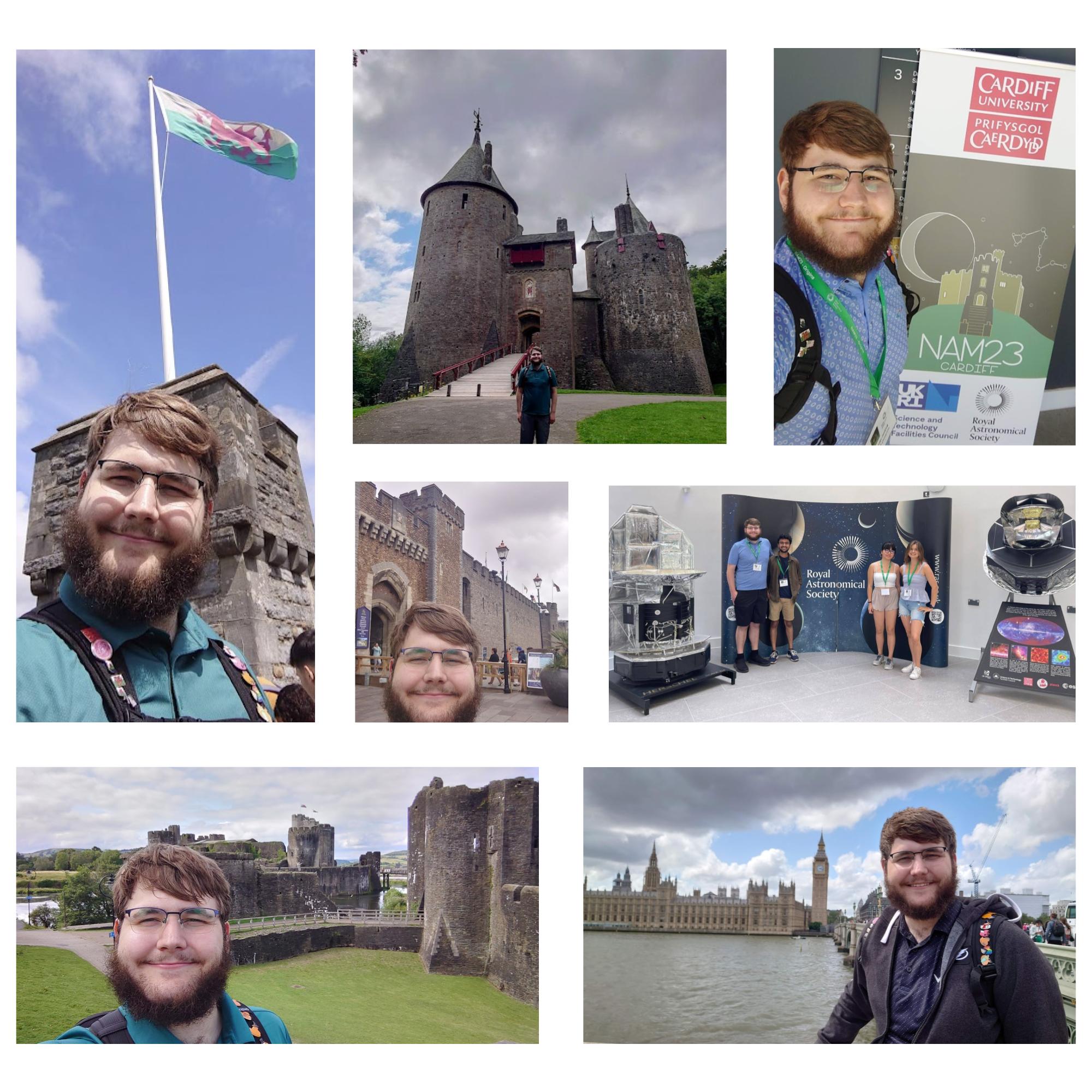
Some photos from writer Xander Jenkin’s International Internship in Wales, UK. Photo credits: Xander Jenkin (2023)
Last summer, I went abroad on a fully-funded internship doing astrophysics research at Cardiff University, in Cardiff, Wales, UK. This experience not only solidified my career decision to pursue astrophysics research, but also gave me a unique immersion into Wales and Welsh culture as well as the broader United Kingdom. If you are curious about research abroad, read on!
Even before stepping foot on campus, I had already heard of the challenges that came with the Writing Seminar, the first-year writing requirement. Students are able to rank by preference several Writing Seminars covering different topics, which have included topics such as WRI 116: Sustainable Futures and WRI 159: Gray Matter. In each of these Writing Seminars, students develop their writing skills through a research focus, writing three research papers throughout the semester. As Writing Seminars are such a widely discussed topic for first-years and there is an abundance of advice from juniors and seniors floating around, I wanted to write a more detailed article specifically about what I did to learn how to write.
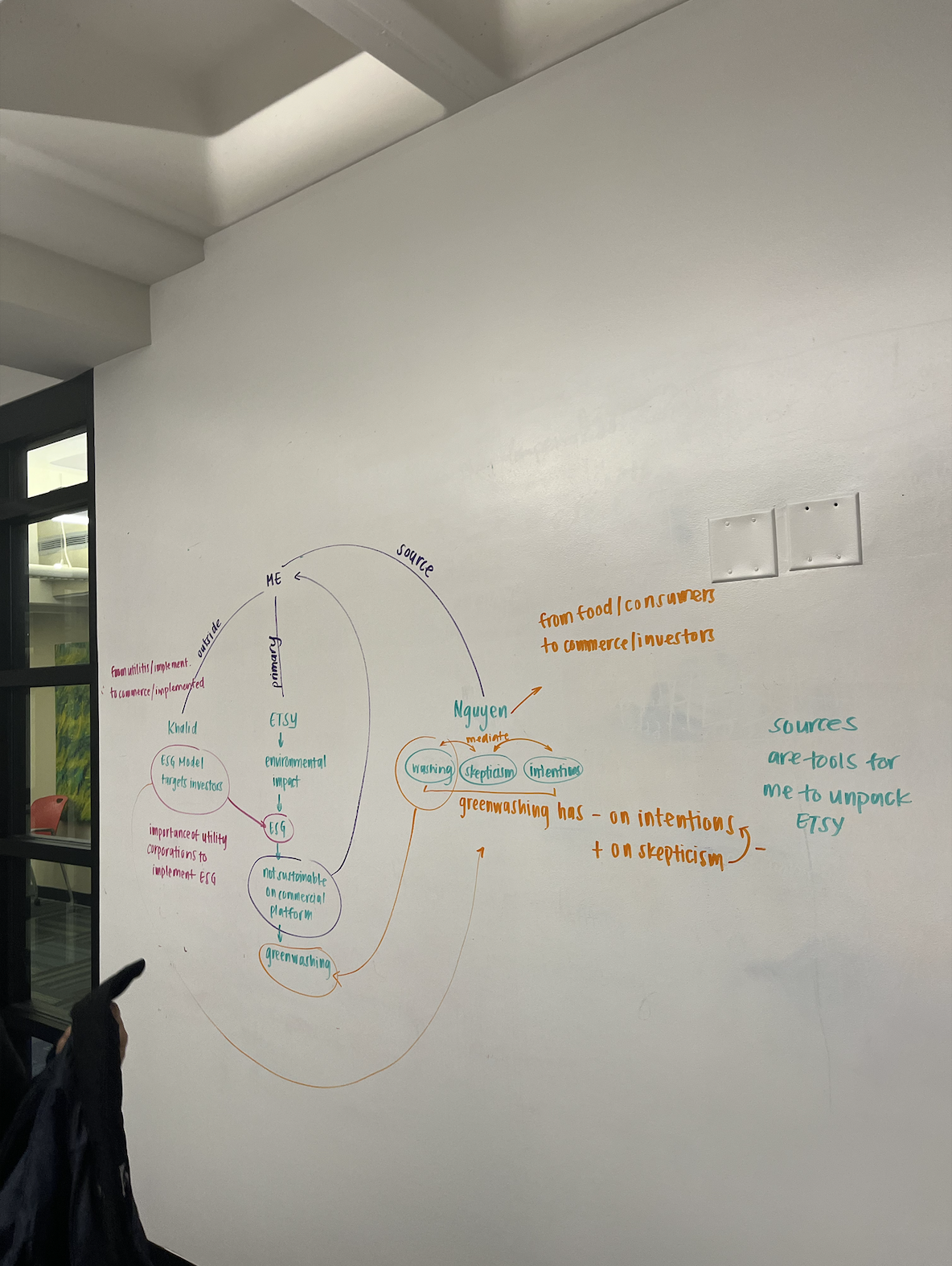
Picture of the flowchart I created for my R2; tip #3, use whiteboards!
You may not feel as confident as CEE department graduate student Meiqi Yang looks here working on lithium extraction, but as you do more research over time, you’ll feel much more comfortable as you progress. Photo Credit: Bumper DeJesus (2023)
When doing research as an undergraduate, sometimes the work you are doing and topics you study may be very familiar to you, other times you may be totally unfamiliar with what is going on. Maybe you even have some previous experience but the topic of the project is way above anything you’ve done before—you might be working with a physics professor on something really advanced like quantum field theory or condensed matter, which you have never taken a class on and are expected to now work on and understand what’s going on during your project. This can happen a lot in any field, not just STEM, where your professor may have spent years studying something that you are expected to contribute to after having taken maybe a few classes in it, if that. Some professors may work more often with graduate students, so they may assume that you know “basic” things about your field that you as an undergrad have just encountered for the first time: you could be working with an Art History professor who focuses on Late Antiquity, and they start throwing around terms and common symbols that you aren’t able to easily recognize.
Regardless of the circumstances, this situation comes up a lot in undergraduate research. The fortunate thing is that tons of professors are willing to work with students who have no prior experience in the subject, but you still have to wrestle with “catching up” as you try to somewhat understand anything that you’re actually doing. Here are some tips to try to get acclimated with difficult, unfamiliar topics that may be well above your current depth as an undergraduate.
Course selection is coming up! Picking classes that you are really excited about can be one of the best academic moments of the semester. Doing as much research on a course as possible can help to ensure I will enjoy a professor’s teaching style, which in my opinion is just as important as being interested in the subject matter. As those of us who have dabbled in the social sciences know, survey data can be a great method for evaluation, which is why when it comes to picking courses, I tend to weigh student ratings pretty heavily.
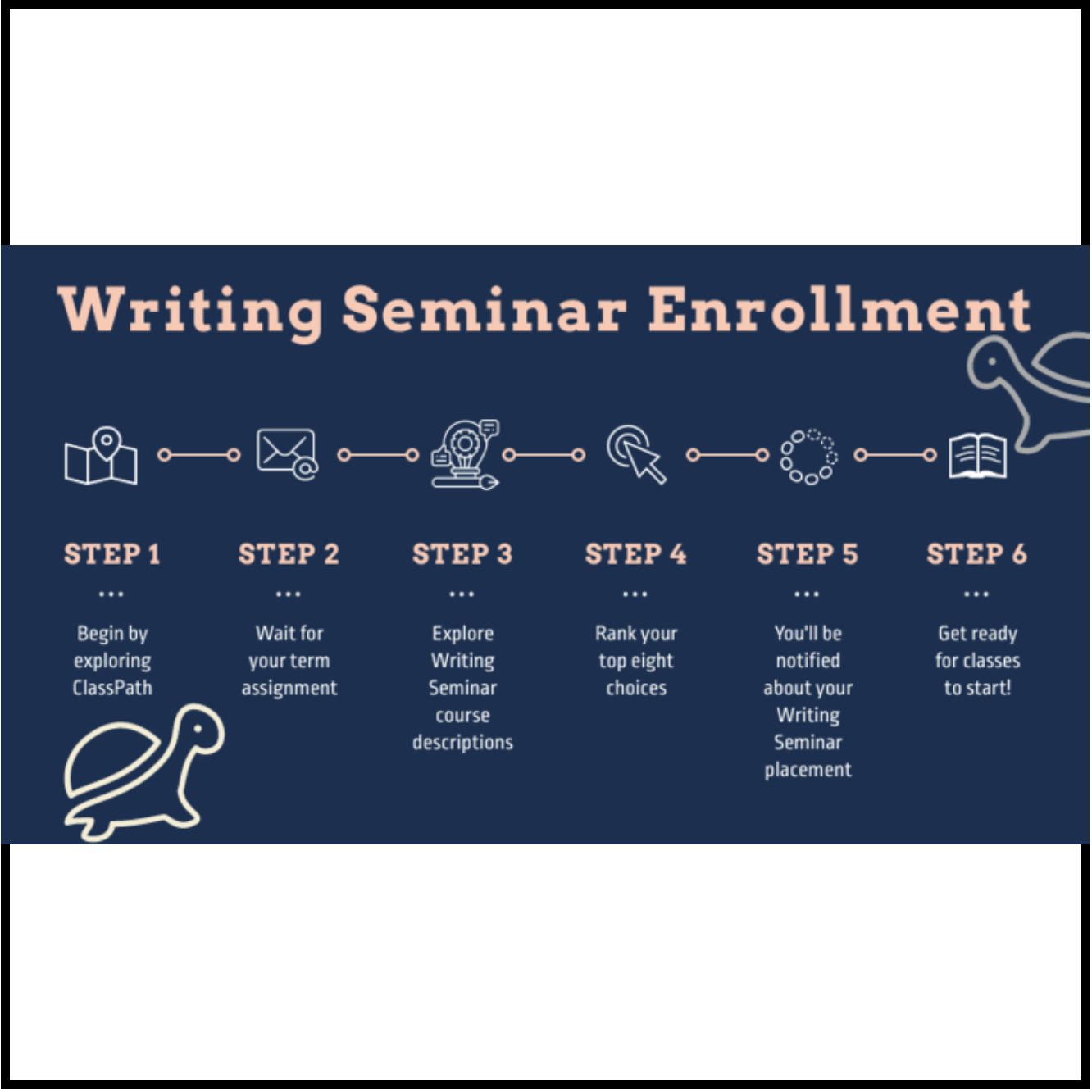
This helpful diagram from the Writing Program website outlines the steps of the writing seminar enrollment process.
This strategy for course selection, however, is far from perfect. Now that I am more than halfway through my time at Princeton, I am all too familiar with hoping to read the reviews for a course only to discover that there aren’t any. The first time I had this experience was in the fall of my first year when I was trying to pick a writing seminar.
That’s right, first-years! For those of you who are taking your writing seminar this spring, you will soon discover (if you haven’t already) that there is no way to see the feedback provided on these courses by previous students. On top of the lack of access to course evaluations, there is no add/drop period for writing seminar; once you get your assignment, you will have to stick with it. So where should you start when trying to decide how to rank your top choices?