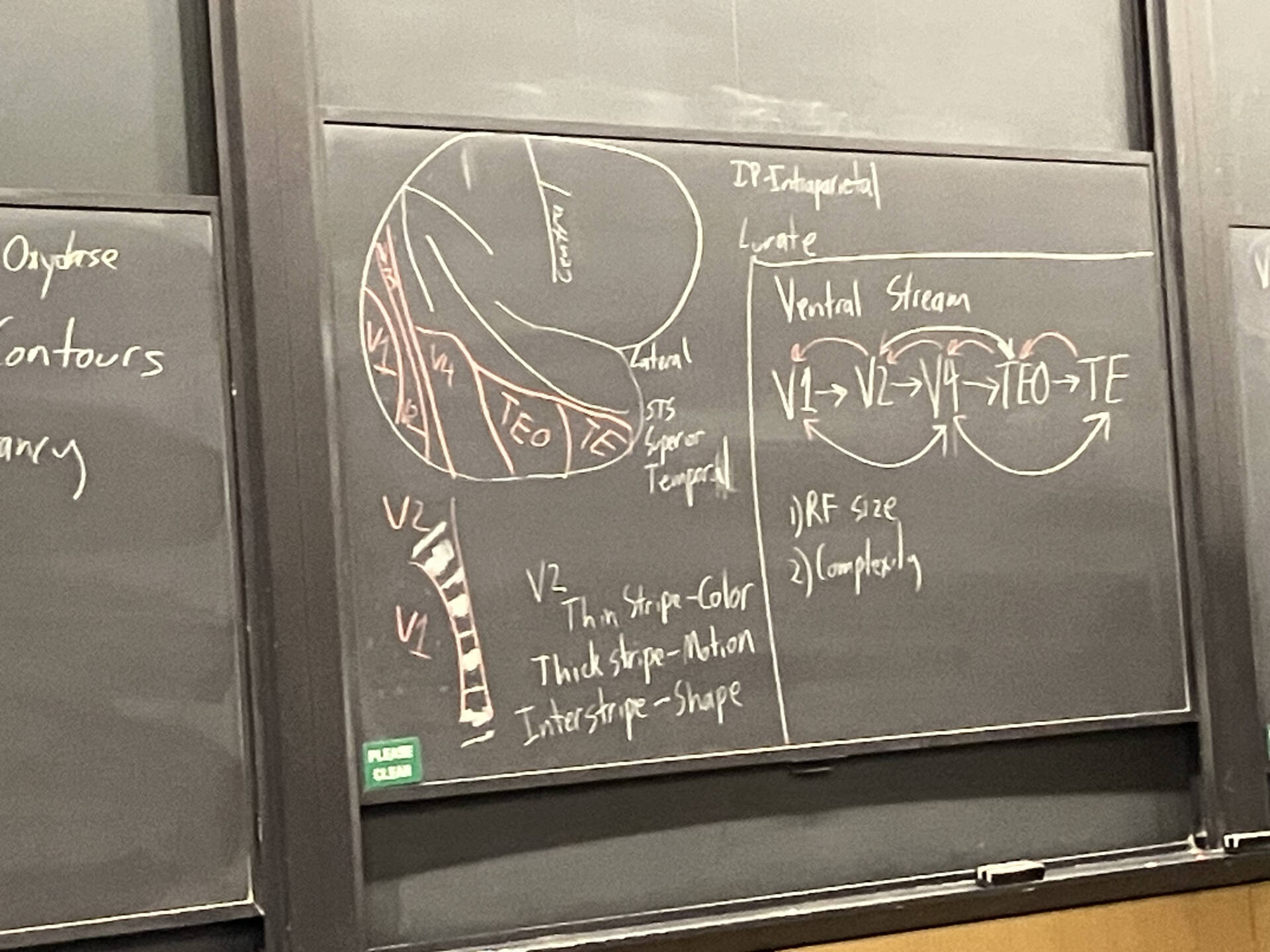
Blackboard featuring some neuroscience concepts from a neuro class taken at Princeton
We all have to do it: read research papers. They can be jargon-y, long, confusing, and all in all an upsetting experience, but there’s no way around it.
First of all, let’s start by approaching this with a more positive mindset. Reading research papers can give us access to a bucketload of information that no other resource can provide. It is the most updated source on your favorite scientific topics, a Vogue magazine for the scientific world if you will. As such, reading them can be fun–but only if you know how. Now that we are a bit more optimistic about reading them, we can start with the first few steps.
Many books in a library. Citing them all would probably take a long time. Credit: Emil Widlund
If I have to be completely honest, dealing with citations is my least favorite portion of the academic writing process. Ascertaining what citation style I need to use, successfully figuring out how to actually format citations in that style, and managing the hodgepodge of footnotes and endnotes are all tasks that seem, to me, cumbersome. Of course, these are necessary tasks: it is imperative that if we paraphrase, quote, or utilize in any way the work of others, we should always attribute the proper credit to them. But recognizing the importance of academic integrity doesn’t prevent us from still finding the task of dealing with citations to be a chore! If you’re in the same boat as I am, I’ll try to provide some advice and tips on dealing with citations!
You’ve finished a research project and now you’re on to the final step: presenting your work! It’s time to share the incredible work you’ve done with the general public, and one of the best ways to do so is to create a poster conveying the significance and conclusions of your research. This will be an essential skill during your time at Princeton whether for a course or as a part of your junior and senior independent work. If this is your first time creating a poster presentation, check this blog out!
Sara Akiba ‘26 with her poster presentation on “Foraminifera-bound δ13C as a Paleo CO2 Proxy: Methods Testing” for the Geosciences Junior Poster Presentations! If you want a poster as great as hers, continue reading below for some advice.
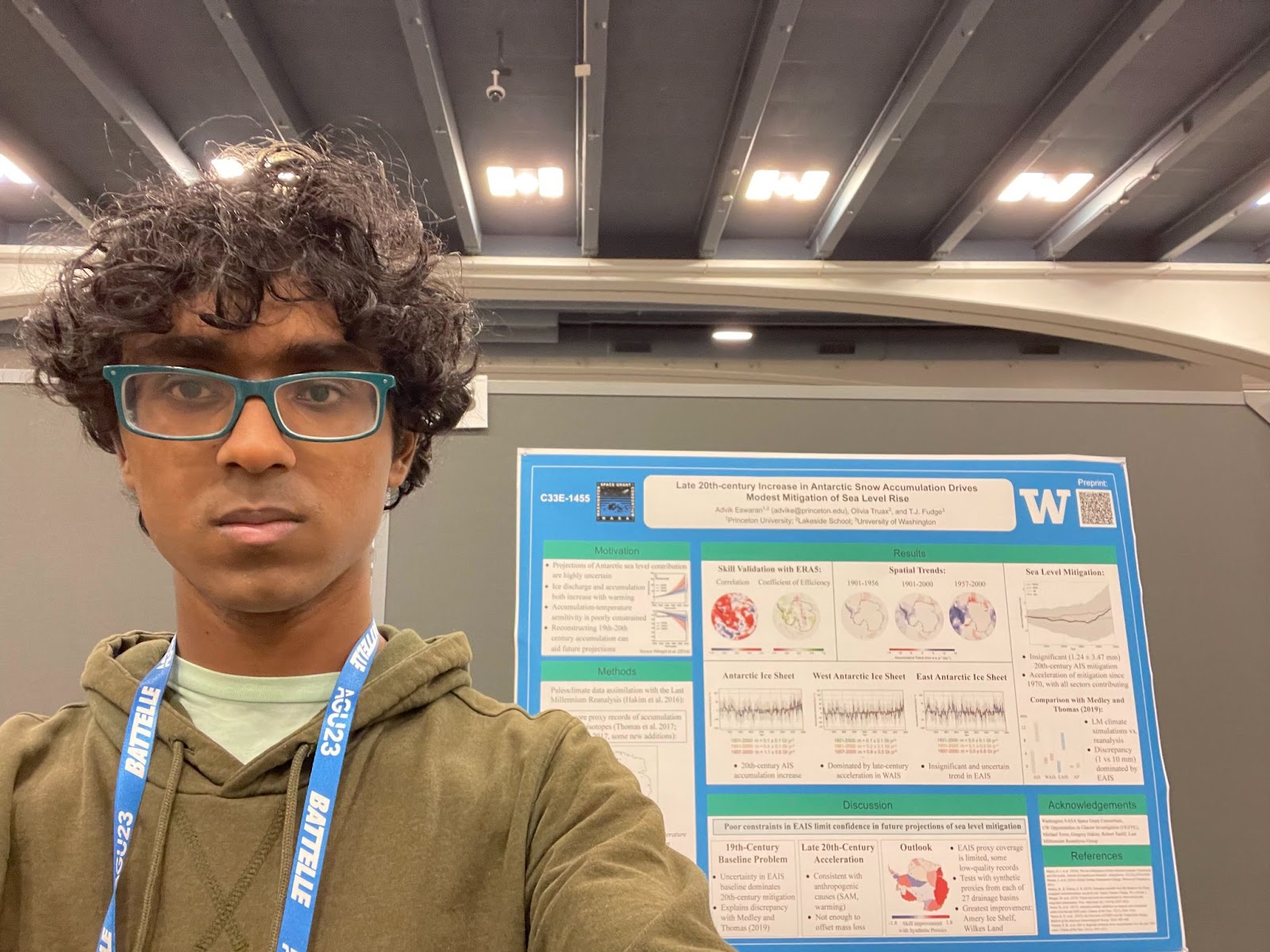
The author presenting at the American Geophysical Union 2023 Fall Meeting.
Imagine the following scenario: after months of committed, in-depth research on the academic topic of your choice, you’ve finally obtained some pretty cool and novel results. Your adviser is excited, and their reaction is enthusiastic—“Hey, what if we submit an abstract to an academic conference?” This was the situation I found myself in last year, when my advisers suggested I present my research on reconstructing past Antarctic snowfall patterns at the American Geophysical Union Fall Meeting in San Francisco. I felt honored and excited, but also a bit nervous. How was I, a lowly undergraduate, going to present my work to a massive academic conference the size of a midsized town?
Luckily, I was fortunate enough to receive a lot of great advice from mentors and peers, and in the end it turned out great! Now, I’ll try and share some of that advice with you all—I hope you’ll find it useful!
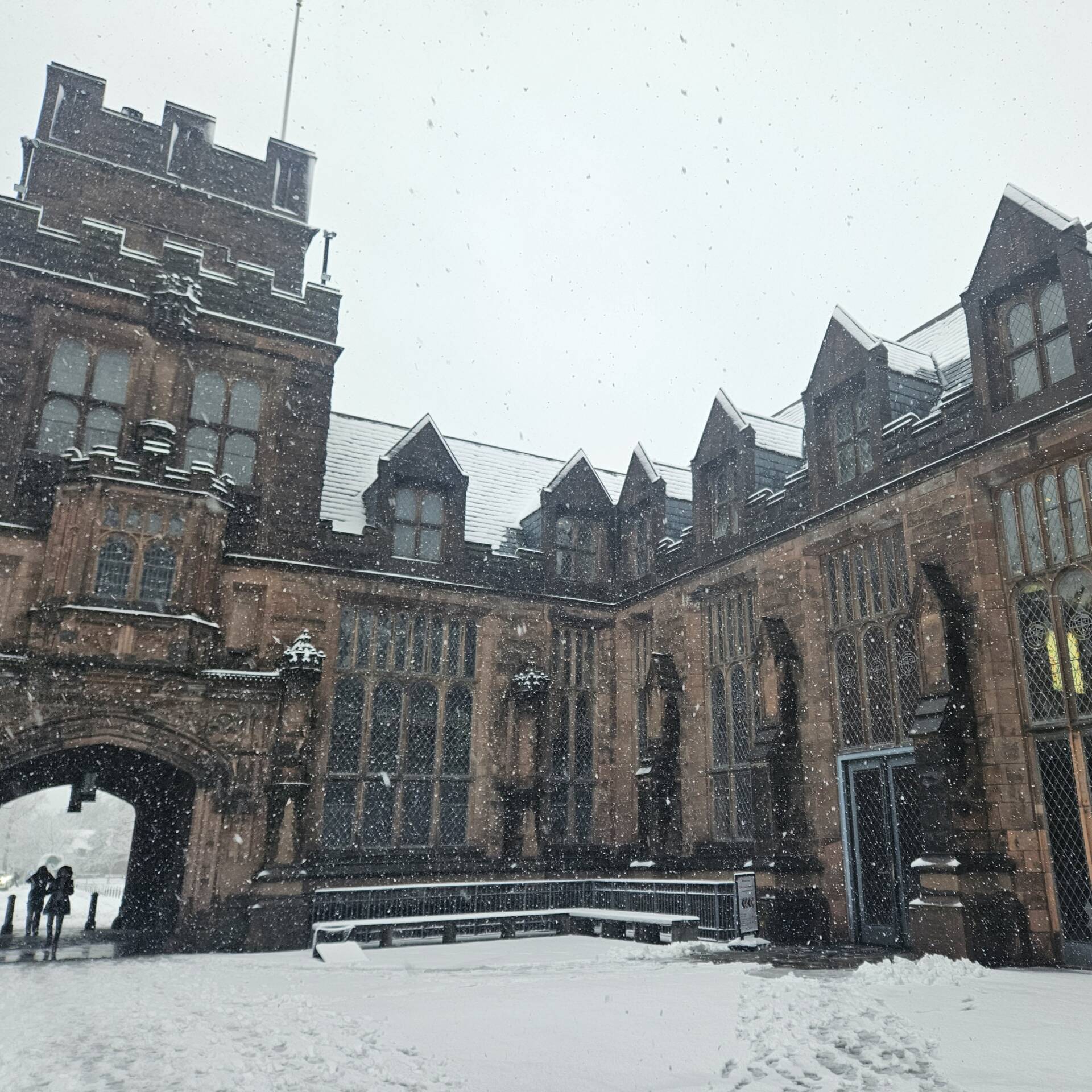
East Pyne Hall, former home to the Princeton University Library Collection
As someone who has spent more than a little time in libraries both here and back home, I can’t express how important libraries are. Oftentimes, we reduce our campus libraries to simple study spots, places we can go when we really just need to lock in. But, this is reductive. Libraries are connection points, providing the opportunity to connect and reconnect with friends and peers in the most serendipitous of ways. Additionally, our libraries are invitations to discovery. Each building stands as a testament to the physical accumulation of centuries of knowledge. From the official writings of American presidents to enzyme analyses of gene editing technology, Princeton’s libraries are practically bursting with knowledge to be uncovered.
When I talk to friends about studying at Princeton, one thing I always find myself circling back to is the beauty of our campus and community. This goes beyond the aesthetics of the buildings, but relates to the experiences that Princeton students can all share in. Our campus is one of connection and discovery, and I believe that there is no aspect that makes this as clear as our libraries. The Princeton University Library system claims the 9th largest collection of titles of any University in the country, so it’s no surprise that our campus is dotted with libraries. Of these numerous libraries though, many get overlooked. These overlooked libraries all represent unique opportunities that deserve to be noticed.
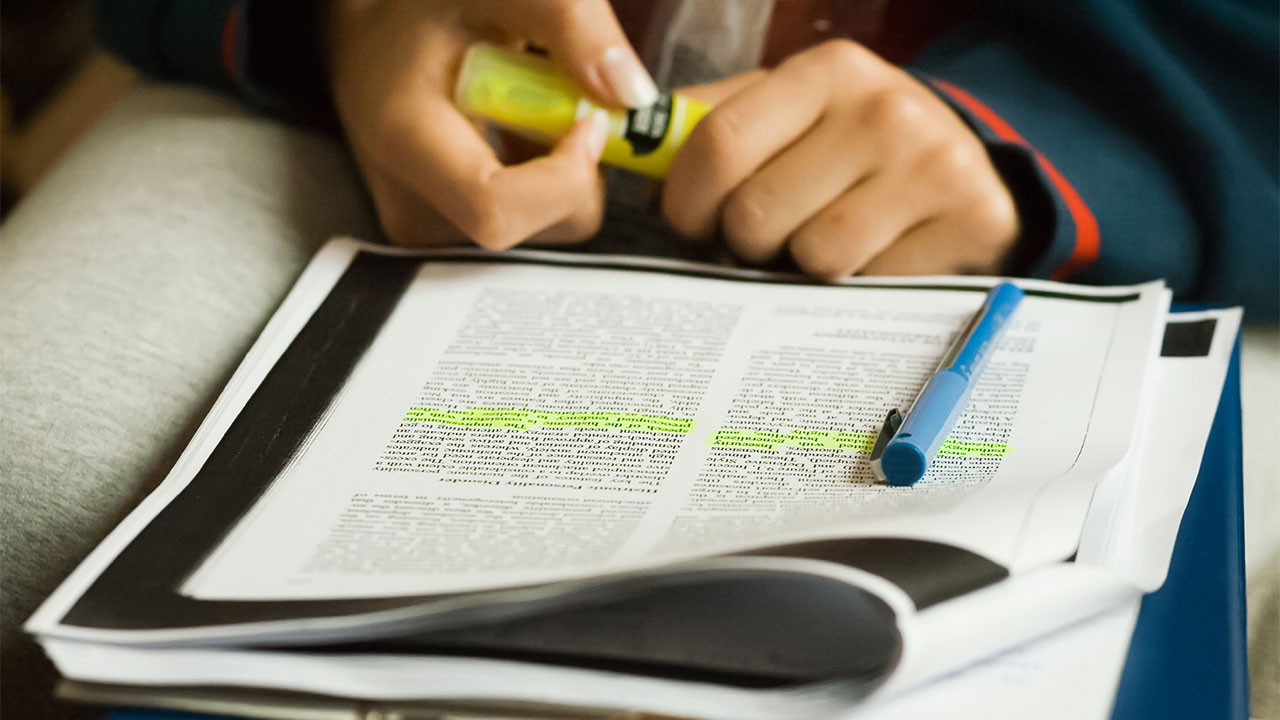
A person reads and annotates an article printout. Photo Credit: Y.Arcurs/iStockphoto
In our undergraduate years, as we get involved with research and science, it can be incredibly overwhelming to read scientific literature. It’s easy to drown in hundreds of thousands of articles with fancy-sounding titles, pages and pages of complex writings, and dozens of figures that you have no idea what they mean. However, reading scientific literature is a necessary skill to have, and you must be able to understand what scientists know, and what they don’t.
Therefore, I’ve created a list of tips and advice to tackle scientific literature as an undergraduate. Follow my advice, and you’re on your way to impress your supervisors with your knowledge, and create a nuanced understanding of where your research lies within the body of knowledge that scientists have been cultivating!
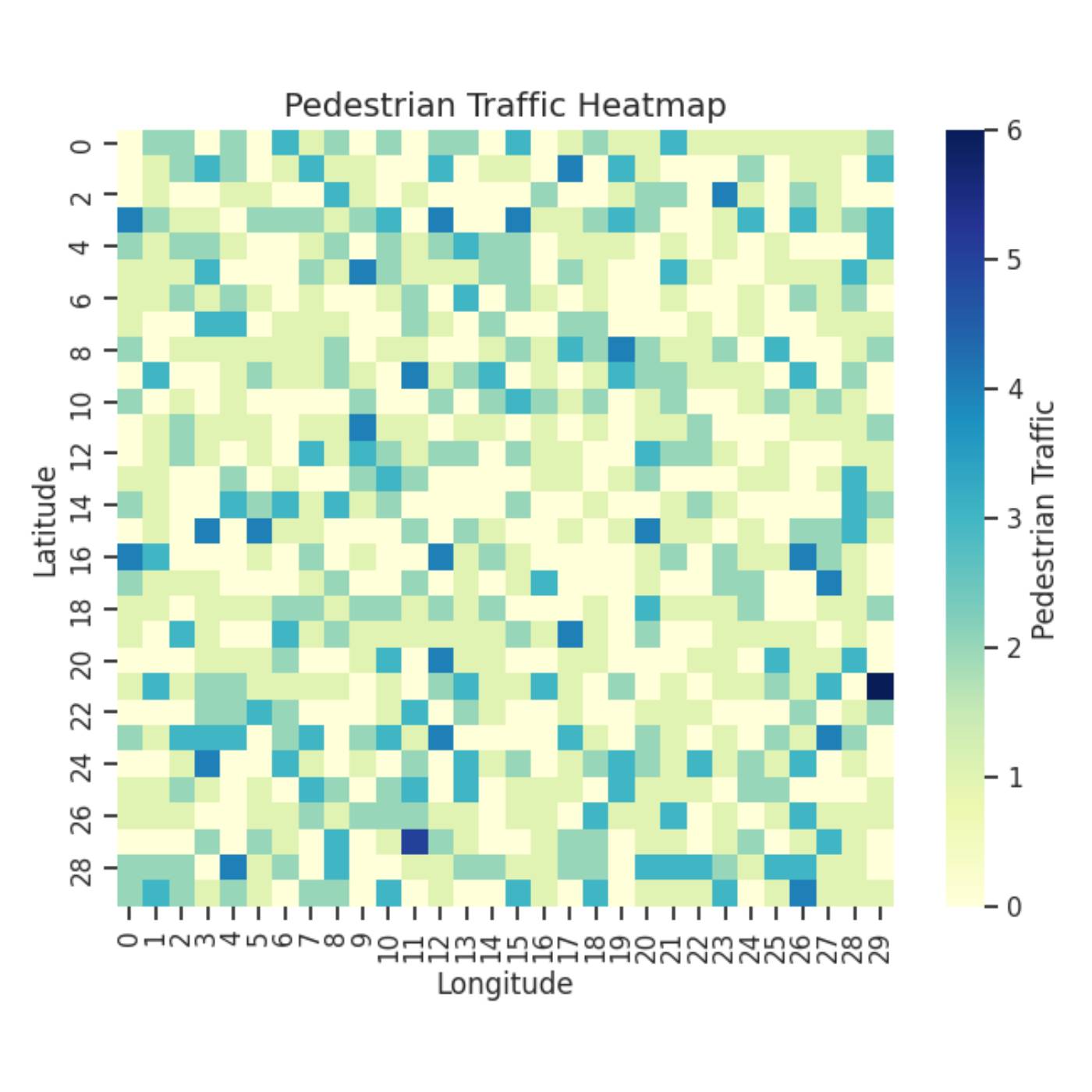
Example heatmap of pedestrian traffic generated by the author to illustrate some of Matplotlib’s capabilities.
Data is everywhere. Whether it’s to track your music listening habits, analyze stock market trends, or understand scientific research, data is most valuable when it can be easily interpreted. This is where data visualization comes in: to transform raw data into clear, engaging visuals.
The Princeton University Library has a wealth of resources and research guides, including guides tailored specifically to data visualization in programming language R and statistical software Stata (often used in economics courses). However, not as many PUL research guides are currently available on data visualization in Python. If you haven’t heard of Python before, it’s a popular programming language that can tackle a versatile range of applications, including data analysis and artificial intelligence. While Stata and R are both excellent choices for statistical analysis and visualization, Python stands out for its flexibility, interactivity, and seamless integration with web development and machine learning applications.
In this article, I wanted to present a commonly-used Python library for data visualization: Matplotlib. By learning how to use Matplotlib, you’ll be able to take your data and turn it into visuals that communicate your findings effectively—a key skill whether you are analyzing survey results, studying statistics, or working on research projects!
A blank Google Docs file, with academic writing potential as of yet unrealized.
Every student at Princeton lives their own unique experience, but if there’s one thing all Princeton students have in common, it’s that we all need to know how to write academically. The only required class for all Princeton students, first-year writing seminar, is a rite of passage. Later on, students of nearly every single major must complete independent work, writing their junior papers and senior theses; when writing these, knowing how to effectively communicate your findings is an essential skill. Here, I’ll talk about some strategies for getting a handle on academic writing, which I hope you’ll find useful!
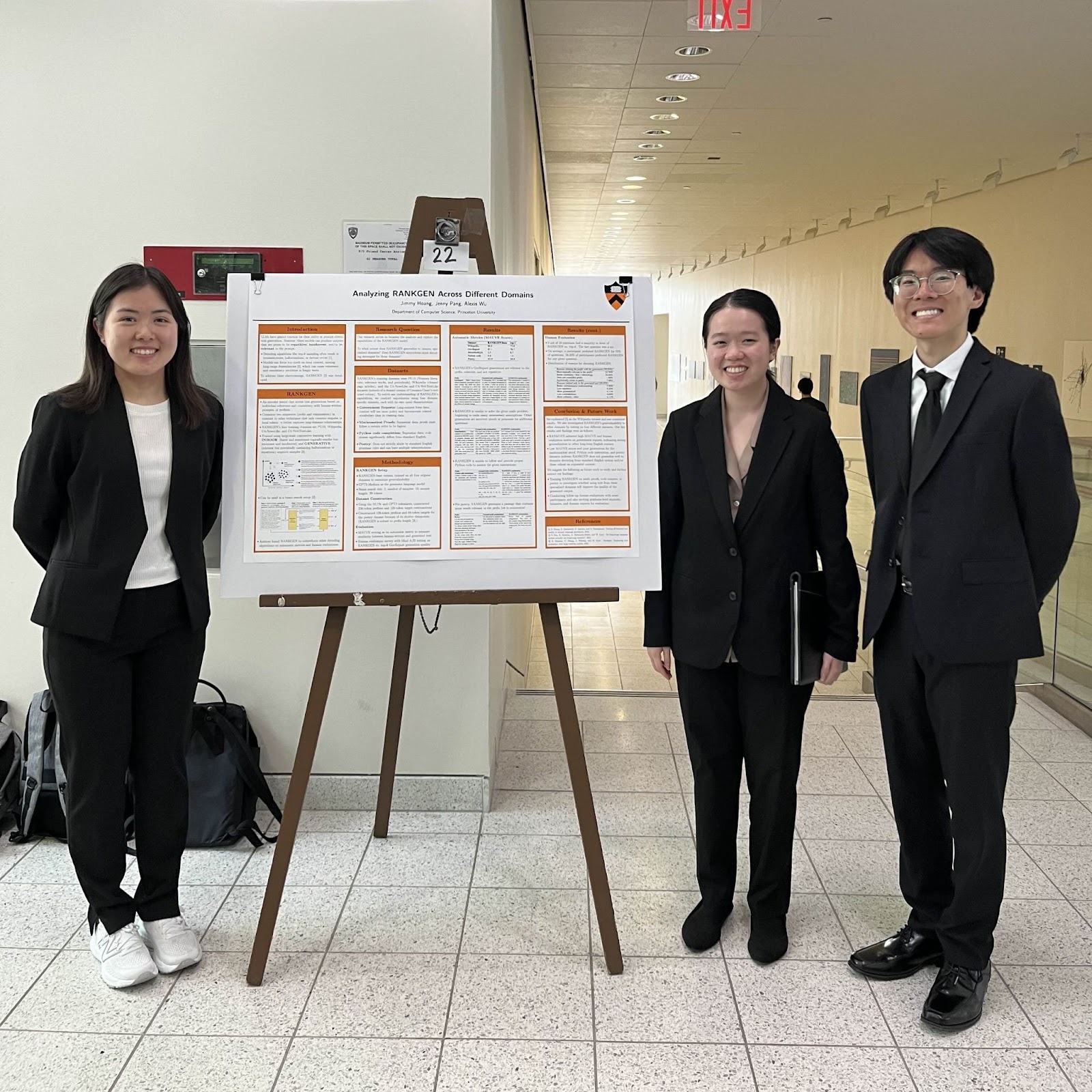
Alexis Wu (author), Jenny Pang ‘24, and Jimmy Hoang ‘24 at the COS 484: Natural Language Processing Spring 2024 poster session.
The end of the semester is often accompanied by deadlines for semester-long projects and final papers (including the infamous Dean’s Date deadline, which past correspondent Ryan Champeau has amazing advice on!). For some classes, students may be asked to create an academic or research poster and present their work to their peers in a poster session. A couple of courses I have taken where I produced a final research paper were COS 484: Natural Language Processing and ASA 238: Asian-American Psyches.
In ASA 238, the department provided funding so that all students in the class could have their poster printed through Princeton Print & Mail Services. However, this option typically is not free-of-charge to students. Moreover, since this process typically takes 4-5 business days after the proof is approved to be printed, course instructors may set conservatively early deadlines so that all students’ posters may be printed on time. With more deadlines in other classes, this can create additional stress.
The great news is, this stress can be avoided with a free, straightforward alternative: utilizing the Makerspace’s Large Format Printer. The Princeton University Library (PUL) Makerspace is a creative space on the A-level of the Lewis Science Library open to current students, faculty, and staff. If you’ve never used the space before, it might be daunting, but I hope this article will clarify the process and assuage any fears you may have!
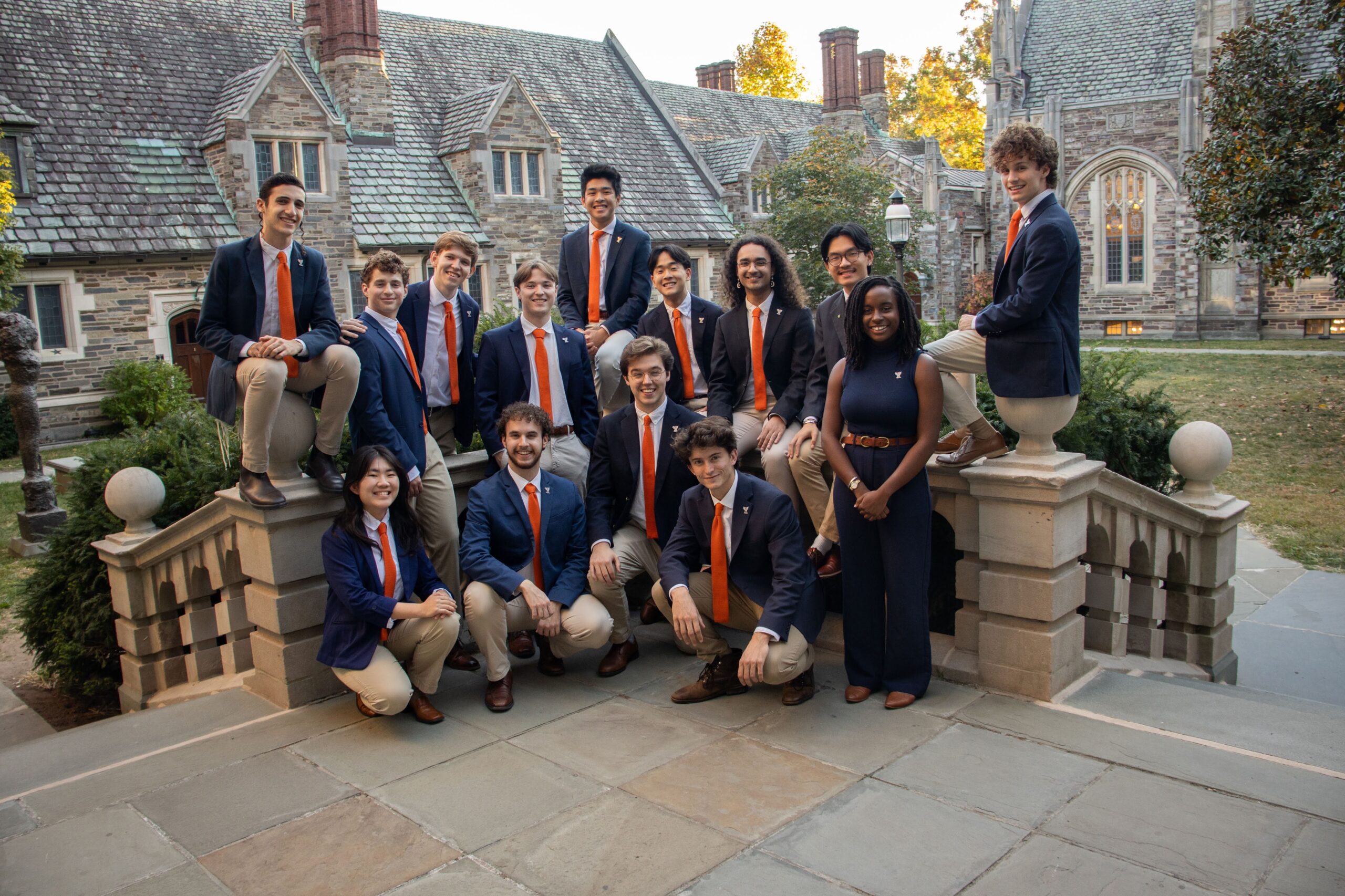
Photo of the Footnotes, Princeton’s fresh low-voice a cappella group founded in 1959
Imagine standing in front of a big audience, heart racing, ready to blend your voice with others and hit the notes of an intricate a cappella arrangement. Every beat, every breath, is crucial. Every time I stand on stage or under an arch with my a cappella group, the Princeton Footnotes, I think of how similar singing and music feels to what I do in the lab. You might be thinking that singing in an a cappella group and doing research are worlds apart. However, these two passions have formed a bond in ways that I never believed possible. In fact, the creativity, collaboration, and discipline I have channeled in being a part of the Footnotes have made me a better researcher—and vice versa.