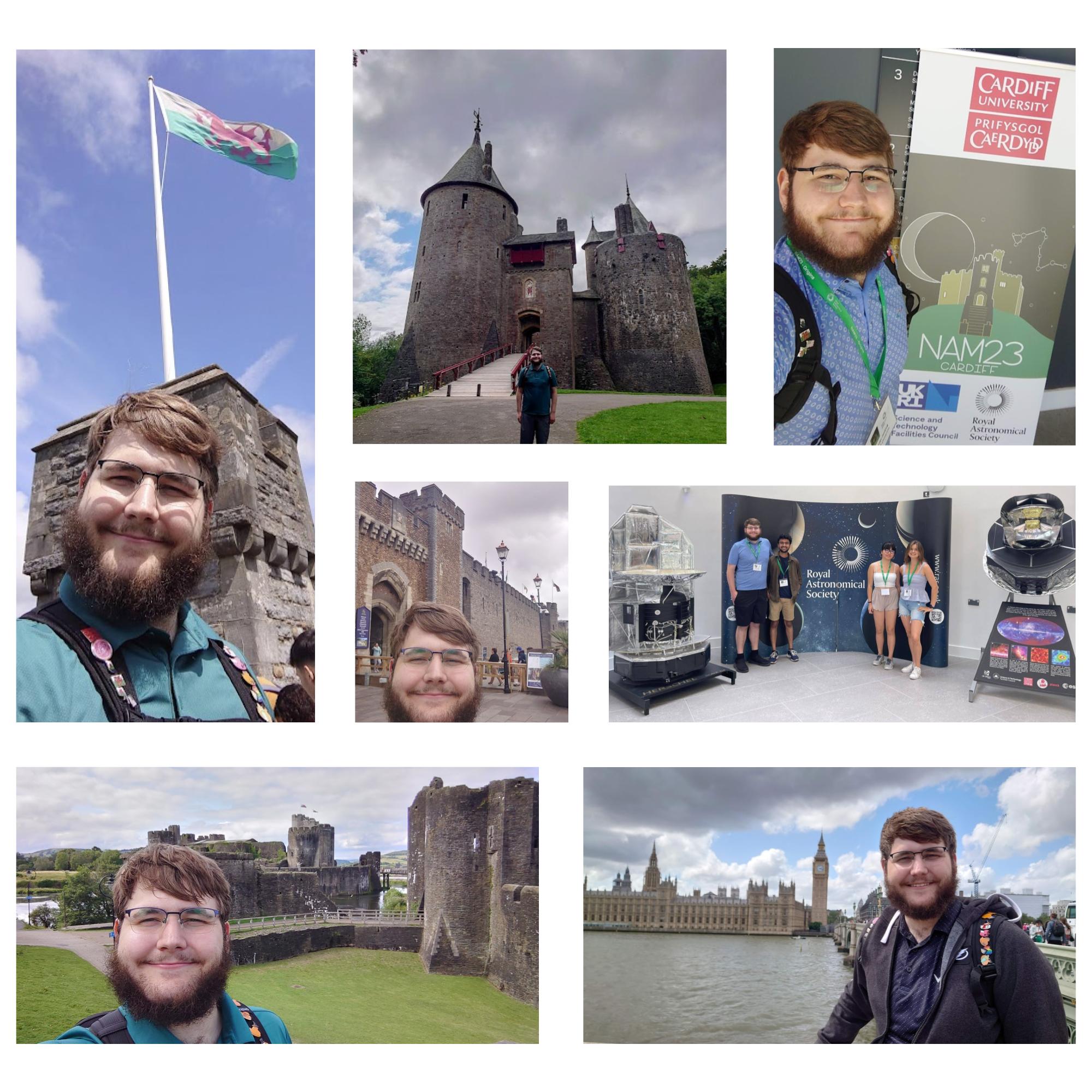
Some photos from writer Xander Jenkin’s International Internship in Wales, UK. Photo credits: Xander Jenkin (2023)
Last summer, I went abroad on a fully-funded internship doing astrophysics research at Cardiff University, in Cardiff, Wales, UK. This experience not only solidified my career decision to pursue astrophysics research, but also gave me a unique immersion into Wales and Welsh culture as well as the broader United Kingdom. If you are curious about research abroad, read on!
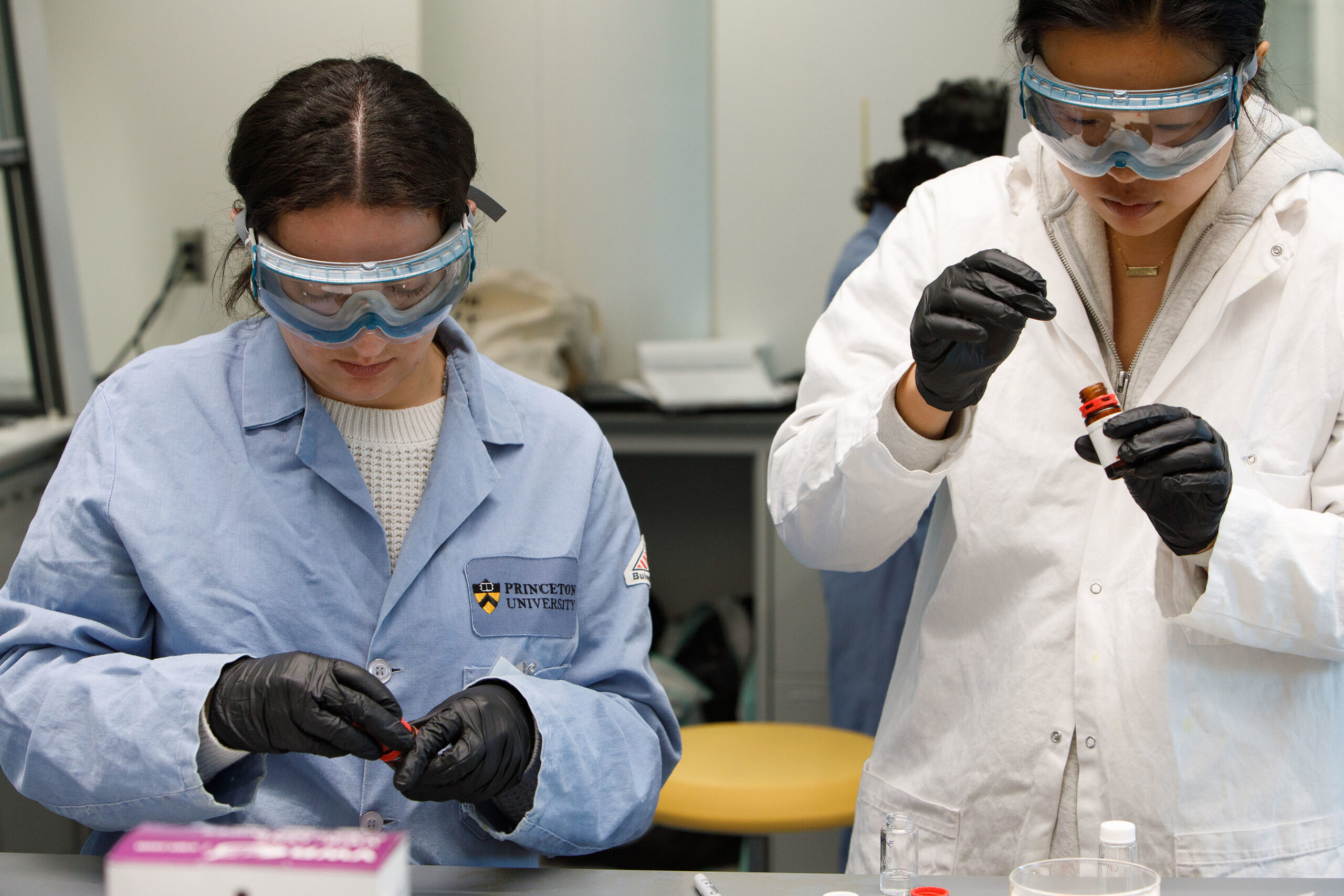
You may not feel as confident as CEE department graduate student Meiqi Yang looks here working on lithium extraction, but as you do more research over time, you’ll feel much more comfortable as you progress. Photo Credit: Bumper DeJesus (2023)
When doing research as an undergraduate, sometimes the work you are doing and topics you study may be very familiar to you, other times you may be totally unfamiliar with what is going on. Maybe you even have some previous experience but the topic of the project is way above anything you’ve done before—you might be working with a physics professor on something really advanced like quantum field theory or condensed matter, which you have never taken a class on and are expected to now work on and understand what’s going on during your project. This can happen a lot in any field, not just STEM, where your professor may have spent years studying something that you are expected to contribute to after having taken maybe a few classes in it, if that. Some professors may work more often with graduate students, so they may assume that you know “basic” things about your field that you as an undergrad have just encountered for the first time: you could be working with an Art History professor who focuses on Late Antiquity, and they start throwing around terms and common symbols that you aren’t able to easily recognize.
Regardless of the circumstances, this situation comes up a lot in undergraduate research. The fortunate thing is that tons of professors are willing to work with students who have no prior experience in the subject, but you still have to wrestle with “catching up” as you try to somewhat understand anything that you’re actually doing. Here are some tips to try to get acclimated with difficult, unfamiliar topics that may be well above your current depth as an undergraduate.
A guide of first steps for women-identifying undergraduate students stepping into research
Every women-identifying undergraduate student has the potential to become an incredible researcher; your journey starts now!
As we step into the new school year, woman-identifying undergraduate students across campus are looking to take their first steps into research. This process can be new, daunting, and sometimes, downright terrifying. It’s scary to step into a room where you are the first, the only, or both. That’s why it’s imperative to support women-identifying students in empowering research communities, advocating for their learning goals, and asserting themselves in new research settings. For allies, there are also important ideas shared by woman-identifying researchers about the best ways to support their success.
We may have wasted no time getting back into the semester after spring break, but just two weeks ago, I was exploring Denmark as a part of the class “Making the Viking Age.” This trip marks the second time I have been lucky enough to travel internationally as part of a class here at Princeton; last fall, I also visited Rome as a part of a group of students who took the Western Humanities Sequence during our first year. With course selection just around the corner, I highly recommend keeping an eye out for courses that include travel, as they have been some of the most academically enriching experiences I have had in all my education thus far.
On campus, Nal Xaviera ’25 is a member of Engineers Without Borders: Kenya, Community House After School Programs, and an assistant for the Visual Resources Department.
College is a wonderful place to explore your interests. It’s a time to meet new people, engage with different disciplines, and explore what you’re truly curious about. Perhaps one of the most apt examples of such opportunities is the Office of International Programs’s International Internship Program (IIP).
The outdoor food festival takes place on Prospect at the end of Wintersession. From donuts to skiing to iFly, you should definitely check it all out!
Winter break is long and much-needed. It is a time to relax, rejuvenate, and reflect on the semester. In this post, I will give advice on how to make the most of the next few months, but I recognize that you know yourself best and should choose to spend your break in whatever way makes you happiest. Without further ado, here are my takeaways from the last 3 winter breaks:
When most people think of summer, they think of warmer weather and longer days filled with newfound time to relax, travel, or to try something new. However, for many Princeton students, one summer topic that might be a source of both excitement and stress is summer internships. The summer can be the ideal time to pursue opportunities related to your interests in a more hands-on way, and summer internships provide (potentially paid) opportunities to do so. Many internships also provide avenues for Princetonians to do extensive and meaningful research, which, given the pace and workload of a typical Princeton semester, may be difficult to find time for during the academic year between classes and other extracurricular commitments.
The internship search process may be overwhelming, especially for freshmen and sophomores, who are still learning about the abundance of opportunities that Princeton has to offer. This post focuses on setting yourself up for a successful internship search by outlining popular programs, resources, and deadlines to ensure that you are able to find experiences that will enrich your (summer)time at Princeton. This list is not exhaustive and focuses on internships that include aspects of research, some combined with community service and professional development.
The summer internship search can be stressful – sit back, relax, and read this article for a place to begin!
In the summer of 2021, I participated in a virtual global seminar in Cyprus entitled Conflict, Borders, Multilingualism, Translation. I was particularly drawn to the idea of learning about Cyprus’ history and culture through the lens of multilingualism and translation. Personally, language has always played a key role in my understanding of identity and culture. Three languages are spoken in my home (Filipino, English, and Chinese Hokkien), and growing up in this way has made me very conscious of language-culture influences, code-switching, and nuances in connotation.
An aerial shot of Nicosia, the capital of Cyprus
Applying to this global seminar was a spontaneous decision; I major in MAE and am more used to spending my summers doing research and technology. However, when I read about this seminar in an email, I knew that it aligned with my personal interests in the social sciences. Because of the great time I had during the seminar, I am writing to motivate people to take advantage of the breadth of courses offered by Princeton and try studying something totally spontaneous and new!
As senior thesis season approaches, Haider Abbas offers advice that will help you produce a thoughtful, successful, and influential thesis.
Haider Abbas ‘17 is a Princeton alumni who recently published his inspirational senior thesis which he created while in the Princeton School of Public and International Affairs. Many Princeton seniors are now beginning to dive deeper into their theses, therefore I think that hearing from Abbas would be very helpful. Thankfully, a few weeks ago, I was able to interview Abbas and he offered key insight into why he chose his thesis topic, how he was able to produce his thesis, and most significantly the impact that his thesis will have beyond his years at Princeton. I hope that you can learn from his experience and develop a thesis that you feel passionate about!
This interview has been edited for length and clarity.
My most recent post focused on gearing up towards your senior year and finding a thesis adviser. I decided to continue this mini “preparing for your senior thesis” series by providing some tips on funding your research! The infamous senior thesis is such a daunting thing to think about as a junior because it is not always clear how early you should begin to plan for it and what steps you should take. At the beginning of the year, I attended an information session through the Woodrow Wilson School regarding thesis research funding. During that meeting, the speakers told students that they should start working on applications for funding as soon as possible if they wanted to receive money for their endeavors.
The Student Activities Funding Engine (“SAFE”) offers many opportunities to apply for funding!