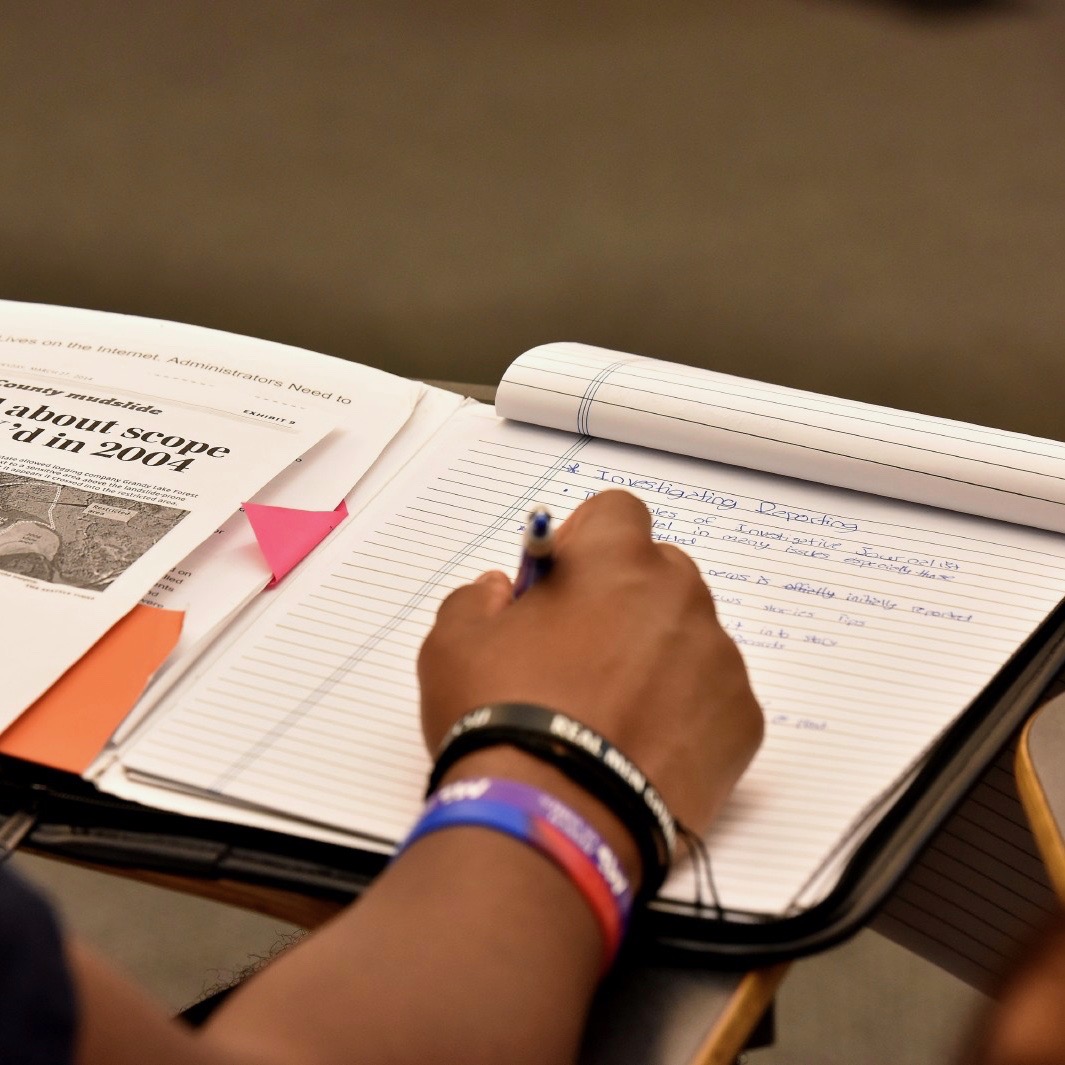
Having a pen in hand (and using it with some frequency) will set you up for active reading.
The precept response is a veritable Princeton institution, right there alongside Reunions, long nights in the library, and overly-friendly sidewalk squirrels. Somehow, I didn’t encounter this special form of assignment—where, as the name suggests, you “respond” to that week’s readings—until my sophomore year, but now I feel as though these responses set the rhythm of my academic week. On Mondays I’m responding to readings for a seminar on mythology. Wednesdays, for a history of science course. And Fridays, for a junior colloquium in Religion. Yes, friends, I cannot escape the precept response, and if you’ve read this far, I suspect you cannot either. As a celebration of our shared weekly assignment, I’d like to offer some tidbits of accumulated wisdom for completing the precept response. Continue reading How to Write a Precept Response
As a concentrator in the Woodrow Wilson School, I have finally reached the much-discussed junior year, a year full of research seminars, task forces, and not one, but two JPs. Before the semester started, I was given a list of 8 to 10 research seminars and asked to rank my preferences. I’m interested in researching race and discrimination, but the limited selection meant that none of my options exactly matched up to this. Now I’m in a seminar about Maternal and Child Health in the U.S., and I have to face the nerve-wracking question: how do I pick a JP topic in a subject I’m totally unfamiliar with? For me, the first step started with a simple attitude change.
Research can be a truly thrilling experience–interesting data, new findings, surprising collections. However, research can also be incredibly frustrating, namely when you feel like your work isn’t going anywhere.
If you’ve ever been really excited about a topic, done a load of research, and still found that you aren’t making forward progress, this post is for you. I’m talking about hitting tough obstacles in your research–walls you can’t seem to get over–reaching what seems like a dead end.
I’ve been there before (oh more times than I would like to admit), and what I’ve found is that normally, this frustrating lack of a solution is not an indicator that your research is ‘wrong’ or isn’t worthwhile. In fact, it might actually mean that there is another question buried in your topic that needs to be addressed primarily. Continue reading Flexibility of Research: What to Do When You Feel like You’ve Hit a Dead End
Princeton semesters are hard. For most people, the stress comes and goes throughout the semester.
Going into sophomore year, I wanted to try new extracurriculars (like writing for PCUR and being a writing center fellow) and to continue things that I’d done since my first year (like Princeton University Orchestra and Princeton Social Innovation), but I was worried about how to manage everything.
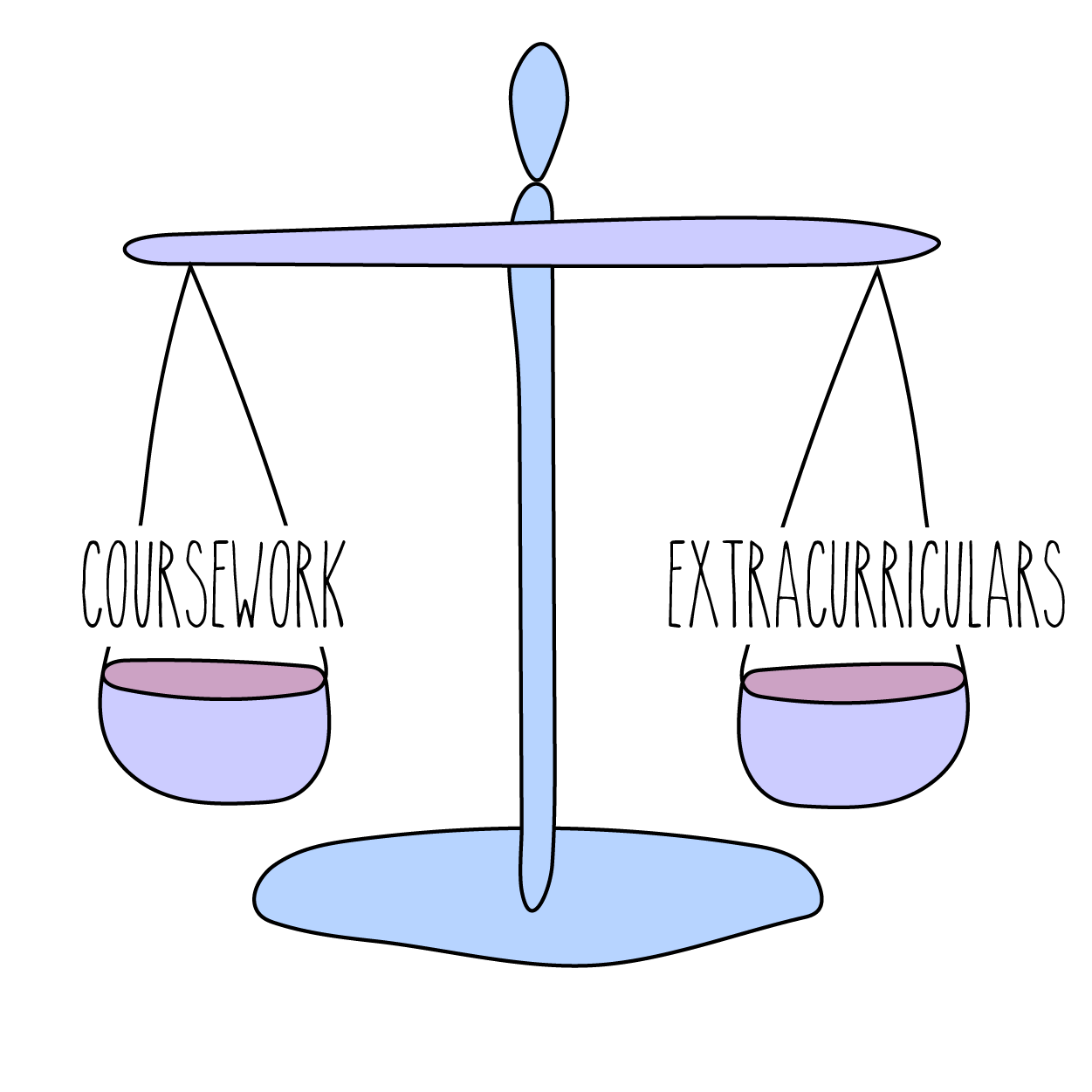
It’s hard to balance both coursework and extracurriculars.
Extracurriculars are such a crucial part of life here at Princeton, but we’re also students first. How could I try to start the semester off on the right foot?
This question became all the more pressing when classes started and I got a better understanding of the time commitment and effort that was required for each of my classes.
Until recently, I only watched TV and movies in order to decompress. There’s nothing quite like lying in bed after a long day, lulled to sleep by my favorite Netflix show. Requiring minimal effort, movies acted as a brief escape from my reading- and writing-heavy coursework.
Like many Princeton students, though, I sometimes felt guilty choosing to watch TV over, say, finishing my readings for precept the next morning. But a few weeks ago, my professor introduced me to an invaluable resource called Kanopy. Completely free for all Princeton students and faculty, this site provides over 30,000 films for streaming on any device. But Kanopy isn’t just another Netflix or Hulu: it’s specifically designed for use in research institutions.
Kanopy offers a wide range of free films, specially curated for students and professors.
Growing up, I always enjoyed reading books. While some of my friends complained about having to read short chapter books for homework, I was busy devouring book after book. One summer, as I went to check out a stack of books for the next week at my library, the librarian scanned my card and suddenly exclaimed, “Ah hah! It’s you! You’re the one who’s read most of the Young Adult section this summer!” I frequently argued with my parents over the merits of bringing half a suitcase full of books on every vacation. They constantly asked if I wanted an eReader for whatever holiday was coming up, but I was far too set on physical, paper books and refused each offer.
Like most engineering students, I have spent almost two years at Princeton learning the fundamental theory of my field. While the material is interesting, it can be difficult to imagine how the concepts can lead to practical applications in engineering, and some of the basics can begin to seem useless in the real world.
Thermodynamics is one of the fundamental Mechanical and Aerospace Engineering (MAE) courses. It explores heat transfer and the relationship between heat and other types of energy. When I took the course last semester, I spent a large amount of time learning about heat pumps—cycles that move heat against its gradient (the way it “wants” to flow) from an area of low temperature to an area of high temperature. This process explains how comfortable temperatures are maintained in most living spaces. While the general application of the theory was clear to me, it seemed as if it would never be relevant to me. Fairly efficient air conditioners and heaters already exist and are unlikely to undergo a major overhaul in the near future, so why spend so much time learning the minutiae of how they work?
“Any science major should consider this course…it is basically independent work guided by two top notch professors and supported by an entire seminar class.” – Anonymous Student Review
Every undergraduate studying the natural sciences at Princeton undertakes significant independent research projects in their Junior and Senior years. GEO/WRI 201: Methods in Data Analysis & Scientific Writing is a unique course designed specifically to teach students how to write an independent scientific paper. If you are a Sophomore or Junior looking to attain the concrete skills and confidence to tackle independent research, there is no better class to take.
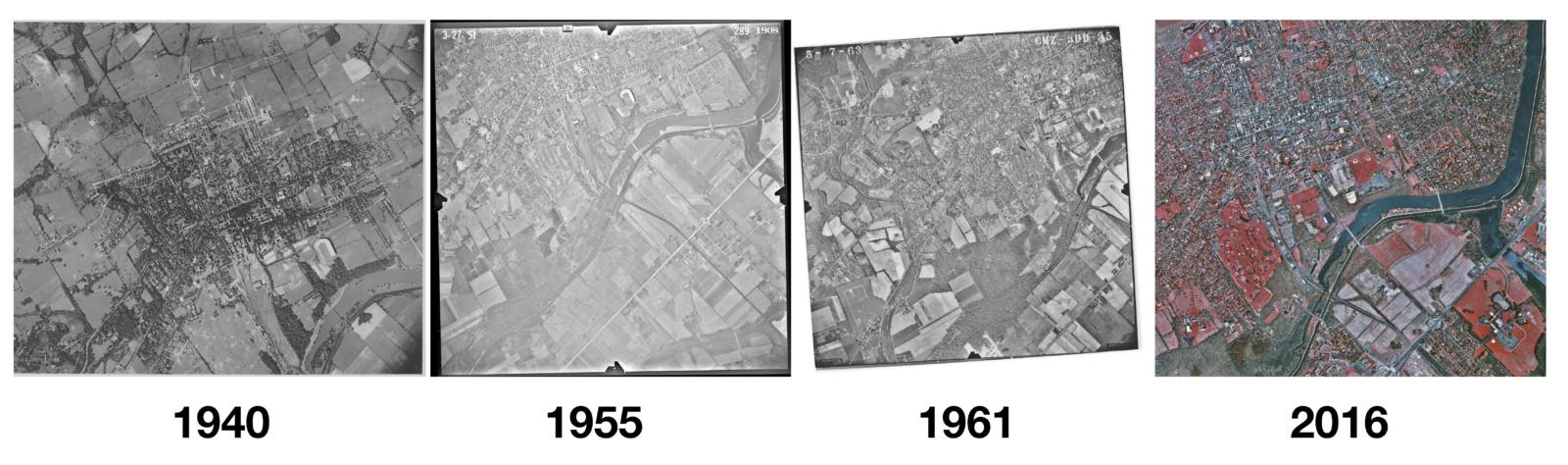
In 201, you will learn how to design, research, write, and present original scientific research, all through the lens of measuring changing landscapes using satellite and drone-derived aerial imagery. Under the mentorship of Adam Maloof (GEO) and Amanda Irwin Wilkins (WRI), and with the support of your peers, you will: develop an original, well motivated scientific question; design effective field methods to test a specific hypothesis; quantitatively analyze data and imagery; and learn how to effectively communicate the results in a scientific paper and slideshow presentation. The highlight of the class is a nine day field trip across Utah, where students work collaboratively to implement their own field methods, piloting drones and collecting climatological data.
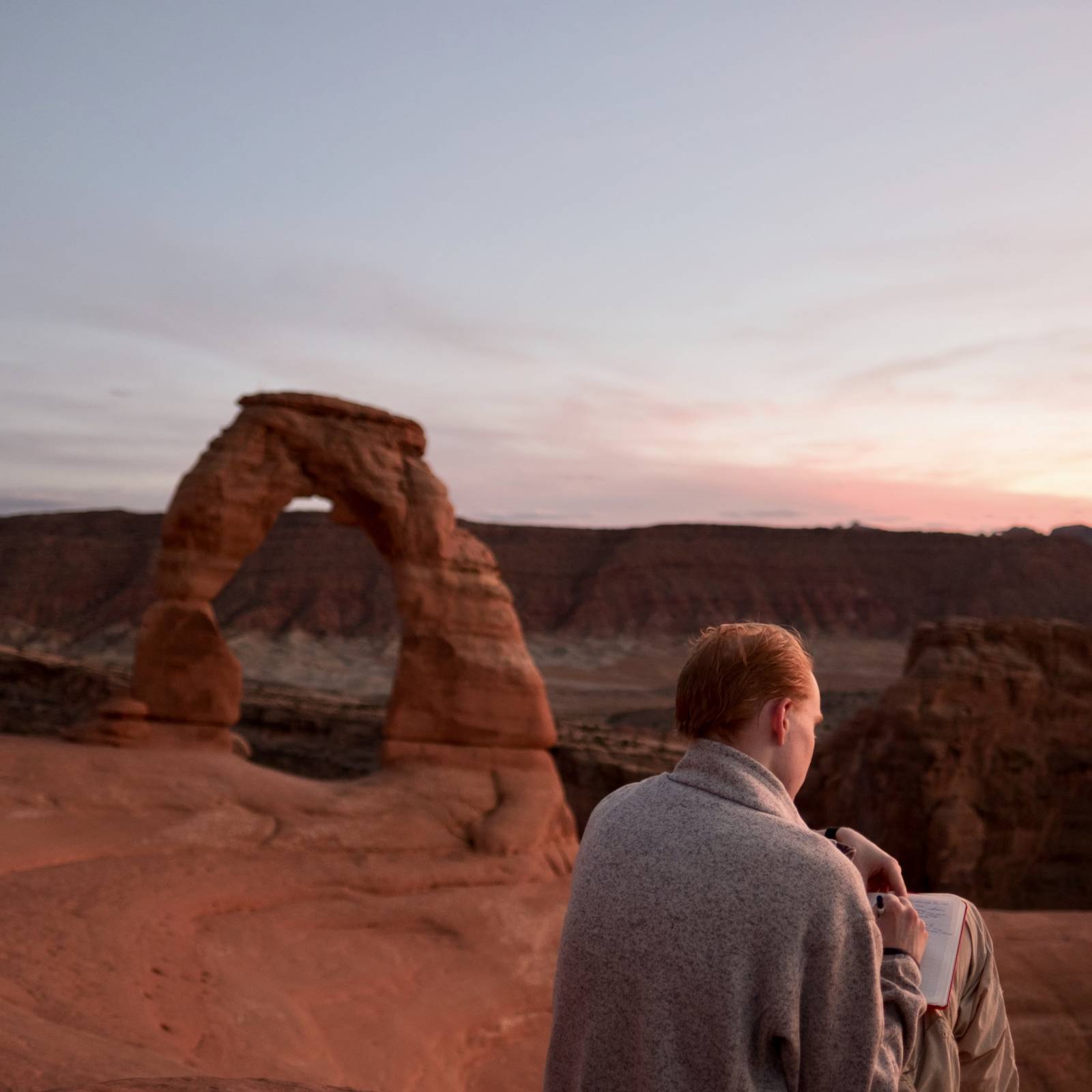
Will Atkinson ‘18 misses a beautiful sunset over Delicate Arch in Arches National Park, Utah while taking notes on a geology lecture given by professor Adam Maloof during the class field trip. (Fall break, 2016)
The Princeton University Library system features over six million unique titles. So when you discover a book not already in the system, you know you’ve found a niche topic.
This semester, I’m taking a course called “Modern India: History and Political Theory” taught by Visiting Professor Sunil Khilnani. In the course, we examine primary sources from the major actors in the Indian nationalist movement.
Recommending a book purchase is as easy as online shopping!
Interested in indigenous politics in India, I asked Professor Khilnani if I could write my midterm paper on the Adivasi (Indian tribal societies) role in Independence – even though we haven’t addressed this topic in class. He suggested I focus on Jaipal Singh, a major twentieth-century Adivasi activist, and sent me a list of primary and secondary sources to consider. Specifically, he recommended using the recently published collection of Singh’s speeches and writings, Adivasidom. Continue reading Recommend a Purchase: The Princeton Wish List
Few students enter Princeton planning to study Geosciences–I certainly didn’t.
Fascinated by the natural world and enticed by the prospect of a field semester in Kenya, I confidently chose “Ecology and Evolutionary Biology” as my intended concentration every semester on Tigerhub’s Academic Planning Form. My backup plan, if the sciences weren’t the right fit, was to study History and get a certificate in American Studies.
So why, when it came time to declare my concentration, did I end up choosing Geosciences? There were three factors that I felt set GEO apart from the other departments I considered:
Community
When I was considering which department to join, it was important to me that the department had a strong community with a space for undergraduate participation.
GEO has a vibrant department community that places a high value on undergraduates. Undergraduate participation is encouraged in weekly department wide events such as lunchtime lectures and snack breaks, as well as celebratory events such as annual department picnics. Even before I declared my concentration, faculty and staff in the department made it clear that there was a place for me in GEO.
Graduate student Akshay Mehra (far right) laughs as Professor Adam Maloof (second from right) chastises the author (far left) for “cheating” during a game of foosball on a class field-trip to Utah in Fall 2016. Informal social interaction with faculty and graduate students abounds in the GEO department, creating a warm and welcoming atmosphere for undergraduates.
The department even has its own undergraduate society, Princeton University Geosciences Society (PUGS), run entirely by students, which plans regular social events and field trips centered around building a close-knit community of engaged undergraduates. PUGS organized a department field trip to Iceland in 2015 and is planning a weeklong trip to the United Kingdom this year.