Sometimes graduate students are the older siblings you didn’t know you had.
In my Orange Key tours, I always emphasize how exciting it is to be an undergraduate student at Princeton. Unlike many other leading research institutions, Princeton maintains a strong focus on undergraduate teaching. This results in an unusual dynamic between undergraduates and graduate students on campus. In general, the two populations are pretty segregated. Aside from the preceptor-student relationship (and, of course, the ReMatch relationship), I haven’t encountered a whole lot of avenues for collaboration between undergraduates and graduate students in our research projects.
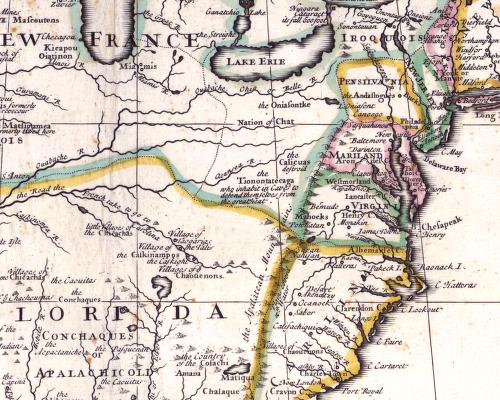
Map of Northeastern Native tribes (ca. 1710), the subjects of my JP research
For over 70 years the Juneau Icefield Research Program (JIRP) has run an eight-week field research expedition on the glaciers spanning Juneau, Alaska and Atlin, British Columbia. JIRP is the longest continuous glacial monitoring program in North America. But what truly sets the program apart is its commitment to active student participation and mentorship: all of the summer research is carried out by students, ranging from high schoolers to Ph.D. candidates, and mentored by field staff and faculty from around the world.
Active participation and mentorship are vital aspects of all student research. In my experience, I learn way more from engaging with research in the real world than from reading, listening to lectures, or completing recipe-type lab exercises. So, when I got the opportunity to join JIRP this summer, I jumped at the chance.
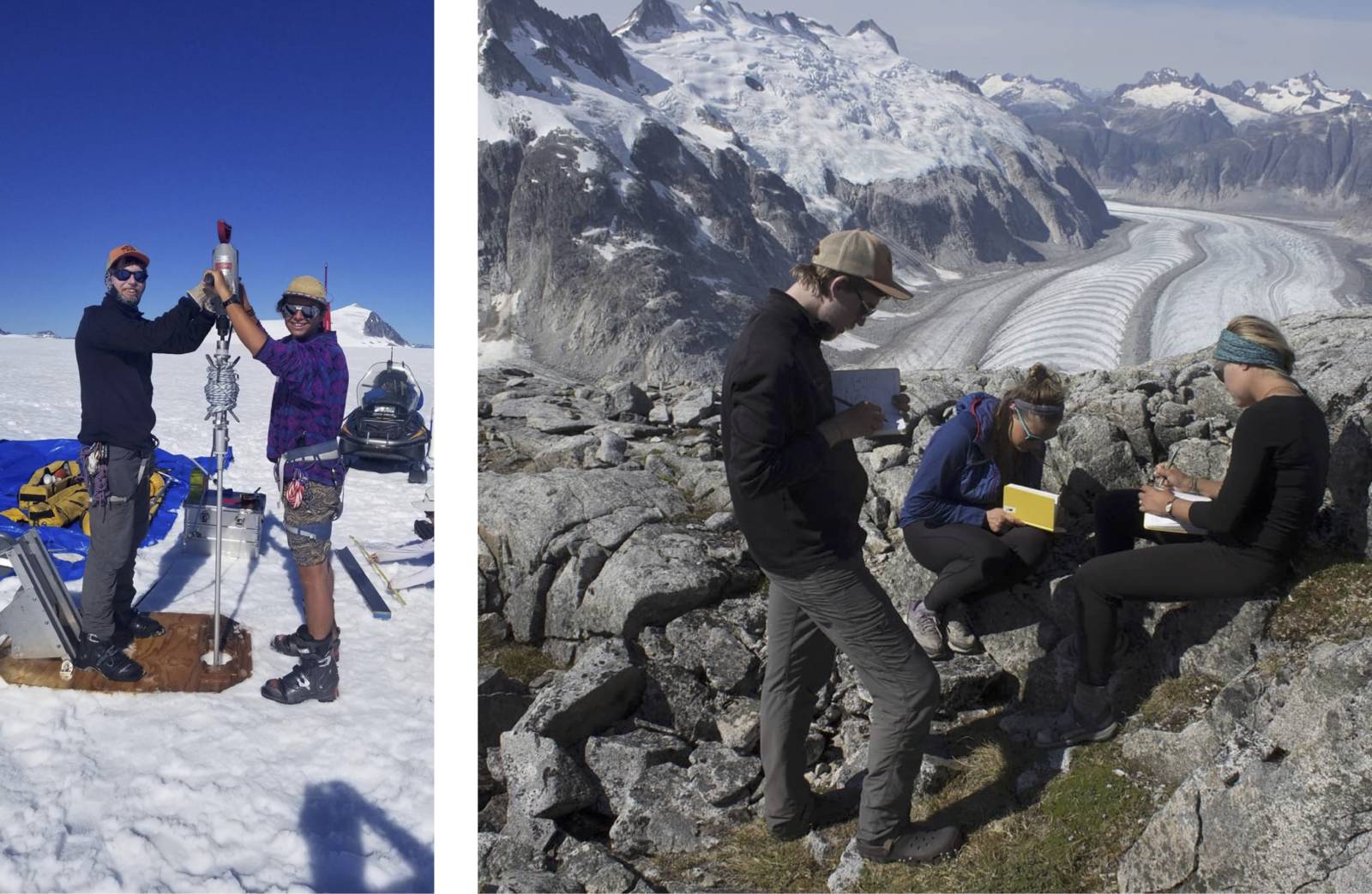
Research in action! The author drilling an ice core (credit Alex Burkhart) and identifying alpine vegetation (credit Hannah Mode) with fellow ‘JIRPers’ on the Juneau Icefield.
Research can be a truly thrilling experience–interesting data, new findings, surprising collections. However, research can also be incredibly frustrating, namely when you feel like your work isn’t going anywhere.
If you’ve ever been really excited about a topic, done a load of research, and still found that you aren’t making forward progress, this post is for you. I’m talking about hitting tough obstacles in your research–walls you can’t seem to get over–reaching what seems like a dead end.
I’ve been there before (oh more times than I would like to admit), and what I’ve found is that normally, this frustrating lack of a solution is not an indicator that your research is ‘wrong’ or isn’t worthwhile. In fact, it might actually mean that there is another question buried in your topic that needs to be addressed primarily.
Princeton semesters are hard. For most people, the stress comes and goes throughout the semester.
Going into sophomore year, I wanted to try new extracurriculars (like writing for PCUR and being a writing center fellow) and to continue things that I’d done since my first year (like Princeton University Orchestra and Princeton Social Innovation), but I was worried about how to manage everything.
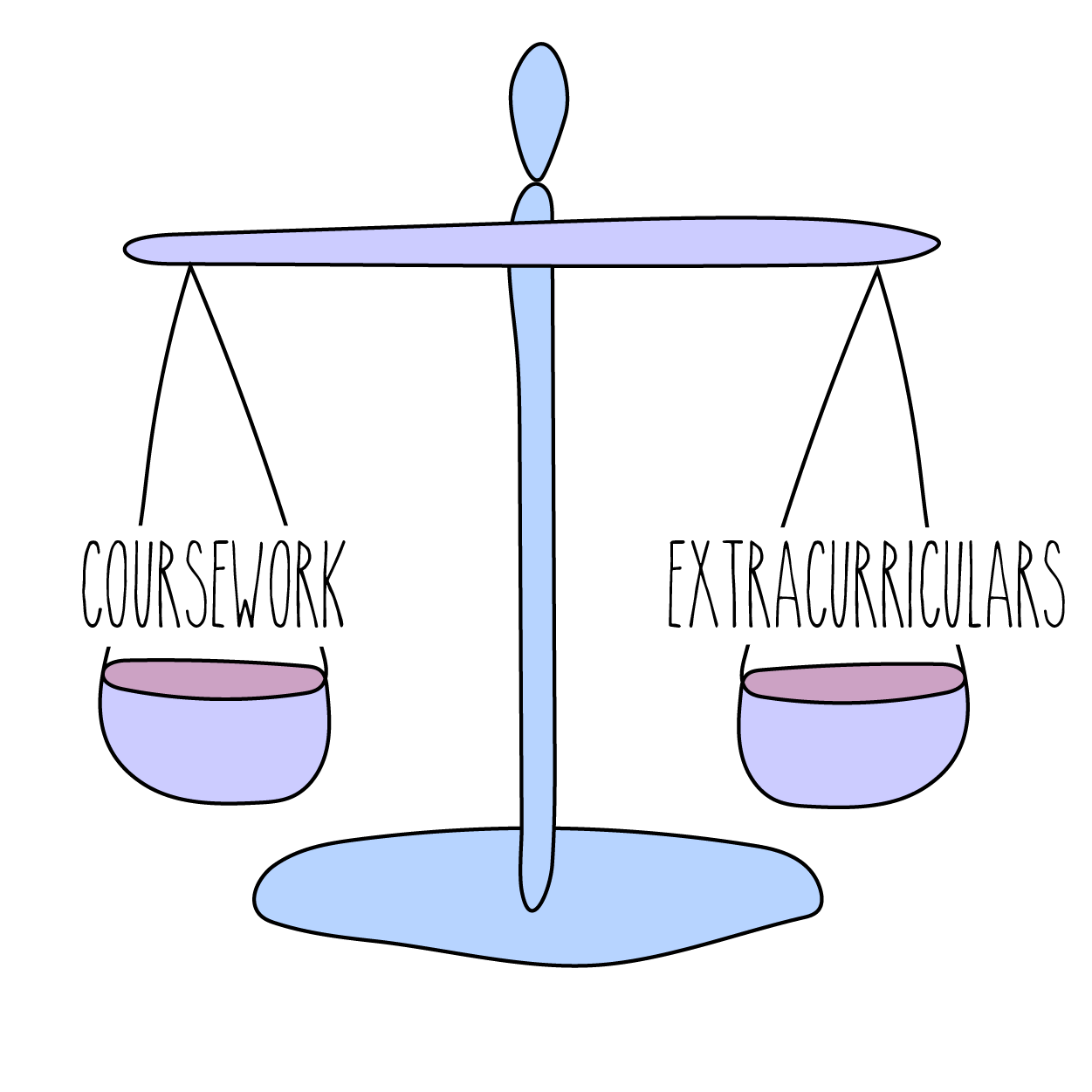
It’s hard to balance both coursework and extracurriculars.
Extracurriculars are such a crucial part of life here at Princeton, but we’re also students first. How could I try to start the semester off on the right foot?
This question became all the more pressing when classes started and I got a better understanding of the time commitment and effort that was required for each of my classes.
While it was extremely easy to feel overwhelmed, I tried to stay calm.
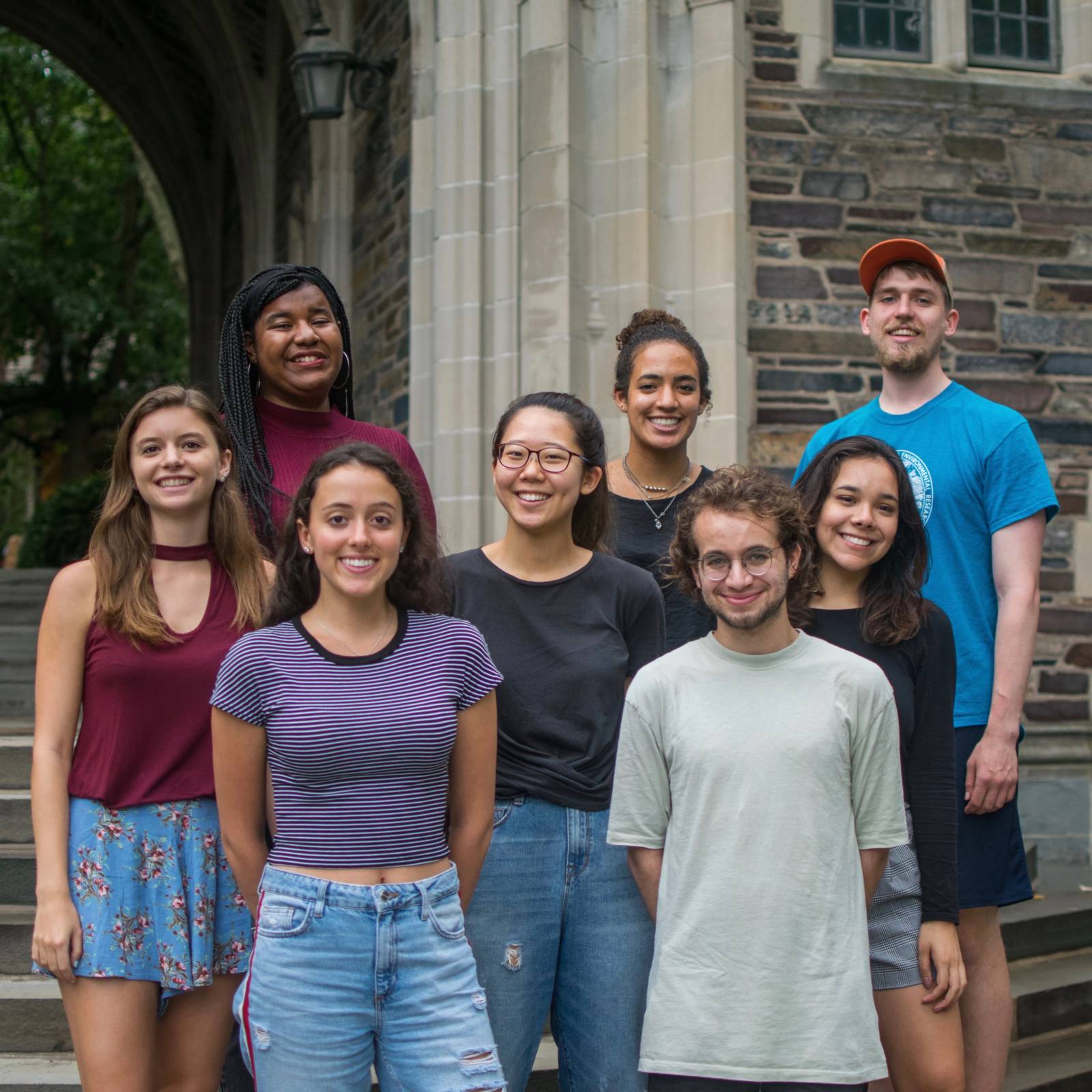
It’s that time of year again. The hustle and bustle of the beginning of the year begins to die down–new dorms have been moved in to, another fall lawn parties has come and gone, textbooks have been purchased–and now its time to jump right into the nitty gritty. As we finish up our second week of classes, the assignments start flooding in and it’s time to get back to work. PCUR is here to help! Join me, our four returning correspondents: Rafi, Shanon, Alec, and Elise, and four new fresh faces: Andrea, Saira, Nanako, and Raya. Coming from a wide variety of disciplines, this year’s team is ready to guide you through the coming academic year.
The 2018-2019 PCUR Team (minus Shanon), photo courtesy of Marah Sakkal
If you have specific questions that you would like to see answered, use the Contact Us form and let us know what kinds of post you want to see! Also new this year, some of our posts will be featured on the Princeton University Instagram story! We’re looking forward to a great year, so continue reading below to see what our new correspondents are bringing to the table.
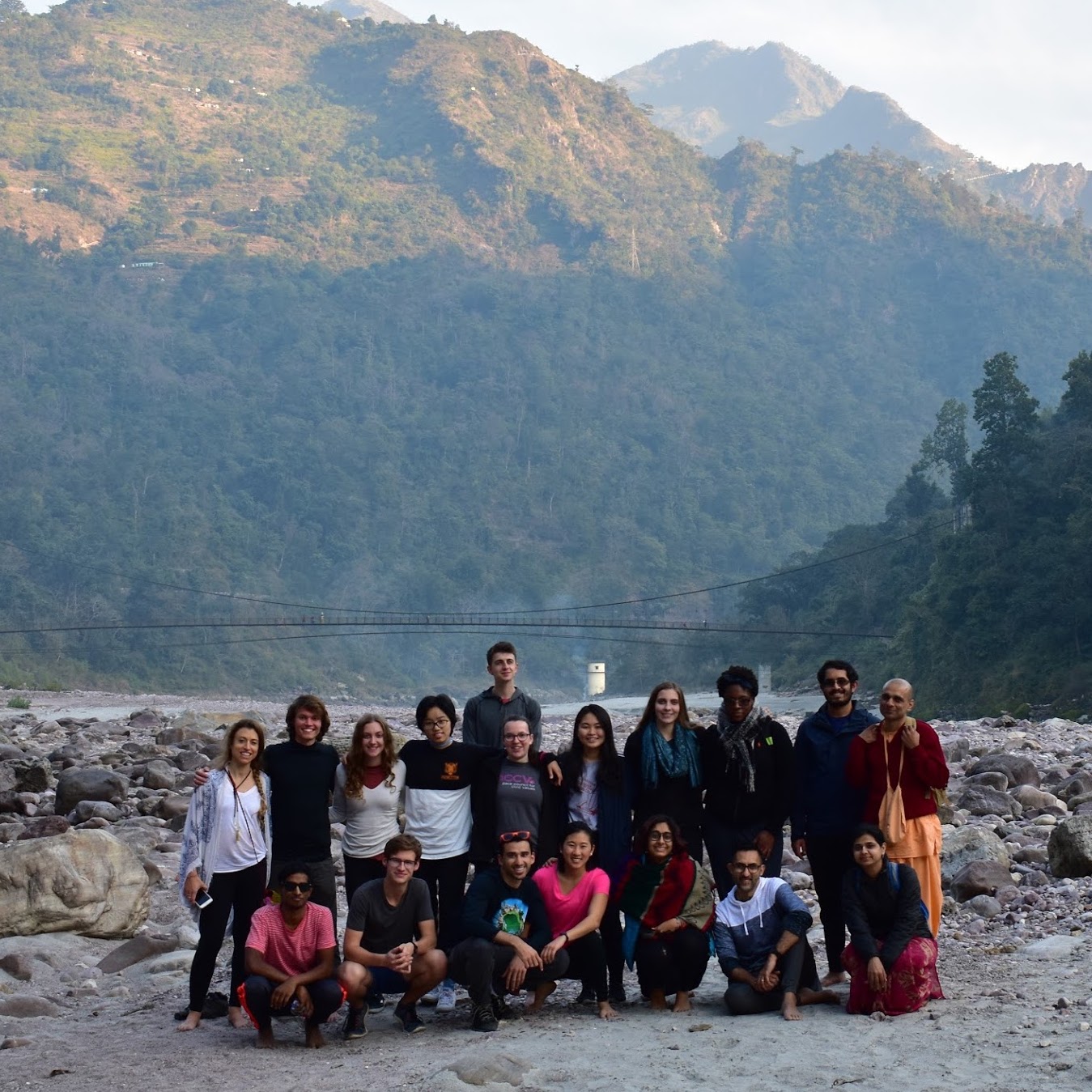
The author and the 2017-2018 ORL Yoga and Meditation Fellows on the banks of the Ganges River above Rishikesh, India. Like many good things, this opportunity became a reality thanks to an attitude of flexibility.
It’s hard to believe, but this is my last post of my sophomore year. This PCUR “ending,” however, comes at a time when I’m still in the middle of working on Dean’s Date assignments and (thinking about) preparing for final exams, so there’s something a little dissonant about writing a reflection post right now. Indeed, I suspect that only after the last exam wraps up, or after I move home and begin my summer job, will I be able to reflect more fully on my sophomore year. Nevertheless, I do have some preliminary observations, which I hope others will find useful as they take stock of their own personal and academic progress this year.
Amanda Blanco, Class of 2018, Sociology Department
Amanda Blanco is a senior in the Sociology Department. Having taken several journalism courses and being an avid news reader, she was inspired by current events to write a thesis pertaining to the effects of today’s political climate on college campuses. Amanda recently finished her thesis and is in the midst of preparing for her defense. This process of reviewing her research in order to share it with a larger audience has led her to reflect on what the senior thesis experience has been like and what she has learned from the process. Luckily, Amanda had time in her busy schedule to share some of her end-of-year reflections:
This semester, in our spring series, PCURs will interview a graduate student from their home department who either is currently a graduate student at Princeton, or attended Princeton as an undergraduate. In Graduate Student Reflections: Life in Academia, interviews with graduate students shed light on the variety of paths one can take to get to graduate school and beyond, and the many insights gained along the way from research projects and mentors. Here, Emma shares her interview.
~~~~~
As part of our Spring Seasonal Series, Graduate Student Reflections: Life in Academia, I interviewed two students in the SINSI Graduate Program, Alex Wheatley ‘16 *20 and Nathan Eckstein ‘16 *20. The Scholars in the Nation’s Service Initiative (SINSI) is a scholarship program designed to prepare students to pursue careers in the U.S. government. Students in the program spend two years pursuing an MPA in the Woodrow Wilson School and two years in a SINSI fellowship with an executive branch department or agency (often, but not always, between the first and second years of the MPA program). In my last post, the first section of this two-part interview, Alex and Nathan discussed their experiences as SINSI scholars in the MPA program. Below, they reflect on their experiences with research and public service work in the fellowship component of SINSI.
Emma: What role has research played in the fellowship component of the SINSI program?
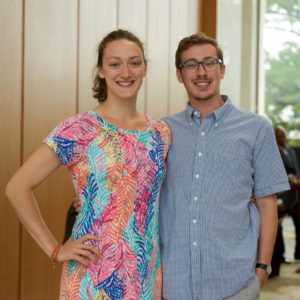
Alex and Nathan at a SINSI event last spring before heading off to their fellowships.
Alex: I’ve rotated through two positions thus far, the first at the Division of Viral Diseases at the Center for Disease Control (CDC) in Atlanta. Almost all the work I’ve done has been fairly traditional research. At the CDC, I built on the knowledge I gained from my thesis to help analyze and write up a review of the spatiotemporal dynamics of the same virus (respiratory syncytial virus) in the US over the last three years. The policy question we debated in that research was actually how to define “RSV season”; changing testing practices had affected the timing of the season, and we had to weigh various policy-related factors as we updated that definition of season. I also helped with an economic analysis of RSV burden in the US.
As the simultaneously dreaded and much-awaited Dean’s Date comes around again, many of us find ourselves writing final research papers for our foreign language classes. Conducting research and writing a long paper in a language in which we are not fully fluent is both harder and very different from writing one in our native language. Personally, I have spent the past few days writing a paper for French 307 discussing the ethics of weapons development, a fairly technical subject which presented a number of challenges.
Until recently, I only watched TV and movies in order to decompress. There’s nothing quite like lying in bed after a long day, lulled to sleep by my favorite Netflix show. Requiring minimal effort, movies acted as a brief escape from my reading- and writing-heavy coursework.
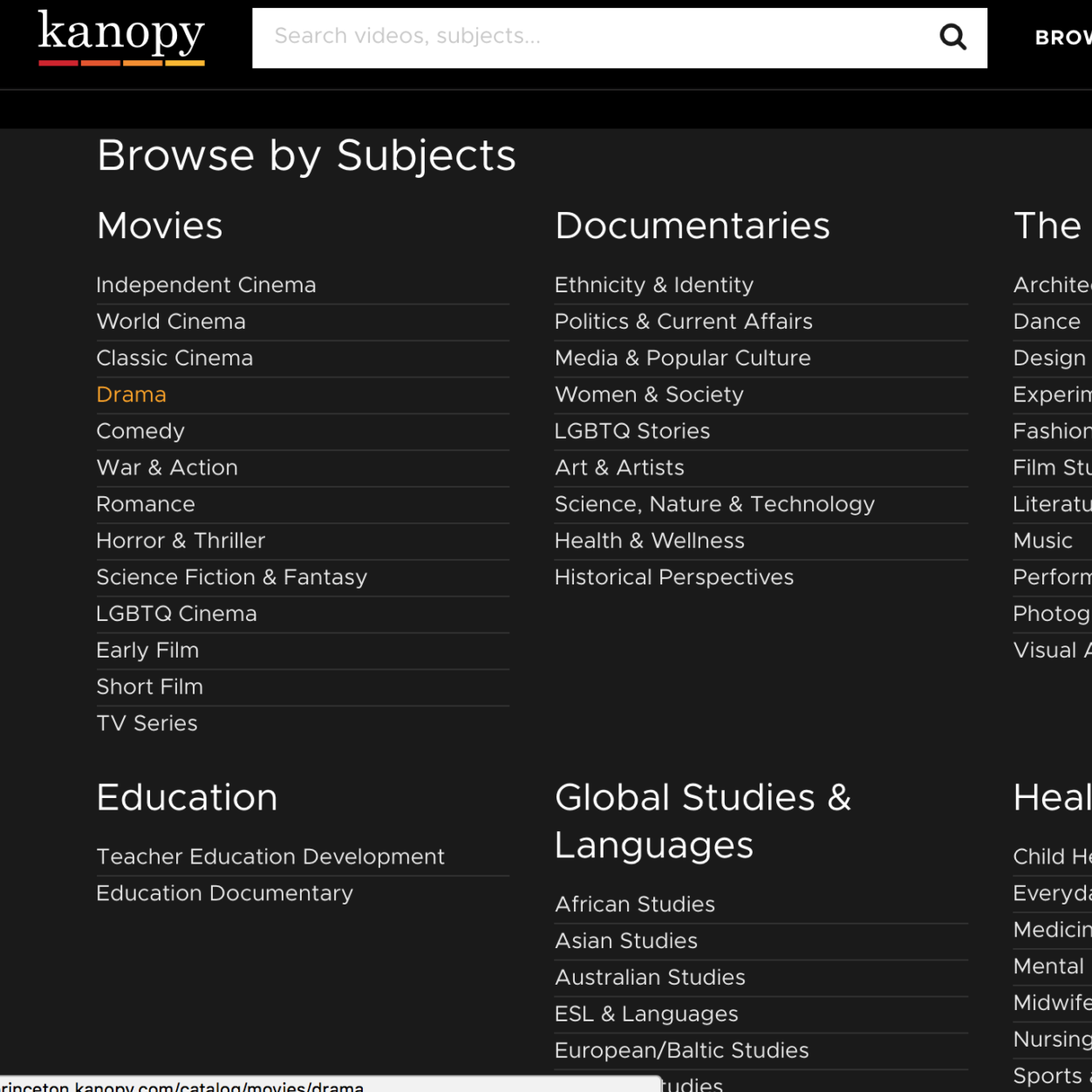
Like many Princeton students, though, I sometimes felt guilty choosing to watch TV over, say, finishing my readings for precept the next morning. But a few weeks ago, my professor introduced me to an invaluable resource called Kanopy. Completely free for all Princeton students and faculty, this site provides over 30,000 films for streaming on any device. But Kanopy isn’t just another Netflix or Hulu: it’s specifically designed for use in research institutions.
Kanopy offers a wide range of free films, specially curated for students and professors.