
The freshman seminars are one of the unique experiences at Princeton. While they may seem intimidating at first, they made me think of the process of research in my very first year in college. Not everyone might become a full-time researcher – I, for example, want to become a policy analyst – but many of our jobs will involve research, and the structure of the freshman seminar is very conducive to the research process. In the Economics of Immigration seminar that I took with Professor Leah Boustan during Fall 2019, we discussed aspects of the economic effects of immigration both on the receiving country and on the migrants themselves. Our final deliverable was a research policy memo – a document that describes a policy intervention by the government, by first arguing the need for it, then describing its advantages, and finally proposing a way by which it might be implemented. In order to write an effective memo, I had to research an issue that necessitated looking at it from diverse points of view. The process made me appreciate several principles of writing a policy memo.
Tag: research based courses
There comes a time for many Princeton students when they are assigned their first PSET, or problem set. “How will I learn all of this in a week? What are the teachers looking for in the answers? How will I collaborate with others when I’m not even on campus?” These are thoughts that many Princeton students have when any PSET is distributed, especially with the semester being online. Believe me, I have been there too, and I would love to share some PSET tips and tricks to help you do your best!
Oh, it’s unfortunate that your classes are all online now… But all the extra free time must be nice, right?
Actually, no. Somehow, I have ended up in a place where I’m busier than I was back when school was offline. And that’s without Powerlifting Team practices, the thirty-minute dinners that consistently turned into three-hour-long social gatherings, and all of the hours I spent working on-campus jobs.
I’ve realized it has to do with my relationship with time. In the past, I didn’t need to be very intentional with my free time: it always just happened. Nowadays I think back fondly to my naïve visits to the Rocky Common Room for pre-bedtime cereal-breaks, only to end up practicing handstands on the rug by the piano with my friends until 2 am.
Without spontaneous social interaction, I ended up filling up all of my time with work, clubs, projects, and research. Unfortunately for first-year students, these challenges are only compounded by the transition to college academics in general. Whether or not you feel like you’re busier this semester, I believe we can all benefit from evaluating how we make time for ourselves: below are five tips I’ve implemented to help facilitate a productive and sustainable semester this fall.

When I first applied for departmental senior thesis funding early this spring, everyone was still uncertain about how long the effects of the COVID-19 pandemic would last. It seemed departmental administrators were optimistic: funding requests could still be made for summer travel. In my application, I detailed my intent to travel to university and state archives throughout the U.S. south for a thesis examining how antebellum Mississippi Valley planters conceptualized the idea of labor. But before I even heard back about whether I was to receive support, the department updated its funding parameters to prohibit summer travel and I had to redo my application in turn. My summer plans, of course, were not the first academic casualty of the strange 2020 world; nor would they be the last. Fortunately, though, there were ways to work around my newfound limitations: all of the archives that I wanted to visit offered services for resident librarians to scan and send materials from their collection, so I updated my application to ask for funds to pay for associated fees. Here, I’ll be sharing some tips for requesting archival materials to be scanned, which I hope will be helpful to any researcher unable to travel (pandemic or not).
This year, as we prepare to write our final papers in quarantine, it will be extra tough to locate the sources we need for our research. Without in-person access to campus libraries, this Dean’s Date will require some new strategies for accessing research materials. To help with this process, I’ve collected a few virtual research resources from my weeks of quarantine thesis work, as well as the beginnings of my Dean’s Date research (also check out Alec’s recent post for more tips):
Do not underestimate the library catalog. A lot of sources are available online, especially with the University’s new partnership with the HathiTrust Digital Library. Through this partnership, millions of scanned books have been made temporarily available to students—in addition to Princeton’s many existing online holdings. To see if a book is available online, just search for it in the Princeton library catalog. If you don’t see a digital edition listed, try clicking on a print edition and seeing if a scanned version is available through HathiTrust (if it is, there will be a link just below the book’s title and general information). You can also click the “Request” button under “Copies in the Library,” then “Help Me Get It” and a librarian will do their best to send you a digital copy—if it’s available—within a few days.

[Note: This post was written before COVID-19 reconfigured our library access. Interlibrary Loan is no longer accessible for students, but its sister program, Article Express, is still running at full speed!]
Every so often, when reading sources for my thesis, I come across a citation for a book or article I can’t find in the Princeton library catalog. Of course, given the size of Princeton’s holdings, these moments are rare—though somewhat more frequent as I’ve entered the fine-grain stages of my research project. In the past, a dead end in the library catalog was enough to convince me to give up on a source. However, the exigencies of my last month of thesis writing have pushed me to use what might just be the most magical tool in the Princeton library toolbox: Interlibrary Loan (ILL).

Whereas Borrow Direct and Recap only provide access to books listed in the Princeton library catalog, Interlibrary Loan can provide access to… pretty much any source you could possibly need. ILL has two main request options: Article Express (for scans of specific articles and book chapters) and Interlibrary Loan (for larger sources, like books, audio/visual materials, and microreels).
My most recent post focused on gearing up towards your senior year and finding a thesis adviser. I decided to continue this mini “preparing for your senior thesis” series by providing some tips on funding your research! The infamous senior thesis is such a daunting thing to think about as a junior because it is not always clear how early you should begin to plan for it and what steps you should take. At the beginning of the year, I attended an information session through the Woodrow Wilson School regarding thesis research funding. During that meeting, the speakers told students that they should start working on applications for funding as soon as possible if they wanted to receive money for their endeavors.
One of the challenges of college is assimilating large amounts of information from a variety of sources: lectures, course readings, independent work research, precept discussions, extracurricular programming—the list goes on and on. Compounding the challenge is the fact that what’s ultimately demanded of students is not mere recall, which can be accomplished through memorization. Rather, we’re charged with synthesizing disparate materials, pulling things together, making connections across genres of information. In this post, I reflect on some of the ways I try to do this.
It’s that time of year again: everyone is spending endless amounts of time browsing and discussing the available spring courses with their friends, advisers, and mentors. The buildup is for good reason: it’s important to put together a balanced, enjoyable course schedule (for tips on how to go about doing that, check out this post).
I’ve personally had my eye on NEU 350, the neuroscience major requirement known for teaching data analysis techniques and lab procedures. Thus far in my Princeton career, I’ve learned a lot about theoretical methods within the discipline, but I’ve yet to actually apply those methods myself and work with real data. I wanted to take the class to learn these skills and broaden my understanding of what actual work within the neurosciences looks like.
However, I noticed under the “Prerequisites and Restrictions” header of the course on the registrar website that sophomores need permission from the Instructor to take the course. I found this odd considering that many sophomores are enrolled in NEU 314, a class that is typically taken by neuro majors the semester before NEU 350. The need for instructor permission felt intimidating to say the least, and in this post, I’ll share a few steps I took to learn more about NEU 350 and whether or not I should take it this spring.
It’s been almost four years, and the generosity of Princeton faculty continues to surprise me. So many professors here are not just accessible to students, but deeply invested in supporting us in and outside of the classroom. It typically isn’t too hard to find at least one research mentor among our 950 full-time faculty.
Nevertheless, one institution’s faculty cannot possibly cover every sub-field or research topic. This has become especially apparent as I’ve moved towards the specificity required of a thesis project. In my case, no professor on campus studies Vilna, the Eastern European city at the center of my thesis.
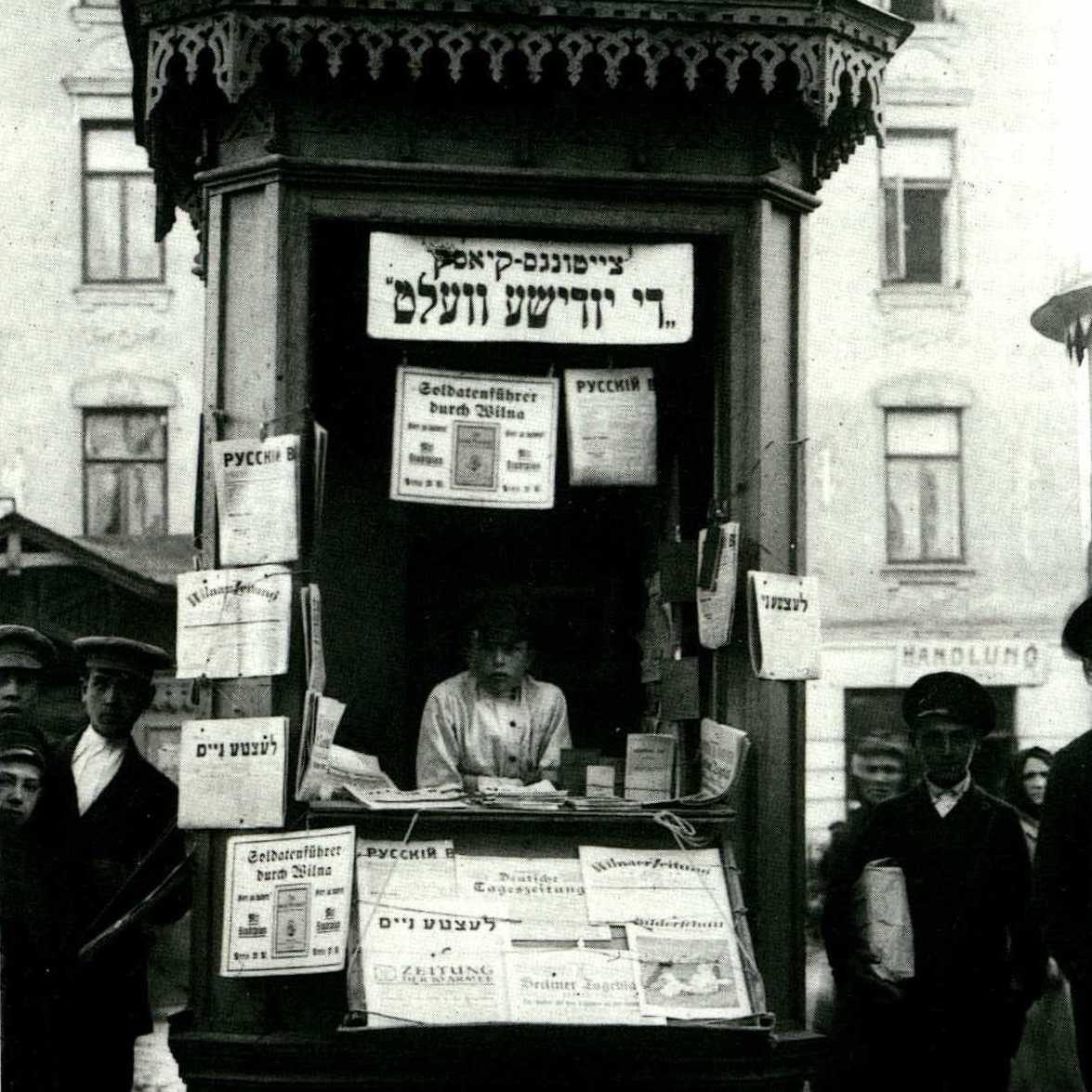
Of course, there are ways around this. For one, there is probably a professor on campus whose area of expertise has something in common with your project. My thesis adviser does not work on Eastern Europe, for example, but she is an expert in writing urban histories. So even though Vilna is new to her, she has been invaluable in guiding my methodology and argumentation.
She has also encouraged me to reach out to faculty and graduate students in other departments and at other institutions who might be more familiar with Vilna itself. Connecting with these scholars has turned out to be one of the most valuable aspects of my thesis process thus far. I’ve compiled some tips for accessing the rich academic network beyond your particular department or university.